Birdr

Eastern Crowned Warbler vs Arctic Warbler

Phylloscopus coronatus versus Phylloscopus borealis

Play a quiz with Eastern Crowned Warbler and Arctic Warbler
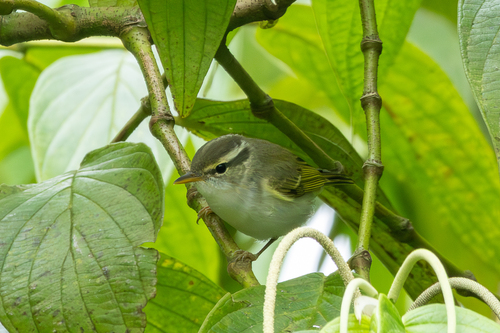
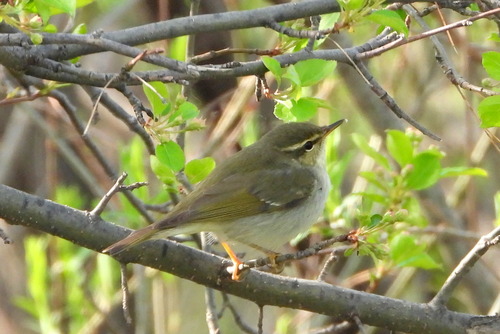
Eastern Crowned Warbler (Phylloscopus coronatus) Eastern Crowned Warbler
Arctic Warbler (Phylloscopus borealis) Arctic Warbler

Media

Loading…

In short

The most reliable field mark to separate Eastern Crowned Warbler from Arctic Warbler is the distinctive head pattern: Eastern Crowned Warbler shows a strong, dark lateral crown stripe with a yellowish median crown stripe and a long, pale supercilium, while Arctic Warbler has a plainer face and lacks the bold crown stripes. Both species show a single pale wingbar, but Eastern Crowned Warbler is brighter olive-green above and whiter below, whereas Arctic Warbler is more greyish-green above and off-white below. Bill structure and subtle differences in cheek and supercilium color can also help. In the field, focus on head pattern and overall brightness, as both can show similar wingbars and general structure.

Identification tips

  1. Head pattern is key: Eastern Crowned Warbler shows a bold, dark lateral crown stripe with a yellowish median crown stripe; Arctic Warbler lacks these crown stripes and appears plainer-headed. This works for all ages and seasons.
  2. Supercilium: Eastern Crowned Warbler has a long, yellowish-white supercilium that stands out against the darker crown and lores. Arctic Warbler's supercilium is less contrasting and paler, blending more with the face.
  3. Cheek color: Look for dusky yellow cheeks on Eastern Crowned Warbler; Arctic Warbler's cheeks are plain and off-white.
  4. Upperparts color: Eastern Crowned Warbler is dark olive-green above, giving a brighter impression. Arctic Warbler is more greyish-green, appearing duller overall.
  5. Underparts: Eastern Crowned Warbler is white below, while Arctic Warbler is off-white—subtle, but can help in good light.
  6. Wingbar: Both species show a single pale wingbar; do not use this mark alone for separation.
  7. Bill structure: Arctic Warbler has a heavier, dagger-like bill with a dark tip to the lower mandible. Eastern Crowned Warbler's bill is strong and robust but paler overall.
  8. Tail shape: Eastern Crowned Warbler's tail is square with a slight fork; Arctic Warbler's tail shape is not described as distinctive, so this is only a minor supporting feature.
  9. Leg color: Eastern Crowned Warbler has dark legs, but this is not contrasted with Arctic Warbler in the sources and should be used with caution.
  10. Flight views: No distinctive upperwing or flight pattern differences are described for immatures or adults; rely on head and face pattern even in flight.
  11. Behavior: Both species are active and forage in foliage; do not expect behavioral differences to separate them.
  12. Habitat: Use with caution—Eastern Crowned Warbler prefers mature forests, Arctic Warbler is more often in birch/mixed woods near water, but both can overlap, especially on migration.
  13. Voice: If singing, Arctic Warbler gives a fast trill; Eastern Crowned Warbler's song is not described here, so use voice only if the trill is heard.
  14. Season and range: Both can occur as migrants outside their breeding ranges, so do not rely solely on location except in extreme out-of-range situations.
  15. Pitfalls: The single wingbar is shared; do not confuse this with Greenish Warbler, which is smaller and has a different bill structure.

Size

Eastern Crowned Warbler is a medium-sized leaf warbler with a body mass of about 10.1 g [wikidata]. Arctic Warbler is similar in size and structure, and no significant size difference is noted in the available data. Both are robust for Phylloscopus warblers, and size alone is not a reliable separator in the field.

Plumage

For all ages, the most diagnostic feature is the head pattern: Eastern Crowned Warbler has a strong, dark lateral crown stripe with an indistinct yellowish median crown stripe, a long yellowish-white supercilium, and dusky yellow cheeks. Arctic Warbler lacks the crown stripes and has a plainer face, with a more subdued supercilium and off-white underparts. Both species show a single pale wingbar, so this feature is not useful for separation. Eastern Crowned Warbler is more brightly colored, with dark olive-green upperparts and white underparts, while Arctic Warbler is greyish-green above and off-white below. Tail shape is slightly different: Eastern Crowned Warbler has a square, slightly forked tail, but this is subtle. No age-specific upperwing or flight pattern differences are described in the sources for either species.

Behaviour

Both species are typical leaf warblers in their movements and foraging style, often active in foliage. No distinctive behavioral differences are noted in the available sources that would reliably separate them in the field.

Habitat

Eastern Crowned Warbler inhabits boreal and temperate forests in the east Palearctic, often in mature woodland. Arctic Warbler breeds in birch or mixed birch forests near water across Fennoscandia, northern Palearctic, and Alaska, and winters in Southeast Asia. While both can occur in similar forested habitats, Arctic Warbler is more associated with birch and proximity to water, especially in its breeding range. However, habitat alone is not diagnostic where ranges overlap or on migration.

Voice

Arctic Warbler has a distinctive fast trill song, which is not described for Eastern Crowned Warbler in the available notes. If heard singing, Arctic Warbler's rapid trill can be a useful clue, but silent birds require visual identification.

Submit a better description

Use the same sections as the comparison. Your text is published immediately.

The most reliable field mark to separate Eastern Crowned Warbler from Arctic Warbler is the distinctive head pattern: Eastern Crowned Warbler shows a strong, dark lateral crown stripe with a yellowish median crown stripe and a long, pale supercilium, while Arctic Warbler has a plainer face and lacks the bold crown stripes. Both species show a single pale wingbar, but Eastern Crowned Warbler is brighter olive-green above and whiter below, whereas Arctic Warbler is more greyish-green above and off-white below. Bill structure and subtle differences in cheek and supercilium color can also help. In the field, focus on head pattern and overall brightness, as both can show similar wingbars and general structure.

  1. Head pattern is key: Eastern Crowned Warbler shows a bold, dark lateral crown stripe with a yellowish median crown stripe; Arctic Warbler lacks these crown stripes and appears plainer-headed. This works for all ages and seasons.
  2. Supercilium: Eastern Crowned Warbler has a long, yellowish-white supercilium that stands out against the darker crown and lores. Arctic Warbler's supercilium is less contrasting and paler, blending more with the face.
  3. Cheek color: Look for dusky yellow cheeks on Eastern Crowned Warbler; Arctic Warbler's cheeks are plain and off-white.
  4. Upperparts color: Eastern Crowned Warbler is dark olive-green above, giving a brighter impression. Arctic Warbler is more greyish-green, appearing duller overall.
  5. Underparts: Eastern Crowned Warbler is white below, while Arctic Warbler is off-white—subtle, but can help in good light.
  6. Wingbar: Both species show a single pale wingbar; do not use this mark alone for separation.
  7. Bill structure: Arctic Warbler has a heavier, dagger-like bill with a dark tip to the lower mandible. Eastern Crowned Warbler's bill is strong and robust but paler overall.
  8. Tail shape: Eastern Crowned Warbler's tail is square with a slight fork; Arctic Warbler's tail shape is not described as distinctive, so this is only a minor supporting feature.
  9. Leg color: Eastern Crowned Warbler has dark legs, but this is not contrasted with Arctic Warbler in the sources and should be used with caution.
  10. Flight views: No distinctive upperwing or flight pattern differences are described for immatures or adults; rely on head and face pattern even in flight.
  11. Behavior: Both species are active and forage in foliage; do not expect behavioral differences to separate them.
  12. Habitat: Use with caution—Eastern Crowned Warbler prefers mature forests, Arctic Warbler is more often in birch/mixed woods near water, but both can overlap, especially on migration.
  13. Voice: If singing, Arctic Warbler gives a fast trill; Eastern Crowned Warbler's song is not described here, so use voice only if the trill is heard.
  14. Season and range: Both can occur as migrants outside their breeding ranges, so do not rely solely on location except in extreme out-of-range situations.
  15. Pitfalls: The single wingbar is shared; do not confuse this with Greenish Warbler, which is smaller and has a different bill structure.

Eastern Crowned Warbler is a medium-sized leaf warbler with a body mass of about 10.1 g [wikidata]. Arctic Warbler is similar in size and structure, and no significant size difference is noted in the available data. Both are robust for Phylloscopus warblers, and size alone is not a reliable separator in the field.

For all ages, the most diagnostic feature is the head pattern: Eastern Crowned Warbler has a strong, dark lateral crown stripe with an indistinct yellowish median crown stripe, a long yellowish-white supercilium, and dusky yellow cheeks. Arctic Warbler lacks the crown stripes and has a plainer face, with a more subdued supercilium and off-white underparts. Both species show a single pale wingbar, so this feature is not useful for separation. Eastern Crowned Warbler is more brightly colored, with dark olive-green upperparts and white underparts, while Arctic Warbler is greyish-green above and off-white below. Tail shape is slightly different: Eastern Crowned Warbler has a square, slightly forked tail, but this is subtle. No age-specific upperwing or flight pattern differences are described in the sources for either species.

Both species are typical leaf warblers in their movements and foraging style, often active in foliage. No distinctive behavioral differences are noted in the available sources that would reliably separate them in the field.

Eastern Crowned Warbler inhabits boreal and temperate forests in the east Palearctic, often in mature woodland. Arctic Warbler breeds in birch or mixed birch forests near water across Fennoscandia, northern Palearctic, and Alaska, and winters in Southeast Asia. While both can occur in similar forested habitats, Arctic Warbler is more associated with birch and proximity to water, especially in its breeding range. However, habitat alone is not diagnostic where ranges overlap or on migration.

Arctic Warbler has a distinctive fast trill song, which is not described for Eastern Crowned Warbler in the available notes. If heard singing, Arctic Warbler's rapid trill can be a useful clue, but silent birds require visual identification.

Discard your changes?

You have unsaved edits. If you leave now, those changes will be lost.

Eastern Crowned Warbler · Arctic Warbler · My Tricky Birds