Birdr

Eastern Long-billed Lark vs Groundscraper Thrush

Certhilauda semitorquata versus Turdus litsitsirupa

Play a quiz with Eastern Long-billed Lark and Groundscraper Thrush
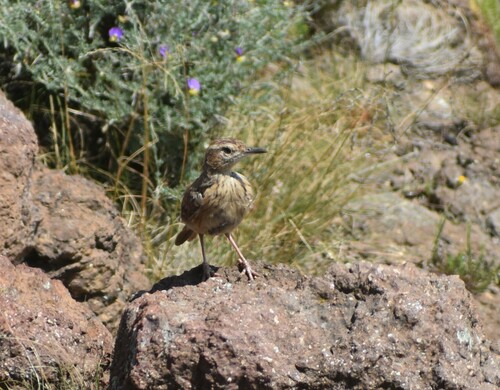
Eastern Long-billed Lark (Certhilauda semitorquata) Eastern Long-billed Lark
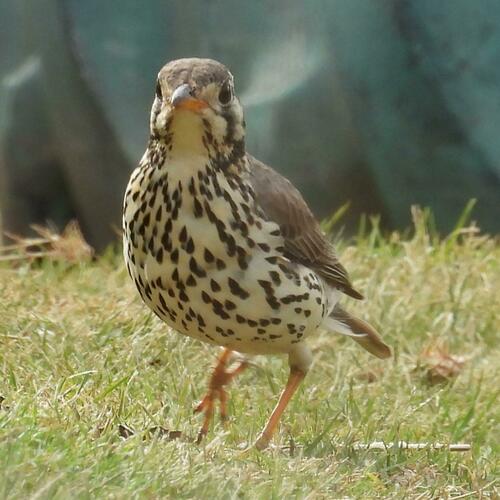
Groundscraper Thrush (Turdus litsitsirupa) Groundscraper Thrush

Media

Loading…

In short

The Eastern Long-billed Lark and Groundscraper Thrush can be distinguished primarily by their structure and behavior. The lark has a notably long, curved bill and is more often found on the ground, while the thrush has a more typical thrush-like appearance with a straight bill and is often seen perched in trees or shrubs.

Identification tips

  1. Bill shape: Look for the long, curved bill of the lark versus the straight bill of the thrush. 2. Plumage pattern: Note the streaked breast of the thrush compared to the more uniform appearance of the lark. 3. Behavior: Observe whether the bird is foraging on the ground (lark) or perched in trees (thrush). 4. Habitat preference: Consider the habitat; larks prefer open grasslands, while thrushes are more versatile.

Size

The Groundscraper Thrush is generally larger and more robust than the Eastern Long-billed Lark.

Plumage

The Eastern Long-billed Lark has a more uniform brown plumage with subtle streaking, whereas the Groundscraper Thrush displays a more contrasting plumage with a spotted breast and a more defined facial pattern.

Behaviour

Eastern Long-billed Larks are ground-dwelling and often seen foraging on open ground, while Groundscraper Thrushes are more arboreal, frequently seen perched in trees or shrubs.

Habitat

Both species can be found in open habitats, but the Eastern Long-billed Lark prefers more arid, open grasslands, whereas the Groundscraper Thrush is more adaptable and can be found in a variety of habitats, including gardens and savannas.

Voice

The Eastern Long-billed Lark's song is a series of melodious whistles, often delivered in flight, while the Groundscraper Thrush has a more varied song with rich, fluty notes.

Submit a better description

Use the same sections as the comparison. Your text is published immediately.

The Eastern Long-billed Lark and Groundscraper Thrush can be distinguished primarily by their structure and behavior. The lark has a notably long, curved bill and is more often found on the ground, while the thrush has a more typical thrush-like appearance with a straight bill and is often seen perched in trees or shrubs.

  1. Bill shape: Look for the long, curved bill of the lark versus the straight bill of the thrush. 2. Plumage pattern: Note the streaked breast of the thrush compared to the more uniform appearance of the lark. 3. Behavior: Observe whether the bird is foraging on the ground (lark) or perched in trees (thrush). 4. Habitat preference: Consider the habitat; larks prefer open grasslands, while thrushes are more versatile.

The Groundscraper Thrush is generally larger and more robust than the Eastern Long-billed Lark.

The Eastern Long-billed Lark has a more uniform brown plumage with subtle streaking, whereas the Groundscraper Thrush displays a more contrasting plumage with a spotted breast and a more defined facial pattern.

Eastern Long-billed Larks are ground-dwelling and often seen foraging on open ground, while Groundscraper Thrushes are more arboreal, frequently seen perched in trees or shrubs.

Both species can be found in open habitats, but the Eastern Long-billed Lark prefers more arid, open grasslands, whereas the Groundscraper Thrush is more adaptable and can be found in a variety of habitats, including gardens and savannas.

The Eastern Long-billed Lark's song is a series of melodious whistles, often delivered in flight, while the Groundscraper Thrush has a more varied song with rich, fluty notes.

Discard your changes?

You have unsaved edits. If you leave now, those changes will be lost.

Eastern Long-billed Lark · Groundscraper Thrush · My Tricky Birds