Birdr

Eastern Olivaceous Warbler vs Icterine Warbler

Iduna pallida versus Hippolais icterina

Play a quiz with Eastern Olivaceous Warbler and Icterine Warbler
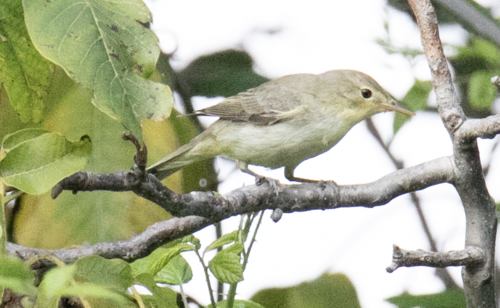
Eastern Olivaceous Warbler (Iduna pallida) Eastern Olivaceous Warbler
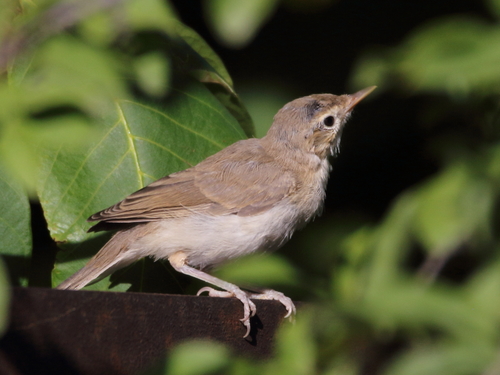
Icterine Warbler (Hippolais icterina) Icterine Warbler

Media

Loading…

In short

The Eastern Olivaceous Warbler and Icterine Warbler are both small, similar-looking warblers, but they can be distinguished by structure and subtle plumage differences. The Eastern Olivaceous Warbler has a longer, more slender bill and a more muted overall coloration, while the Icterine Warbler is brighter with a more pronounced yellowish tone.

Identification tips

Size

Both species are similar in size, but the Icterine Warbler may appear slightly bulkier.

Plumage

The Eastern Olivaceous Warbler is generally duller with a greyish-brown upperpart and pale underparts, whereas the Icterine Warbler has a brighter, more yellowish-green tone on the upperparts and yellowish underparts.

Behaviour

Both species are active and often seen flitting through foliage, but the Icterine Warbler may appear more conspicuous due to its brighter plumage.

Habitat

Both species can be found in similar habitats such as open woodlands and scrub, but the Eastern Olivaceous Warbler is more often associated with drier, more open areas.

Voice

The Icterine Warbler has a more melodic and varied song, often incorporating mimicry, while the Eastern Olivaceous Warbler's song is simpler and more repetitive.

Submit a better description

Use the same sections as the comparison. Your text is published immediately.

The Eastern Olivaceous Warbler and Icterine Warbler are both small, similar-looking warblers, but they can be distinguished by structure and subtle plumage differences. The Eastern Olivaceous Warbler has a longer, more slender bill and a more muted overall coloration, while the Icterine Warbler is brighter with a more pronounced yellowish tone.

  • Bill Shape: Eastern Olivaceous Warbler has a longer, more slender bill compared to the Icterine Warbler.
  • Color Tone: Icterine Warbler is brighter with yellowish tones, especially on the underparts.
  • Primary Projection: Icterine Warbler has a longer primary projection, giving it a more elongated wing appearance.
  • Vocalization: Listen for the Icterine Warbler's more varied and melodic song, which may include mimicry.
  • Seasonal Presence: Be aware of migration periods, as both species may overlap in certain regions during migration.

Both species are similar in size, but the Icterine Warbler may appear slightly bulkier.

The Eastern Olivaceous Warbler is generally duller with a greyish-brown upperpart and pale underparts, whereas the Icterine Warbler has a brighter, more yellowish-green tone on the upperparts and yellowish underparts.

Both species are active and often seen flitting through foliage, but the Icterine Warbler may appear more conspicuous due to its brighter plumage.

Both species can be found in similar habitats such as open woodlands and scrub, but the Eastern Olivaceous Warbler is more often associated with drier, more open areas.

The Icterine Warbler has a more melodic and varied song, often incorporating mimicry, while the Eastern Olivaceous Warbler's song is simpler and more repetitive.

Discard your changes?

You have unsaved edits. If you leave now, those changes will be lost.

Eastern Olivaceous Warbler · Icterine Warbler · My Tricky Birds