Birdr

Eastern Phoebe vs Dark-sided Flycatcher

Sayornis phoebe versus Muscicapa sibirica

Play a quiz with Eastern Phoebe and Dark-sided Flycatcher

Eastern Phoebe (Sayornis phoebe) Eastern Phoebe
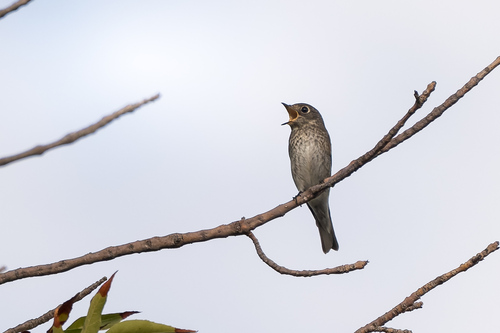
Dark-sided Flycatcher (Muscicapa sibirica) Dark-sided Flycatcher

Media

Loading…

In short

The Eastern Phoebe and Dark-sided Flycatcher can be distinguished by their habitat preferences and plumage details. The Eastern Phoebe is more likely found near human structures, while the Dark-sided Flycatcher prefers forested areas. Look for the Eastern Phoebe's plain, dark head and lack of wing bars compared to the more patterned Dark-sided Flycatcher.

Identification tips

  1. Habitat: Check if the bird is near human structures (Eastern Phoebe) or in a forested area (Dark-sided Flycatcher). 2. Plumage: Look for the plain head and back of the Eastern Phoebe versus the patterned appearance of the Dark-sided Flycatcher. 3. Behavior: Note the tail-wagging behavior of the Eastern Phoebe. 4. Vocalization: Listen for the 'fee-bee' call of the Eastern Phoebe.

Size

Both species are small flycatchers, but the Eastern Phoebe is slightly larger and more robust compared to the more slender Dark-sided Flycatcher.

Plumage

The Eastern Phoebe has a plain, dark head and back with no wing bars, while the Dark-sided Flycatcher shows a more patterned appearance with faint wing bars and a slightly streaked breast.

Behaviour

Eastern Phoebes often wag their tails downwards, a behavior less commonly seen in Dark-sided Flycatchers.

Habitat

Eastern Phoebes are frequently found near human structures like barns and bridges, whereas Dark-sided Flycatchers prefer forested habitats, particularly in Asia.

Voice

The Eastern Phoebe has a distinctive 'fee-bee' call, whereas the Dark-sided Flycatcher's vocalizations are less well-known and not as distinctive.

Submit a better description

Use the same sections as the comparison. Your text is published immediately.

The Eastern Phoebe and Dark-sided Flycatcher can be distinguished by their habitat preferences and plumage details. The Eastern Phoebe is more likely found near human structures, while the Dark-sided Flycatcher prefers forested areas. Look for the Eastern Phoebe's plain, dark head and lack of wing bars compared to the more patterned Dark-sided Flycatcher.

  1. Habitat: Check if the bird is near human structures (Eastern Phoebe) or in a forested area (Dark-sided Flycatcher). 2. Plumage: Look for the plain head and back of the Eastern Phoebe versus the patterned appearance of the Dark-sided Flycatcher. 3. Behavior: Note the tail-wagging behavior of the Eastern Phoebe. 4. Vocalization: Listen for the 'fee-bee' call of the Eastern Phoebe.

Both species are small flycatchers, but the Eastern Phoebe is slightly larger and more robust compared to the more slender Dark-sided Flycatcher.

The Eastern Phoebe has a plain, dark head and back with no wing bars, while the Dark-sided Flycatcher shows a more patterned appearance with faint wing bars and a slightly streaked breast.

Eastern Phoebes often wag their tails downwards, a behavior less commonly seen in Dark-sided Flycatchers.

Eastern Phoebes are frequently found near human structures like barns and bridges, whereas Dark-sided Flycatchers prefer forested habitats, particularly in Asia.

The Eastern Phoebe has a distinctive 'fee-bee' call, whereas the Dark-sided Flycatcher's vocalizations are less well-known and not as distinctive.

Discard your changes?

You have unsaved edits. If you leave now, those changes will be lost.

Eastern Phoebe · Dark-sided Flycatcher · My Tricky Birds