Birdr

Eastern Rock Nuthatch vs Hume's Wheatear

Sitta tephronota versus Oenanthe albonigra

Play a quiz with Eastern Rock Nuthatch and Hume's Wheatear
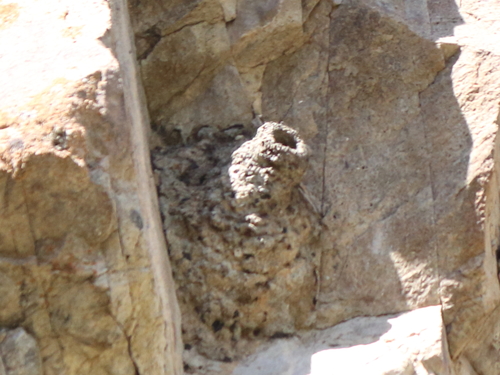
Eastern Rock Nuthatch (Sitta tephronota) Eastern Rock Nuthatch
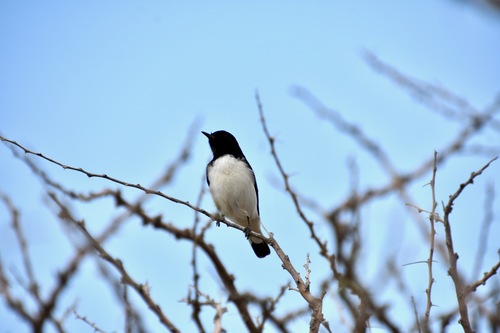
Hume's Wheatear (Oenanthe albonigra) Hume's Wheatear

Media

Loading…

In short

Eastern Rock Nuthatch and Hume's Wheatear can be distinguished by their habitat preferences and plumage patterns. The nuthatch is typically found on rocky slopes and cliffs, while the wheatear prefers open, arid landscapes. Look for the nuthatch's blue-gray upperparts and the wheatear's contrasting black and white plumage.

Identification tips

Size

Eastern Rock Nuthatch is slightly smaller and more compact than Hume's Wheatear.

Plumage

The Eastern Rock Nuthatch has blue-gray upperparts with a white throat and underparts, and a distinctive black eye stripe. Hume's Wheatear has a striking black and white pattern, with a black head, back, and wings, and white rump and underparts.

Behaviour

Eastern Rock Nuthatch often clings to vertical surfaces and moves in a creeping manner, typical of nuthatches. Hume's Wheatear is more likely to be seen perching upright on rocks or low shrubs, often bobbing its tail.

Habitat

Eastern Rock Nuthatch is found on rocky cliffs and slopes, while Hume's Wheatear prefers open, arid, and rocky landscapes.

Voice

Eastern Rock Nuthatch has a varied song with whistles and trills, while Hume's Wheatear's song is more melodic and includes a series of whistles and chatters.

Submit a better description

Use the same sections as the comparison. Your text is published immediately.

Eastern Rock Nuthatch and Hume's Wheatear can be distinguished by their habitat preferences and plumage patterns. The nuthatch is typically found on rocky slopes and cliffs, while the wheatear prefers open, arid landscapes. Look for the nuthatch's blue-gray upperparts and the wheatear's contrasting black and white plumage.

  • Habitat: Look for Eastern Rock Nuthatch on rocky cliffs; Hume's Wheatear in open, arid areas.
  • Plumage: Note the nuthatch's blue-gray upperparts and black eye stripe versus the wheatear's black and white contrast.
  • Behavior: Observe the nuthatch's creeping movements on rocks compared to the wheatear's upright perching and tail bobbing.

Eastern Rock Nuthatch is slightly smaller and more compact than Hume's Wheatear.

The Eastern Rock Nuthatch has blue-gray upperparts with a white throat and underparts, and a distinctive black eye stripe. Hume's Wheatear has a striking black and white pattern, with a black head, back, and wings, and white rump and underparts.

Eastern Rock Nuthatch often clings to vertical surfaces and moves in a creeping manner, typical of nuthatches. Hume's Wheatear is more likely to be seen perching upright on rocks or low shrubs, often bobbing its tail.

Eastern Rock Nuthatch is found on rocky cliffs and slopes, while Hume's Wheatear prefers open, arid, and rocky landscapes.

Eastern Rock Nuthatch has a varied song with whistles and trills, while Hume's Wheatear's song is more melodic and includes a series of whistles and chatters.

Discard your changes?

You have unsaved edits. If you leave now, those changes will be lost.

Eastern Rock Nuthatch · Hume's Wheatear · My Tricky Birds