Birdr

Eastern Screech-Owl vs Great Horned Owl

Megascops asio versus Bubo virginianus

Play a quiz with Eastern Screech-Owl and Great Horned Owl
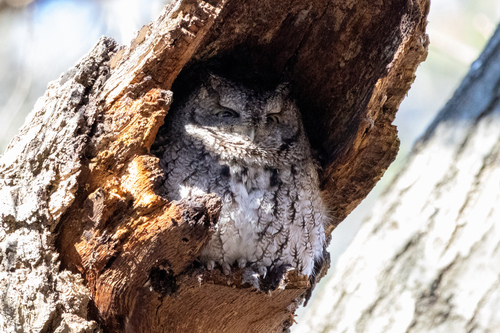
Eastern Screech-Owl (Megascops asio) Eastern Screech-Owl
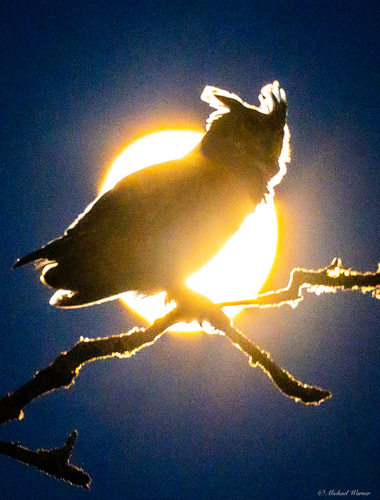
Great Horned Owl (Bubo virginianus) Great Horned Owl

Media

Loading…

In short

The Eastern Screech-Owl and Great Horned Owl are both nocturnal predators with distinct differences. The Eastern Screech-Owl is much smaller and has a characteristic descending trill, while the Great Horned Owl is larger with prominent ear tufts and a deep hoot.

Identification tips

Size and ear tufts: The Great Horned Owl is much larger with prominent ear tufts, while the Eastern Screech-Owl is smaller and lacks these tufts. Plumage: Look for the color morphs in the Eastern Screech-Owl and the mottled pattern and white throat of the Great Horned Owl. Vocalization: Listen for the descending trill of the Eastern Screech-Owl and the deep hoot of the Great Horned Owl. Habitat: Consider the environment; Eastern Screech-Owls prefer wooded areas, while Great Horned Owls are more adaptable to varied habitats.

Size

The Eastern Screech-Owl is significantly smaller, about the size of a robin, whereas the Great Horned Owl is much larger, comparable to a red-tailed hawk.

Plumage

Eastern Screech-Owls have two color morphs: rufous and gray, with a pale yellowish-green or pale gray bill. Great Horned Owls have mottled brown and gray plumage with distinctive ear tufts and a white throat patch.

Behaviour

Both species are nocturnal hunters, but the Great Horned Owl is more versatile in its hunting techniques, often using a perch-and-pounce strategy.

Habitat

Eastern Screech-Owls are found in wooded environments and are common in suburban areas. Great Horned Owls have a broader range, inhabiting deserts, grasslands, forests, and urban areas.

Voice

Eastern Screech-Owls are known for their monotonic trill and whinny calls. Great Horned Owls have a deep, resonant hoot that is quite different from the screech-owl's calls.

Submit a better description

Use the same sections as the comparison. Your text is published immediately.

The Eastern Screech-Owl and Great Horned Owl are both nocturnal predators with distinct differences. The Eastern Screech-Owl is much smaller and has a characteristic descending trill, while the Great Horned Owl is larger with prominent ear tufts and a deep hoot.

Size and ear tufts: The Great Horned Owl is much larger with prominent ear tufts, while the Eastern Screech-Owl is smaller and lacks these tufts. Plumage: Look for the color morphs in the Eastern Screech-Owl and the mottled pattern and white throat of the Great Horned Owl. Vocalization: Listen for the descending trill of the Eastern Screech-Owl and the deep hoot of the Great Horned Owl. Habitat: Consider the environment; Eastern Screech-Owls prefer wooded areas, while Great Horned Owls are more adaptable to varied habitats.

The Eastern Screech-Owl is significantly smaller, about the size of a robin, whereas the Great Horned Owl is much larger, comparable to a red-tailed hawk.

Eastern Screech-Owls have two color morphs: rufous and gray, with a pale yellowish-green or pale gray bill. Great Horned Owls have mottled brown and gray plumage with distinctive ear tufts and a white throat patch.

Both species are nocturnal hunters, but the Great Horned Owl is more versatile in its hunting techniques, often using a perch-and-pounce strategy.

Eastern Screech-Owls are found in wooded environments and are common in suburban areas. Great Horned Owls have a broader range, inhabiting deserts, grasslands, forests, and urban areas.

Eastern Screech-Owls are known for their monotonic trill and whinny calls. Great Horned Owls have a deep, resonant hoot that is quite different from the screech-owl's calls.

Discard your changes?

You have unsaved edits. If you leave now, those changes will be lost.

Eastern Screech-Owl · Great Horned Owl · My Tricky Birds