Birdr

Eastern Subalpine Warbler vs Common Whitethroat

Curruca cantillans versus Curruca communis

Play a quiz with Eastern Subalpine Warbler and Common Whitethroat
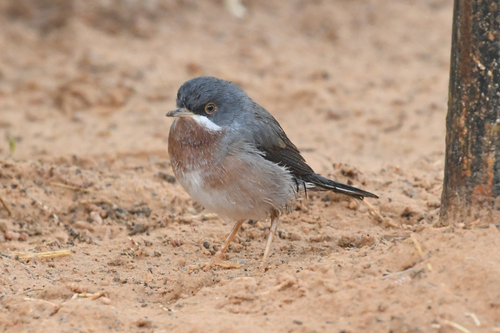
Eastern Subalpine Warbler (Curruca cantillans) Eastern Subalpine Warbler
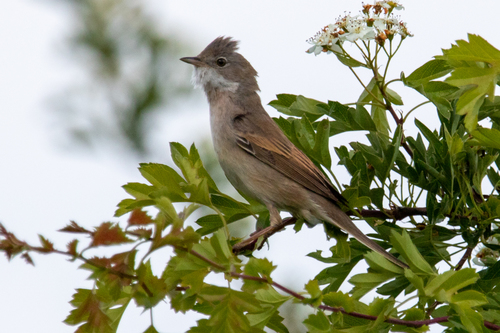
Common Whitethroat (Curruca communis) Common Whitethroat

Media

Loading…

In short

The Eastern Subalpine Warbler (Curruca subalpina) and the Common Whitethroat (Curruca communis) are both small, warbler-like birds that can be found across Europe and parts of Asia. Key differences include their plumage coloration, vocalization patterns, and habitat preferences. The Eastern Subalpine Warbler tends to have more contrasting plumage colors with a reddish-brown throat, while the Common Whitethroat has a more uniform grayish-brown coloration.

Identification tips

  1. Birds of the World Similar-Species Diagnostics:
  2. The Eastern Subalpine Warbler may develop a rather extensive pale reddish-rufous throat and even upper breast, approaching male pigmentation (Birds of the World, Eastern Subalpine Warbler - PLUMAGE section).
  3. The Common Whitethroat is known for its more uniform grayish-brown coloration, with a less distinctive throat (Birds of the World, Common Whitethroat - IDENTIFICATION section).

  4. AI Field Diagnostics:

  5. Look for contrasting plumage: if you see a warbler with a reddish-brown throat, it's likely the Eastern Subalpine Warbler, whereas a more uniform grayish-brown bird with a buffy throat is likely the Common Whitethroat.
  6. Monitor behavior: the Eastern Subalpine Warbler tends to stay hidden in dense brush, while the Common Whitethroat is often in more open spaces, making it easier to spot.
  7. Listen for vocalizations: the Eastern Subalpine Warbler's song is melodious with whistles, while the Common Whitethroat produces scratchy, less melodious notes.
  8. Observe habitat preferences: if the bird is in dense scrub or hilly areas, it’s likely the Eastern Subalpine Warbler; if it’s in gardens or grasslands, it’s the Common Whitethroat.

By focusing on these identifying features, birdwatchers can confidently distinguish between the Eastern Subalpine Warbler and the Common Whitethroat in the field.

Size

Plumage

Behaviour

Habitat

Voice

Submit a better description

Use the same sections as the comparison. Your text is published immediately.

The Eastern Subalpine Warbler (Curruca subalpina) and the Common Whitethroat (Curruca communis) are both small, warbler-like birds that can be found across Europe and parts of Asia. Key differences include their plumage coloration, vocalization patterns, and habitat preferences. The Eastern Subalpine Warbler tends to have more contrasting plumage colors with a reddish-brown throat, while the Common Whitethroat has a more uniform grayish-brown coloration.

  1. Birds of the World Similar-Species Diagnostics:
  2. The Eastern Subalpine Warbler may develop a rather extensive pale reddish-rufous throat and even upper breast, approaching male pigmentation (Birds of the World, Eastern Subalpine Warbler - PLUMAGE section).
  3. The Common Whitethroat is known for its more uniform grayish-brown coloration, with a less distinctive throat (Birds of the World, Common Whitethroat - IDENTIFICATION section).

  4. AI Field Diagnostics:

  5. Look for contrasting plumage: if you see a warbler with a reddish-brown throat, it's likely the Eastern Subalpine Warbler, whereas a more uniform grayish-brown bird with a buffy throat is likely the Common Whitethroat.
  6. Monitor behavior: the Eastern Subalpine Warbler tends to stay hidden in dense brush, while the Common Whitethroat is often in more open spaces, making it easier to spot.
  7. Listen for vocalizations: the Eastern Subalpine Warbler's song is melodious with whistles, while the Common Whitethroat produces scratchy, less melodious notes.
  8. Observe habitat preferences: if the bird is in dense scrub or hilly areas, it’s likely the Eastern Subalpine Warbler; if it’s in gardens or grasslands, it’s the Common Whitethroat.

By focusing on these identifying features, birdwatchers can confidently distinguish between the Eastern Subalpine Warbler and the Common Whitethroat in the field.

  • Eastern Subalpine Warbler: Generally measures about 13-14 cm in length. It has a slender, elongated body, slightly larger than the Common Whitethroat.
  • Common Whitethroat: Typically measures around 12.5-13.5 cm in length. It has a compact build, with a slightly shorter tail compared to the Eastern Subalpine Warbler.
  • Eastern Subalpine Warbler: Males feature a distinctive pale reddish-rufous throat and upper breast, which are more vibrant and contrast sharply with the rest of their grayish or brown plumage. They also have a darker crown and a lighter belly.
  • Common Whitethroat: Exhibits more uniform grayish-brown plumage overall, with a buffy or white throat and belly. Their color pattern is less contrasting than that of the Eastern Subalpine Warbler, making them appear more homogenous.
  • Eastern Subalpine Warbler: Known for its somewhat secretive behavior, often preferring dense undergrowth or scrub where it forages for insects and seeds. It tends to be less visible than the Common Whitethroat.
  • Common Whitethroat: More active and often seen foraging in open areas or low shrubs. It displays a more conspicuous behavior, flitting about and often singing from an exposed perch.
  • Eastern Subalpine Warbler: Typically found in scrubland, bushy areas, and open woodlands, particularly in hilly or mountainous regions. It prefers areas with dense undergrowth.
  • Common Whitethroat: Commonly inhabits hedgerows, gardens, and grasslands. It favors more open habitats compared to the Eastern Subalpine Warbler.
  • Eastern Subalpine Warbler: Known for a varied, melodious song that often includes trills and whistles. Their calls are sharp and clear, usually described as “tseet” or “tsip.”
  • Common Whitethroat: Its song is less melodious, consisting of a series of scratchy notes and phrases. The call is a distinctive “chack” or “tchick,” which can be heard frequently during the breeding season.

Discard your changes?

You have unsaved edits. If you leave now, those changes will be lost.

Eastern Subalpine Warbler · Common Whitethroat · My Tricky Birds