Birdr

Eastern Wood-Pewee vs Yellow-bellied Flycatcher

Contopus virens versus Empidonax flaviventris

Play a quiz with Eastern Wood-Pewee and Yellow-bellied Flycatcher
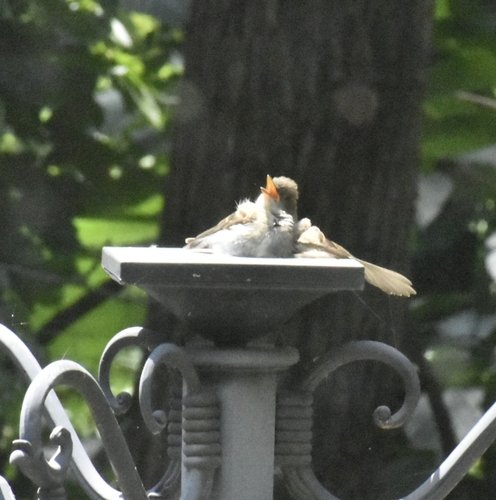
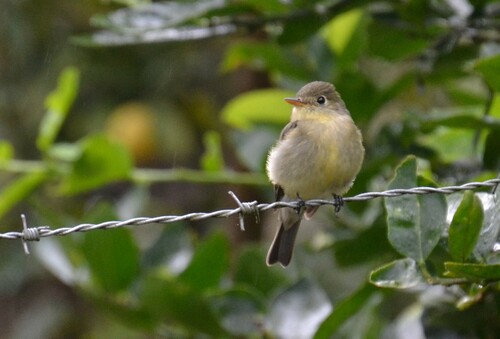
Eastern Wood-Pewee (Contopus virens) Eastern Wood-Pewee
Yellow-bellied Flycatcher (Empidonax flaviventris) Yellow-bellied Flycatcher

Media

Loading…

In short

The Eastern Wood-Pewee and Yellow-bellied Flycatcher can be tricky to distinguish, but key differences in habitat preference and vocalizations can help. The Eastern Wood-Pewee is more likely found in open woodlands, while the Yellow-bellied Flycatcher prefers dense, moist coniferous forests. Listen for the Eastern Wood-Pewee's distinctive 'pee-a-wee' song, which contrasts with the softer, less distinct calls of the Yellow-bellied Flycatcher.

Identification tips

  1. Habitat: Check the habitat; Eastern Wood-Pewees prefer open woodlands, while Yellow-bellied Flycatchers are in dense, moist forests. 2. Vocalizations: Listen for the Eastern Wood-Pewee's 'pee-a-wee' song. 3. Plumage: Look for the yellow wash on the belly of the Yellow-bellied Flycatcher. 4. Behavior: Note the perching habits; Eastern Wood-Pewees are more likely to be seen in the open.

Size

Both species are small flycatchers, but the Eastern Wood-Pewee is slightly larger and more slender compared to the compact Yellow-bellied Flycatcher.

Plumage

The Eastern Wood-Pewee has a more uniform grayish-olive plumage with less contrast, while the Yellow-bellied Flycatcher shows a more pronounced yellow wash on the belly and a slightly greener back.

Behaviour

Eastern Wood-Pewees often perch in the open, sallying out to catch insects, whereas Yellow-bellied Flycatchers are more reclusive, often staying within dense foliage.

Habitat

Eastern Wood-Pewees are found in a variety of wooded habitats, including deciduous and mixed forests, while Yellow-bellied Flycatchers are typically in cool, moist coniferous forests and bogs.

Voice

The Eastern Wood-Pewee's song is a clear, whistled 'pee-a-wee,' while the Yellow-bellied Flycatcher's call is softer and less distinct, often described as a 'chu-wee' or 'tse-bew.'

Submit a better description

Use the same sections as the comparison. Your text is published immediately.

The Eastern Wood-Pewee and Yellow-bellied Flycatcher can be tricky to distinguish, but key differences in habitat preference and vocalizations can help. The Eastern Wood-Pewee is more likely found in open woodlands, while the Yellow-bellied Flycatcher prefers dense, moist coniferous forests. Listen for the Eastern Wood-Pewee's distinctive 'pee-a-wee' song, which contrasts with the softer, less distinct calls of the Yellow-bellied Flycatcher.

  1. Habitat: Check the habitat; Eastern Wood-Pewees prefer open woodlands, while Yellow-bellied Flycatchers are in dense, moist forests. 2. Vocalizations: Listen for the Eastern Wood-Pewee's 'pee-a-wee' song. 3. Plumage: Look for the yellow wash on the belly of the Yellow-bellied Flycatcher. 4. Behavior: Note the perching habits; Eastern Wood-Pewees are more likely to be seen in the open.

Both species are small flycatchers, but the Eastern Wood-Pewee is slightly larger and more slender compared to the compact Yellow-bellied Flycatcher.

The Eastern Wood-Pewee has a more uniform grayish-olive plumage with less contrast, while the Yellow-bellied Flycatcher shows a more pronounced yellow wash on the belly and a slightly greener back.

Eastern Wood-Pewees often perch in the open, sallying out to catch insects, whereas Yellow-bellied Flycatchers are more reclusive, often staying within dense foliage.

Eastern Wood-Pewees are found in a variety of wooded habitats, including deciduous and mixed forests, while Yellow-bellied Flycatchers are typically in cool, moist coniferous forests and bogs.

The Eastern Wood-Pewee's song is a clear, whistled 'pee-a-wee,' while the Yellow-bellied Flycatcher's call is softer and less distinct, often described as a 'chu-wee' or 'tse-bew.'

Discard your changes?

You have unsaved edits. If you leave now, those changes will be lost.

Eastern Wood-Pewee · Yellow-bellied Flycatcher · My Tricky Birds