Birdr

Eastern Yellow-billed Hornbill vs Slender-billed Weaver

Tockus flavirostris versus Ploceus pelzelni

Play a quiz with Eastern Yellow-billed Hornbill and Slender-billed Weaver
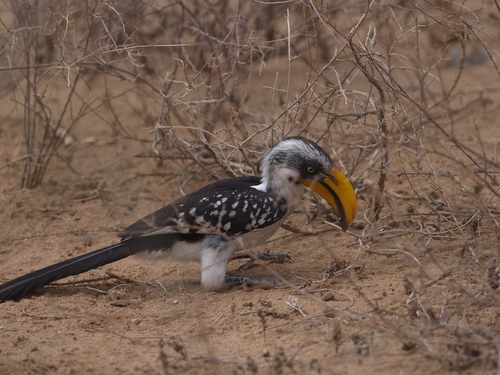
Eastern Yellow-billed Hornbill (Tockus flavirostris) Eastern Yellow-billed Hornbill
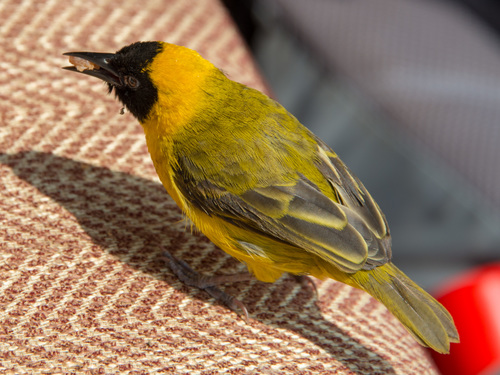
Slender-billed Weaver (Ploceus pelzelni) Slender-billed Weaver

Media

Loading…

In short

The Eastern Yellow-billed Hornbill and the Slender-billed Weaver are unlikely to be confused due to their distinct size and structural differences. The hornbill is much larger with a prominent yellow bill, while the weaver is smaller with a slender bill. Both species occupy different habitats, which can aid in identification.

Identification tips

  1. Size and Structure: Look for the large size and prominent yellow bill of the hornbill. 2. Habitat: Note the habitat; hornbills are in open woodlands, weavers near water. 3. Plumage: Hornbills have contrasting black and white plumage, while weavers are more uniform. 4. Behavior: Observe foraging behavior; hornbills are solitary or in pairs, weavers in flocks. 5. Vocalization: Listen for loud cackling of hornbills versus the softer chirps of weavers.

Size

The Eastern Yellow-billed Hornbill is significantly larger than the Slender-billed Weaver, with a robust body and long tail compared to the weaver's smaller, more compact form.

Plumage

The hornbill has a striking yellow bill and a mix of black, white, and grey plumage, whereas the weaver is generally more uniform in color, often with a yellowish or olive tone depending on the subspecies.

Behaviour

Hornbills are often seen foraging on the ground or in trees, using their large bills to manipulate food. Weavers are more likely to be seen weaving intricate nests and foraging in flocks.

Habitat

Eastern Yellow-billed Hornbills are typically found in dry savannas and open woodlands, while Slender-billed Weavers prefer wetlands and areas near water bodies.

Voice

The hornbill's calls are loud and raucous, often described as cackling, while the weaver's vocalizations are softer and more musical, consisting of chirps and trills.

Submit a better description

Use the same sections as the comparison. Your text is published immediately.

The Eastern Yellow-billed Hornbill and the Slender-billed Weaver are unlikely to be confused due to their distinct size and structural differences. The hornbill is much larger with a prominent yellow bill, while the weaver is smaller with a slender bill. Both species occupy different habitats, which can aid in identification.

  1. Size and Structure: Look for the large size and prominent yellow bill of the hornbill. 2. Habitat: Note the habitat; hornbills are in open woodlands, weavers near water. 3. Plumage: Hornbills have contrasting black and white plumage, while weavers are more uniform. 4. Behavior: Observe foraging behavior; hornbills are solitary or in pairs, weavers in flocks. 5. Vocalization: Listen for loud cackling of hornbills versus the softer chirps of weavers.

The Eastern Yellow-billed Hornbill is significantly larger than the Slender-billed Weaver, with a robust body and long tail compared to the weaver's smaller, more compact form.

The hornbill has a striking yellow bill and a mix of black, white, and grey plumage, whereas the weaver is generally more uniform in color, often with a yellowish or olive tone depending on the subspecies.

Hornbills are often seen foraging on the ground or in trees, using their large bills to manipulate food. Weavers are more likely to be seen weaving intricate nests and foraging in flocks.

Eastern Yellow-billed Hornbills are typically found in dry savannas and open woodlands, while Slender-billed Weavers prefer wetlands and areas near water bodies.

The hornbill's calls are loud and raucous, often described as cackling, while the weaver's vocalizations are softer and more musical, consisting of chirps and trills.

Discard your changes?

You have unsaved edits. If you leave now, those changes will be lost.

Eastern Yellow-billed Hornbill · Slender-billed Weaver · My Tricky Birds