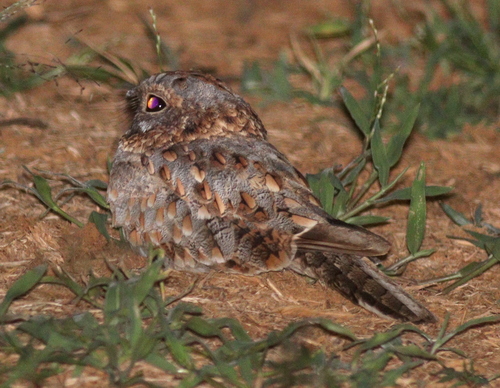
Egyptian Nightjar vs Nubian Nightjar
Caprimulgus aegyptius versus Caprimulgus nubicus
Play a quiz with Egyptian Nightjar and Nubian Nightjar
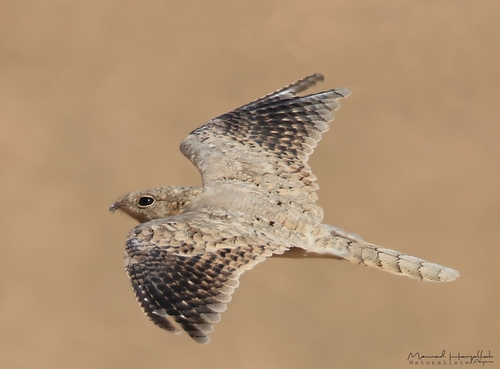
Egyptian Nightjar
Nubian Nightjar
In short
The Egyptian Nightjar and Nubian Nightjar are similar in appearance, but key differences in plumage and habitat preferences can aid identification. The Egyptian Nightjar tends to have a paler overall appearance compared to the Nubian Nightjar, which often shows warmer, more rufous tones.
Identification tips
- Plumage tone: Look for the paler, grayer tones of the Egyptian Nightjar versus the warmer, rufous tones of the Nubian Nightjar.
- Habitat: Consider the habitat; Egyptian Nightjars prefer more open areas, while Nubian Nightjars may be found in slightly more vegetated regions.
- Behavior: Note any use of torpor in cooler conditions, which is more characteristic of Nubian Nightjars.
Size
Both species are similar in size, typical of nightjars, with no significant differences in structure that are easily observable in the field.
Plumage
The Egyptian Nightjar is generally paler with more grayish tones, while the Nubian Nightjar has warmer, more rufous plumage. Look for the Egyptian Nightjar's less distinct patterning compared to the Nubian Nightjar's more pronounced markings.
Behaviour
Both species are nocturnal and feed on flying insects. The Nubian Nightjar is known to use torpor on cold nights, a behavior not specifically noted for the Egyptian Nightjar.
Habitat
The Egyptian Nightjar is often found in more open, arid environments, while the Nubian Nightjar can be found in similar habitats but may also inhabit areas with more vegetation.
Voice
Vocalizations are not well-documented for both species, but any differences in calls could be a useful field mark if heard.