Egyptian Nightjar vs Savanna Nightjar
Caprimulgus aegyptius versus Caprimulgus affinis
Play a quiz with Egyptian Nightjar and Savanna Nightjar
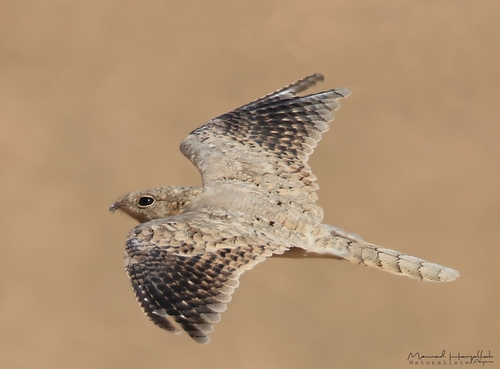
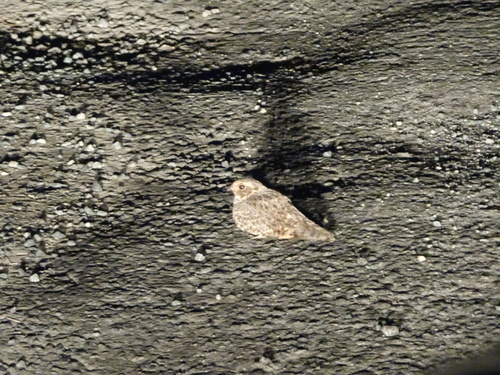
Egyptian Nightjar
Savanna Nightjar
In short
The Egyptian Nightjar and Savanna Nightjar can be distinguished primarily by their habitat preferences and vocalizations. The Egyptian Nightjar is typically found in arid, desert environments, while the Savanna Nightjar prefers open grasslands and savannas. Their calls also differ, which can be a helpful identification aid when visual cues are insufficient.
Identification tips
- Habitat: Check the environment; Egyptian Nightjars are in deserts, Savanna Nightjars in grasslands. 2. Vocalization: Listen for the call; Egyptian Nightjars have a soft 'coo', Savanna Nightjars have a more complex song. 3. Plumage: Note the coloration; Egyptian Nightjars are paler and sandier, Savanna Nightjars darker and more mottled.
Size
Both species are similar in size, typical of nightjars, with no significant differences noted in field guides.
Plumage
Plumage is generally similar, with both species exhibiting cryptic coloration suited to their respective habitats. The Egyptian Nightjar tends to have a paler, sandier appearance, while the Savanna Nightjar may appear slightly darker and more mottled.
Behaviour
Both species are nocturnal and exhibit similar behaviors such as ground nesting and aerial insect hunting. Behavioral differences are subtle and not typically useful for field identification.
Habitat
The Egyptian Nightjar is found in arid, desert regions, often near water sources, whereas the Savanna Nightjar inhabits open grasslands and savannas, sometimes near human settlements.
Voice
The Egyptian Nightjar's call is a soft, repetitive 'cooing' sound, while the Savanna Nightjar has a more varied and complex song, often described as a series of whistles and trills.