Birdr

Eurasian Bittern vs Dwarf Bittern

Botaurus stellaris versus Botaurus sturmii

Play a quiz with Eurasian Bittern and Dwarf Bittern

Eurasian Bittern (Botaurus stellaris) Eurasian Bittern
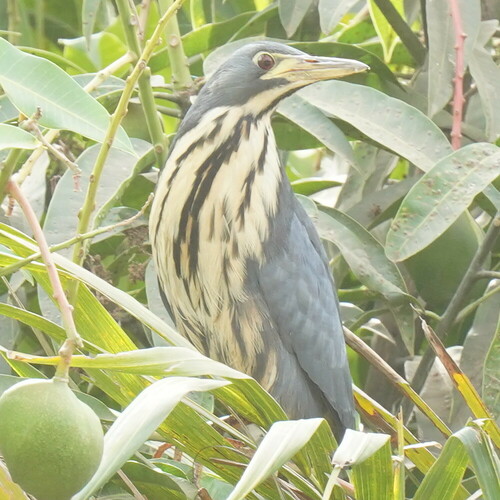
Dwarf Bittern (Botaurus sturmii) Dwarf Bittern

Media

Loading…

In short

The Eurasian Bittern and Dwarf Bittern are both members of the Ardeidae family, but they differ significantly in size and habitat preference. The Eurasian Bittern is much larger and more often found in extensive reed beds, while the Dwarf Bittern is smaller and prefers more varied wetland habitats.

Identification tips

  1. Size: Look for the larger size of the Eurasian Bittern. 2. Habitat: Note the habitat; Eurasian Bitterns prefer dense reed beds, while Dwarf Bitterns are in varied wetlands. 3. Vocalization: Listen for the Eurasian Bittern's booming call during the breeding season. 4. Plumage: Check for the heavier streaking and more robust appearance of the Eurasian Bittern.

Size

The Eurasian Bittern is significantly larger than the Dwarf Bittern, making size a reliable field mark when both species are seen together.

Plumage

Both species have cryptic plumage with streaks and mottling, but the Eurasian Bittern generally appears more robust and has a more pronounced pattern. The Dwarf Bittern is smaller with a more uniform appearance and lacks the heavy streaking of the Eurasian Bittern.

Behaviour

Eurasian Bitterns are known for their secretive behavior, often remaining hidden in dense reeds, while Dwarf Bitterns may be more visible in open wetland areas.

Habitat

Eurasian Bitterns are typically found in large reed beds and marshes, whereas Dwarf Bitterns inhabit a wider range of wetland environments, including smaller marshes and even temporary pools.

Voice

The Eurasian Bittern is famous for its deep, booming call, especially during the breeding season, while the Dwarf Bittern's vocalizations are less well-documented but are not known to include such a distinctive sound.

Submit a better description

Use the same sections as the comparison. Your text is published immediately.

The Eurasian Bittern and Dwarf Bittern are both members of the Ardeidae family, but they differ significantly in size and habitat preference. The Eurasian Bittern is much larger and more often found in extensive reed beds, while the Dwarf Bittern is smaller and prefers more varied wetland habitats.

  1. Size: Look for the larger size of the Eurasian Bittern. 2. Habitat: Note the habitat; Eurasian Bitterns prefer dense reed beds, while Dwarf Bitterns are in varied wetlands. 3. Vocalization: Listen for the Eurasian Bittern's booming call during the breeding season. 4. Plumage: Check for the heavier streaking and more robust appearance of the Eurasian Bittern.

The Eurasian Bittern is significantly larger than the Dwarf Bittern, making size a reliable field mark when both species are seen together.

Both species have cryptic plumage with streaks and mottling, but the Eurasian Bittern generally appears more robust and has a more pronounced pattern. The Dwarf Bittern is smaller with a more uniform appearance and lacks the heavy streaking of the Eurasian Bittern.

Eurasian Bitterns are known for their secretive behavior, often remaining hidden in dense reeds, while Dwarf Bitterns may be more visible in open wetland areas.

Eurasian Bitterns are typically found in large reed beds and marshes, whereas Dwarf Bitterns inhabit a wider range of wetland environments, including smaller marshes and even temporary pools.

The Eurasian Bittern is famous for its deep, booming call, especially during the breeding season, while the Dwarf Bittern's vocalizations are less well-documented but are not known to include such a distinctive sound.

Discard your changes?

You have unsaved edits. If you leave now, those changes will be lost.

Eurasian Bittern · Dwarf Bittern · My Tricky Birds