
Eurasian Bittern vs Least Bittern
Botaurus stellaris versus Botaurus exilis
Play a quiz with Eurasian Bittern and Least Bittern
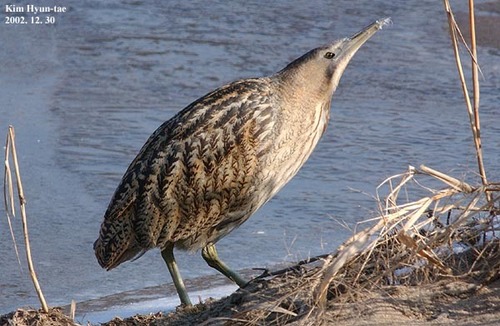
Eurasian Bittern
Least Bittern
In short
The Eurasian Bittern and Least Bittern are both members of the heron family, but differ significantly in size and habitat preference. The Eurasian Bittern is much larger and more robust, while the Least Bittern is smaller and more agile, often found in dense marsh vegetation.
Identification tips
- Size: Look for the large size of the Eurasian Bittern compared to the small, sparrow-sized Least Bittern. 2. Plumage: Note the contrasting black and chestnut colors of the Least Bittern versus the mottled brown of the Eurasian Bittern. 3. Habitat: Eurasian Bitterns are in large reedbeds, while Least Bitterns prefer dense marshes. 4. Behavior: Least Bitterns may be seen flying weakly over marshes; Eurasian Bitterns are more likely to stay hidden. 5. Vocalization: Listen for the booming call of the Eurasian Bittern, which is absent in the Least Bittern.
Size
The Eurasian Bittern is significantly larger, roughly the size of a large heron, whereas the Least Bittern is much smaller, about the size of a sparrow.
Plumage
Eurasian Bitterns have a mottled brown and buff plumage with a more uniform appearance, while Least Bitterns display a more striking contrast with a black crown and back, and chestnut wings.
Behaviour
Eurasian Bitterns are more secretive and often remain hidden in reeds, whereas Least Bitterns are more likely to be seen moving through vegetation or flying weakly over marshes.
Habitat
Eurasian Bitterns prefer large reedbeds in freshwater wetlands, while Least Bitterns are found in smaller, dense marshes with emergent vegetation.
Voice
Eurasian Bitterns are known for their distinctive booming calls, especially during the breeding season, whereas Least Bitterns have a softer, more subtle call.