
Eurasian Blackcap vs Common Whitethroat
Sylvia atricapilla versus Curruca communis
Play a quiz with Eurasian Blackcap and Common Whitethroat
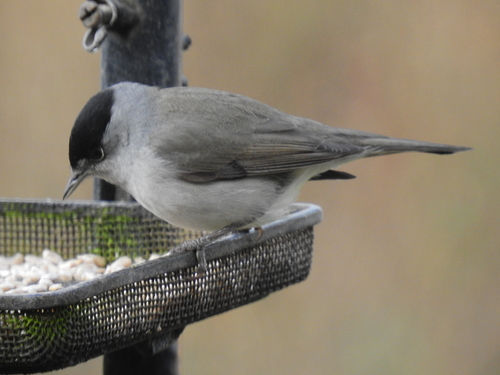 Eurasian Blackcap
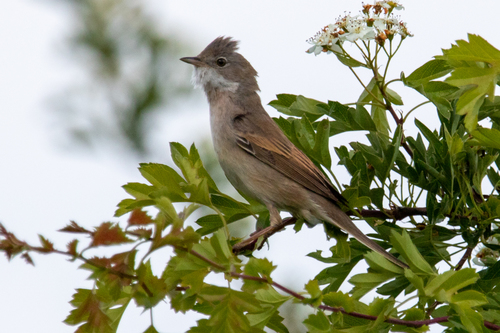 Common Whitethroat
In short
The most reliable field mark between Eurasian Blackcap and Common Whitethroat is the head pattern: blackcaps show a sharply defined cap (black in adult males, chestnut in females and juveniles), while whitethroats never have a cap, instead showing a plain or grey head with a contrasting white throat. Juvenile and female blackcaps can be confused with female whitethroats, but the cap (even if brownish) and overall greyer tones of blackcap are distinctive. Whitethroats are browner above, with chestnut edges to the wings and a clear white throat. In flight or at rest, blackcaps appear more compact and heavier-billed, while whitethroats are slimmer and lighter. Both species are common and may overlap in habitat, but their structure and head patterns remain the best field clues.
Identification tips
- Cap vs. no cap: Blackcap (all ages/sexes) shows a distinct cap (black in adult males, chestnut in females/juveniles). Whitethroat never shows a cap—look for a plain or grey head.
- White throat: Whitethroat (all ages) has a clear, bright white throat contrasting with the head and breast. Blackcap's throat is pale grey to silvery, but never sharply white or contrasting.
- Head color in males: Blackcap male has a black cap on a grey head; whitethroat male has a grey head with no cap and a white throat.
- Female/juvenile confusion: Female and young blackcaps have a chestnut or brownish cap; female whitethroats have a plain brown head with no cap. If you see any cap, it's a blackcap.
- Upperparts: Blackcap is olive-grey above (greyer in males, browner in females/juveniles); whitethroat is brown above with chestnut fringes on the wing feathers.
- Underparts: Blackcap is pale grey below, sometimes silvery on the throat; whitethroat is buff below, with a white throat and less contrast on the breast.
- Bill structure: Blackcap has a heavier, more robust bill; whitethroat's bill is finer and more delicate.
- Overall shape: Blackcap appears more compact and robust; whitethroat is slimmer and more upright, especially when perched.
- Tail and wing edges: Whitethroat shows chestnut fringes on the wing feathers (especially fresh plumage); blackcap's wings and tail are more uniformly grey-olive.
- Behavior: Whitethroat is more likely to perch in the open, flicking tail and wings; blackcap is more skulking, often within dense cover.
- Song: Blackcap's song is rich and fluting; whitethroat's is scratchy and scolding. Use song for quick separation in spring/summer.
- Call: Whitethroat's call is a rough 'wed-wed' or 'woid-woid'; blackcap's is a hard 'tac' or 'teck'. Calls can be tricky but are different with experience.
- Habitat: If in dense woodland or shaded undergrowth, blackcap is more likely; open bramble or scrub favors whitethroat.
- Size: Blackcap is slightly larger and heavier, but this is subtle and best used as supporting evidence.
- Juvenile confusion: Juvenile blackcaps may look rufous-tinged but still show a cap; juvenile whitethroats are browner above, with a white throat and no cap. Always check for the presence or absence of a cap in young birds.
Size
Eurasian Blackcap is slightly larger and heavier than Common Whitethroat, with an average body mass of 18.1 g versus 14.5 g. In the field, this difference is subtle but blackcap often appears more robust and compact, while whitethroat is slimmer and more delicate. Both are small warblers, but the blackcap's slightly stouter build and heavier bill can be apparent with good views.
Plumage
-
Juvenile/First-year birds: Juvenile blackcaps resemble adult females but have a brownish cap (darker in young males), olive-grey upperparts with a slight rufous tinge, and more olive on the breast and flanks. Whitethroat juveniles lack any cap, are brown above with buff underparts, and show chestnut fringes on the wing feathers. The white throat is usually apparent even in young whitethroats, while blackcaps never show a sharply white throat patch.
-
Adult males: Blackcap males are olive-grey above with a neat black cap and pale grey underparts, becoming silvery white on the chin and throat. Whitethroat males are brown above, with a grey head (not capped), a very white throat, and chestnut-edged wings. The contrast between the grey head and white throat is strong in whitethroat males, but the lack of a cap is key.
-
Adult females: Female blackcaps have a chestnut (not black) cap and a browner tinge to the grey upperparts. Female whitethroats lack a cap, have a plain brown head, and a duller white throat. Both can look similar in overall tone, but the presence or absence of a cap is diagnostic.
-
Flight/wing pattern: No distinctive wing or tail pattern is noted for either species in flight, but the chestnut edges to the wing feathers in whitethroat can be seen at close range. Blackcap's wings and tail are more uniformly grey-olive.
Behaviour
Both species are active, but blackcap tends to move more deliberately and often stays within dense cover, occasionally flitting out to sing. Whitethroat is more restless, frequently flicking its tail and wings, and is more likely to perch openly on top of bushes or brambles, especially when singing. Blackcap males may display by raising their crown feathers and fluffing the tail, while whitethroat males often sing from exposed perches with a more upright stance.
Habitat
Both species are widespread and can occur in overlapping habitats such as scrub, woodland edge, and hedgerows. Blackcap is more often found in denser undergrowth or woodland, while whitethroat prefers open scrub, bramble patches, and rough grassland with scattered bushes. In areas with both, blackcap is more likely to be heard or seen within shaded cover, while whitethroat is more likely to be seen in the open.
Voice
Blackcap's song is rich, warbling, and melodic, often compared to a blackbird in miniature, with clear, fluting notes. Whitethroat's song is faster, scratchier, and more scolding, with a hoarse, slightly nasal quality. The whitethroat's call is a rough 'wed-wed' or 'woid-woid', while blackcap's call is a hard 'tac' or 'teck'. In the field, the difference in song quality is usually obvious, but calls can be more confusing.