Birdr

Eurasian Bullfinch vs Trumpeter Finch

Pyrrhula pyrrhula versus Bucanetes githagineus

Play a quiz with Eurasian Bullfinch and Trumpeter Finch

Eurasian Bullfinch (Pyrrhula pyrrhula) Eurasian Bullfinch
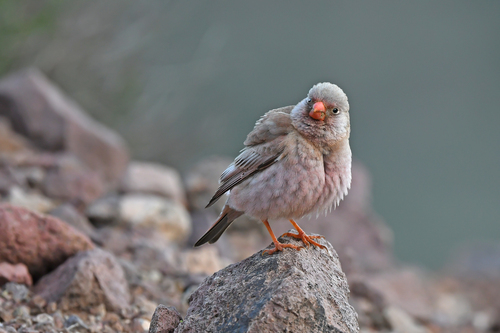
Trumpeter Finch (Bucanetes githagineus) Trumpeter Finch

Media

Loading…

In short

The most reliable field mark between Eurasian Bullfinch and Trumpeter Finch is the bullfinch’s bold white rump and wing bars, especially obvious in flight for all ages, versus the trumpeter finch’s lack of such contrasting wing or rump pattern. Juvenile and female bullfinches can be confusing due to their subdued colors, but the bullfinch is always bulkier, with a thick neck and a black cap (adults) or greyish-brown head (juveniles), while trumpeter finch is slimmer, longer-winged, and shows a pinkish wash on rump and tail in males. Bill color is also a strong clue: bullfinch bills are always dark, while trumpeter finch males have a red bill in summer. Habitat and context are helpful: bullfinch prefers woodland and gardens, trumpeter finch is a bird of open, arid country.

Identification tips

  1. White rump and wing bars (all ages, especially in flight): Eurasian Bullfinch always shows a bold white rump and white wing bars, easily seen when the bird flies. Trumpeter Finch never shows white in the wings or rump; its rump and tail are pinkish in males, but never white.
  2. Bill color (adult males, breeding season): Trumpeter Finch males have a bright red bill in summer, while bullfinch bills are always dark and stubby. In females and juveniles, both species have thick bills, but bullfinch’s is blackish, trumpeter finch’s is pale or horn-colored outside breeding season.
  3. Head pattern: Adult bullfinch has a black cap and face, a strong mark even on dull females; juveniles have a grey-brown head. Trumpeter Finch has a plain grey head and neck in males, never a black cap.
  4. Body shape and jizz: Bullfinch is bulky, bull-necked, and thickset, with a short neck and heavy body. Trumpeter Finch is smaller, slimmer, and more long-winged, with a less bull-headed look.
  5. Underpart color (adult males): Bullfinch males have rich red underparts, while trumpeter finch males are pinkish on breast, rump, and tail. Females and juveniles of both are duller, but bullfinch is always more uniform and lacks the pinkish rump.
  6. Tail pattern: Trumpeter Finch has a pink tail with dark terminal feathers (males), but no white. Bullfinch has a black tail, but the white rump is more obvious.
  7. Habitat context: Bullfinch is found in woodland, parks, and gardens, rarely in open country. Trumpeter Finch is a bird of deserts, dry fields, and open rocky areas.
  8. Flock size and behavior: Trumpeter Finch often forms flocks, especially outside breeding season, and may mix with other finches and sparrows. Bullfinch is usually in pairs or small family groups.
  9. Vocalization: Bullfinch’s call is a soft, mournful whistle, while trumpeter finch gives a buzzing, nasal trill, very different in tone.
  10. Sex and age pitfalls: Female and juvenile bullfinches are dull and can be confused with pale trumpeter finches, but always check for white in the wings and rump. Trumpeter Finch females and immatures are very washed-out, but never show white in the wings or rump.
  11. Bill structure: Both have thick, conical bills, but bullfinch’s is shorter and stubbier; trumpeter finch’s is very thick at the base but may look longer due to the smaller head.
  12. Cap color in juveniles: Juvenile bullfinches have a greyish-brown head, lacking the adult’s black cap but still different from the plain grey of trumpeter finch.
  13. Seasonal changes: Bullfinch males do not acquire a duller autumn plumage; their red underparts remain vivid. Trumpeter Finch males are brightest in summer, duller in winter.
  14. Geographic context: Trumpeter Finch is a vagrant north of its range; in most of Europe, bullfinch is the default. In southern Spain or North Africa, trumpeter finch is more likely in open country.
  15. Mixed flocks: If observed in a mixed flock with linnets or Spanish sparrows in arid habitat, trumpeter finch is likely; bullfinch rarely joins mixed flocks.

Size

Eurasian Bullfinch is noticeably heavier (body mass ~31 g [wikidata]) and bulkier than the Trumpeter Finch, which is a smaller, more delicate bird (no direct mass given, but described as small and long-winged [wikipedia]). Bullfinch has a thick neck and a bull-headed appearance, while trumpeter finch is more slender with proportionally longer wings and a smaller overall impression.

Plumage

Juvenile and female Eurasian Bullfinches have grey-buff underparts and lack the adult male’s rich red, but all ages show a striking white rump and bold white wing bars in flight. The adult bullfinch male is unmistakable with its vivid red underparts, but females and young can be confused with trumpeter finch due to their duller tones. Trumpeter Finch males in summer have a red bill, grey head/neck, pale brown upperparts, and pinkish breast, rump, and tail (with dark tail tips). Females, juveniles, and winter males are much paler and washed-out, but still lack any white in the wings or rump. The trumpeter finch’s pinkish rump and tail (males) can be a pitfall, but the absence of white is key. Bullfinch adults have a black cap and face, while trumpeter finch never does; juveniles bullfinch have a grey-brown head. In all plumages, the bullfinch’s white wing bar and rump are diagnostic in flight.

Behaviour

Bullfinches are generally unobtrusive, often moving quietly in pairs or small groups through woodland or gardens, rarely forming large flocks. Trumpeter Finches are more likely to be seen in open, arid areas, sometimes in flocks (especially outside breeding season), and may travel long distances to water in the evening. Trumpeter Finches can form mixed flocks with other finches and sparrows, while bullfinch is more solitary or in tight family groups.

Habitat

Eurasian Bullfinch is a bird of woodland, parks, and gardens, rarely found in open country. Trumpeter Finch is a specialist of deserts and arid open habitats, from North Africa and Spain to southern Asia. If you see the bird in a lush, wooded area, bullfinch is far more likely; in dry, stony, open country, trumpeter finch should be expected.

Voice

Bullfinch gives a quiet, low, melancholy whistled 'peeu' or 'pew', and its song is a weak, scratchy warbling with soft whistles, audible only at close range and often described as mournful. Trumpeter Finch’s song is a buzzing, nasal trill, reminiscent of a tin trumpet, and is much more mechanical and less musical than the bullfinch’s soft whistles.

Submit a better description

Use the same sections as the comparison. Your text is published immediately.

The most reliable field mark between Eurasian Bullfinch and Trumpeter Finch is the bullfinch’s bold white rump and wing bars, especially obvious in flight for all ages, versus the trumpeter finch’s lack of such contrasting wing or rump pattern. Juvenile and female bullfinches can be confusing due to their subdued colors, but the bullfinch is always bulkier, with a thick neck and a black cap (adults) or greyish-brown head (juveniles), while trumpeter finch is slimmer, longer-winged, and shows a pinkish wash on rump and tail in males. Bill color is also a strong clue: bullfinch bills are always dark, while trumpeter finch males have a red bill in summer. Habitat and context are helpful: bullfinch prefers woodland and gardens, trumpeter finch is a bird of open, arid country.

  1. White rump and wing bars (all ages, especially in flight): Eurasian Bullfinch always shows a bold white rump and white wing bars, easily seen when the bird flies. Trumpeter Finch never shows white in the wings or rump; its rump and tail are pinkish in males, but never white.
  2. Bill color (adult males, breeding season): Trumpeter Finch males have a bright red bill in summer, while bullfinch bills are always dark and stubby. In females and juveniles, both species have thick bills, but bullfinch’s is blackish, trumpeter finch’s is pale or horn-colored outside breeding season.
  3. Head pattern: Adult bullfinch has a black cap and face, a strong mark even on dull females; juveniles have a grey-brown head. Trumpeter Finch has a plain grey head and neck in males, never a black cap.
  4. Body shape and jizz: Bullfinch is bulky, bull-necked, and thickset, with a short neck and heavy body. Trumpeter Finch is smaller, slimmer, and more long-winged, with a less bull-headed look.
  5. Underpart color (adult males): Bullfinch males have rich red underparts, while trumpeter finch males are pinkish on breast, rump, and tail. Females and juveniles of both are duller, but bullfinch is always more uniform and lacks the pinkish rump.
  6. Tail pattern: Trumpeter Finch has a pink tail with dark terminal feathers (males), but no white. Bullfinch has a black tail, but the white rump is more obvious.
  7. Habitat context: Bullfinch is found in woodland, parks, and gardens, rarely in open country. Trumpeter Finch is a bird of deserts, dry fields, and open rocky areas.
  8. Flock size and behavior: Trumpeter Finch often forms flocks, especially outside breeding season, and may mix with other finches and sparrows. Bullfinch is usually in pairs or small family groups.
  9. Vocalization: Bullfinch’s call is a soft, mournful whistle, while trumpeter finch gives a buzzing, nasal trill, very different in tone.
  10. Sex and age pitfalls: Female and juvenile bullfinches are dull and can be confused with pale trumpeter finches, but always check for white in the wings and rump. Trumpeter Finch females and immatures are very washed-out, but never show white in the wings or rump.
  11. Bill structure: Both have thick, conical bills, but bullfinch’s is shorter and stubbier; trumpeter finch’s is very thick at the base but may look longer due to the smaller head.
  12. Cap color in juveniles: Juvenile bullfinches have a greyish-brown head, lacking the adult’s black cap but still different from the plain grey of trumpeter finch.
  13. Seasonal changes: Bullfinch males do not acquire a duller autumn plumage; their red underparts remain vivid. Trumpeter Finch males are brightest in summer, duller in winter.
  14. Geographic context: Trumpeter Finch is a vagrant north of its range; in most of Europe, bullfinch is the default. In southern Spain or North Africa, trumpeter finch is more likely in open country.
  15. Mixed flocks: If observed in a mixed flock with linnets or Spanish sparrows in arid habitat, trumpeter finch is likely; bullfinch rarely joins mixed flocks.

Eurasian Bullfinch is noticeably heavier (body mass ~31 g [wikidata]) and bulkier than the Trumpeter Finch, which is a smaller, more delicate bird (no direct mass given, but described as small and long-winged [wikipedia]). Bullfinch has a thick neck and a bull-headed appearance, while trumpeter finch is more slender with proportionally longer wings and a smaller overall impression.

Juvenile and female Eurasian Bullfinches have grey-buff underparts and lack the adult male’s rich red, but all ages show a striking white rump and bold white wing bars in flight. The adult bullfinch male is unmistakable with its vivid red underparts, but females and young can be confused with trumpeter finch due to their duller tones. Trumpeter Finch males in summer have a red bill, grey head/neck, pale brown upperparts, and pinkish breast, rump, and tail (with dark tail tips). Females, juveniles, and winter males are much paler and washed-out, but still lack any white in the wings or rump. The trumpeter finch’s pinkish rump and tail (males) can be a pitfall, but the absence of white is key. Bullfinch adults have a black cap and face, while trumpeter finch never does; juveniles bullfinch have a grey-brown head. In all plumages, the bullfinch’s white wing bar and rump are diagnostic in flight.

Bullfinches are generally unobtrusive, often moving quietly in pairs or small groups through woodland or gardens, rarely forming large flocks. Trumpeter Finches are more likely to be seen in open, arid areas, sometimes in flocks (especially outside breeding season), and may travel long distances to water in the evening. Trumpeter Finches can form mixed flocks with other finches and sparrows, while bullfinch is more solitary or in tight family groups.

Eurasian Bullfinch is a bird of woodland, parks, and gardens, rarely found in open country. Trumpeter Finch is a specialist of deserts and arid open habitats, from North Africa and Spain to southern Asia. If you see the bird in a lush, wooded area, bullfinch is far more likely; in dry, stony, open country, trumpeter finch should be expected.

Bullfinch gives a quiet, low, melancholy whistled 'peeu' or 'pew', and its song is a weak, scratchy warbling with soft whistles, audible only at close range and often described as mournful. Trumpeter Finch’s song is a buzzing, nasal trill, reminiscent of a tin trumpet, and is much more mechanical and less musical than the bullfinch’s soft whistles.

Discard your changes?

You have unsaved edits. If you leave now, those changes will be lost.

Eurasian Bullfinch · Trumpeter Finch · My Tricky Birds