Birdr

Eurasian Curlew vs Common Snipe

Numenius arquata versus Gallinago gallinago

Play a quiz with Eurasian Curlew and Common Snipe
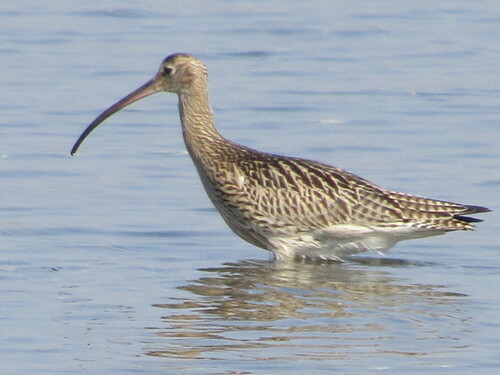
Eurasian Curlew (Numenius arquata) Eurasian Curlew
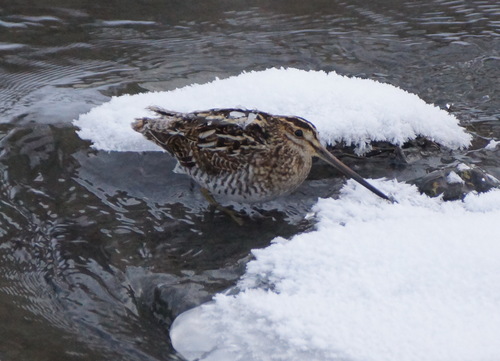
Common Snipe (Gallinago gallinago) Common Snipe

Media

Loading…

In short

The Eurasian Curlew and Common Snipe are both waders but differ significantly in size and bill shape. The Curlew is much larger with a long, decurved bill, while the Snipe is smaller with a straight, shorter bill. These differences are the most reliable for identification in the field.

Identification tips

  1. Size and Bill Shape: Look for the large size and long, down-curved bill of the Curlew versus the smaller size and straight bill of the Snipe. 2. Plumage Patterns: Note the bold stripes on the Snipe's back and head. 3. Habitat: Consider the habitat; Curlews in open areas, Snipes in marshy, vegetated areas. 4. Vocalizations: Listen for the Curlew's 'cur-lee' call and the Snipe's 'chipper' call or drumming display.

Size

The Eurasian Curlew is significantly larger than the Common Snipe, making size a key differentiator when both species are observed together.

Plumage

Both species have cryptic brown plumage, but the Curlew has a more uniform brown with less patterning, while the Snipe displays bold stripes and bars, especially on the back and head.

Behaviour

Curlews are often seen in open mudflats or fields, walking slowly, while Snipes are more secretive, often flushing from cover with a zigzag flight.

Habitat

Curlews prefer open coastal mudflats and estuaries, whereas Snipes are typically found in marshes, wet meadows, and bogs.

Voice

The Curlew's call is a distinctive, haunting 'cur-lee' sound, while the Snipe's call is a sharp, repetitive 'chipper' sound. The Snipe also performs a 'drumming' display flight, producing a unique sound with its tail feathers.

Submit a better description

Use the same sections as the comparison. Your text is published immediately.

The Eurasian Curlew and Common Snipe are both waders but differ significantly in size and bill shape. The Curlew is much larger with a long, decurved bill, while the Snipe is smaller with a straight, shorter bill. These differences are the most reliable for identification in the field.

  1. Size and Bill Shape: Look for the large size and long, down-curved bill of the Curlew versus the smaller size and straight bill of the Snipe. 2. Plumage Patterns: Note the bold stripes on the Snipe's back and head. 3. Habitat: Consider the habitat; Curlews in open areas, Snipes in marshy, vegetated areas. 4. Vocalizations: Listen for the Curlew's 'cur-lee' call and the Snipe's 'chipper' call or drumming display.

The Eurasian Curlew is significantly larger than the Common Snipe, making size a key differentiator when both species are observed together.

Both species have cryptic brown plumage, but the Curlew has a more uniform brown with less patterning, while the Snipe displays bold stripes and bars, especially on the back and head.

Curlews are often seen in open mudflats or fields, walking slowly, while Snipes are more secretive, often flushing from cover with a zigzag flight.

Curlews prefer open coastal mudflats and estuaries, whereas Snipes are typically found in marshes, wet meadows, and bogs.

The Curlew's call is a distinctive, haunting 'cur-lee' sound, while the Snipe's call is a sharp, repetitive 'chipper' sound. The Snipe also performs a 'drumming' display flight, producing a unique sound with its tail feathers.

Discard your changes?

You have unsaved edits. If you leave now, those changes will be lost.

Eurasian Curlew · Common Snipe · My Tricky Birds