Birdr

Eurasian Goshawk vs Common Buzzard

Astur gentilis versus Buteo buteo

Play a quiz with Eurasian Goshawk and Common Buzzard
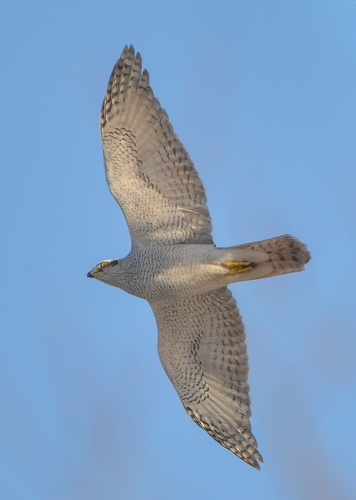
Eurasian Goshawk (Astur gentilis) Eurasian Goshawk
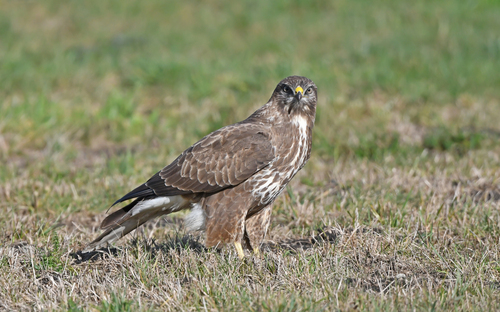
Common Buzzard (Buteo buteo) Common Buzzard

Media

Loading…

In short

The most reliable field mark between Eurasian Goshawk and Common Buzzard, especially in flight, is structural: Goshawk shows longer, more pointed wings and a longer tail, while Buzzard is broader-winged and shorter-tailed, with a slower, lazier flight. Juvenile Goshawks can be confused with Buzzards, but Goshawks always show a strong white supercilium (eyebrow) and more deliberate, powerful wingbeats. Buzzards are extremely variable in plumage but never have the Goshawk's combination of a long tail, broad white supercilium, and deep, rowing flight action. Use flight style, tail shape, and head pattern as your primary clues, especially for immatures.

Identification tips

  1. Tail shape and length: Goshawk has a noticeably longer, more squared-off tail, especially obvious in flight or when perched; Buzzard's tail is shorter and more rounded. This is reliable for all ages.
  2. Wing shape: Goshawk's wings are longer, more pointed, and less broad than Buzzard's, which are broad and rounded. In flight, Buzzard looks more 'chunky' and Goshawk more 'athletic'.
  3. White supercilium (eyebrow): Goshawk of all ages shows a bold white supercilium, especially striking in juveniles and adults. Buzzard never shows this feature; its head is more uniformly brown or streaked.
  4. Flight style: Goshawk uses deep, powerful, deliberate wingbeats and can soar steadily; Buzzard's flight is slower, lazier, and more buoyant, often with wings held in a shallow 'V'. Both do 'flap-flap-glide', but Goshawk's is more forceful.
  5. Plumage variability: Buzzard is extremely variable, from very pale to very dark, sometimes confusingly so, but never shows the crisp barring or white eyebrow of Goshawk. Goshawk juveniles are brown above with bold streaking below; Buzzard juveniles can be similarly brown but lack the strong head pattern.
  6. Tail barring: Both have barred tails, but Goshawk's bars are usually sharper and more evenly spaced; Buzzard's may be less distinct, and the tail is shorter.
  7. Underpart pattern: Goshawk adults show fine, even barring below; juveniles are streaked. Buzzard underparts are highly variable, often with a pale crescent or belly, but never the even barring of adult Goshawk.
  8. Bill and feet: Goshawk has a relatively larger bill and thicker toes, but this is hard to see unless very close.
  9. Perched posture: Goshawk appears longer-bodied and more upright, with a long tail hanging below the perch; Buzzard is more compact and often appears hunched.
  10. Habitat context: Goshawk is rarely seen in open country; Buzzard is common in open fields, moorland, and farmland. If the bird is in deep forest, suspect Goshawk.
  11. Eye color: Goshawk juveniles have pale yellow eyes, adults orange to ochre; Buzzard's eye color is less distinctive in the field.
  12. Moult and feather gaps: Goshawk females may show wing gaps during moult (late spring/summer), but this is rarely diagnostic in the field.
  13. Abundance and behavior: Buzzard is much more likely to be seen in most open-country situations across Europe; Goshawk is scarce and secretive.
  14. Confusion risk: Juvenile Goshawks are most often confused with Buzzards, especially in flight. Always check for the white supercilium and tail length.
  15. When in doubt: If the bird looks 'chunky', broad-winged, with a short tail and no white eyebrow, it's almost certainly a Buzzard. If it looks long-tailed, athletic, with a bold white eyebrow and deep, rowing wingbeats, it's a Goshawk.

Size

Both species are similar in mass (Goshawk: 926g, Buzzard: 878g), but Goshawk is bulkier and more powerfully built, with a longer body and longer tail relative to wing length. Buzzard is more compact and stocky, with broader wings and a shorter, less prominent tail. In the field, Goshawk appears more athletic and agile, while Buzzard looks heavier-bodied and more sluggish, especially when perched.

Plumage

Juvenile Goshawks are brown above with variable, often bold dark streaking below, and always show a barred tail (3–5 dark bars) and a strong white supercilium. Their underparts can range from nearly white to heavily marked, but never show the rusty tones of some other hawks. Juvenile Buzzards are highly variable, from very pale to dark brown, often with a pale 'U' or crescent on the breast and less distinct head pattern—never a strong white supercilium. Both species have barred tails, but Goshawk's is longer and more squared-off. Adult Goshawks are blue-grey or brownish-grey above with fine barring below and maintain the white supercilium; adult Buzzards are brown above with variable underpart patterning, but never show the crisp barring or eyebrow of the Goshawk. Buzzards lack the Goshawk's sharp contrast between head and underparts.

Behaviour

Goshawks are agile, powerful fliers with deep, deliberate wingbeats and a tendency to soar steadily or glide with strong, direct flight. They often hunt by surprise, darting through woodland. Buzzards soar on broad wings in wide circles, often holding their wings in a shallow 'V' (dihedral), and have slower, lazier wingbeats. Buzzards are more likely to be seen perched in the open or soaring high, while Goshawks are secretive and often stay within or near forest cover.

Habitat

Goshawks prefer dense forests and woodland edges, rarely venturing far into open country except when migrating. Buzzards are more generalist, found in open country, farmland, moorland, and woodland edges, and are much more likely to be seen perched on posts or soaring over open fields. If the bird is in deep forest or makes a rapid, low dash through trees, Goshawk is more likely; if soaring over open land or perched in the open, Buzzard is more probable.

Submit a better description

Use the same sections as the comparison. Your text is published immediately.

The most reliable field mark between Eurasian Goshawk and Common Buzzard, especially in flight, is structural: Goshawk shows longer, more pointed wings and a longer tail, while Buzzard is broader-winged and shorter-tailed, with a slower, lazier flight. Juvenile Goshawks can be confused with Buzzards, but Goshawks always show a strong white supercilium (eyebrow) and more deliberate, powerful wingbeats. Buzzards are extremely variable in plumage but never have the Goshawk's combination of a long tail, broad white supercilium, and deep, rowing flight action. Use flight style, tail shape, and head pattern as your primary clues, especially for immatures.

  1. Tail shape and length: Goshawk has a noticeably longer, more squared-off tail, especially obvious in flight or when perched; Buzzard's tail is shorter and more rounded. This is reliable for all ages.
  2. Wing shape: Goshawk's wings are longer, more pointed, and less broad than Buzzard's, which are broad and rounded. In flight, Buzzard looks more 'chunky' and Goshawk more 'athletic'.
  3. White supercilium (eyebrow): Goshawk of all ages shows a bold white supercilium, especially striking in juveniles and adults. Buzzard never shows this feature; its head is more uniformly brown or streaked.
  4. Flight style: Goshawk uses deep, powerful, deliberate wingbeats and can soar steadily; Buzzard's flight is slower, lazier, and more buoyant, often with wings held in a shallow 'V'. Both do 'flap-flap-glide', but Goshawk's is more forceful.
  5. Plumage variability: Buzzard is extremely variable, from very pale to very dark, sometimes confusingly so, but never shows the crisp barring or white eyebrow of Goshawk. Goshawk juveniles are brown above with bold streaking below; Buzzard juveniles can be similarly brown but lack the strong head pattern.
  6. Tail barring: Both have barred tails, but Goshawk's bars are usually sharper and more evenly spaced; Buzzard's may be less distinct, and the tail is shorter.
  7. Underpart pattern: Goshawk adults show fine, even barring below; juveniles are streaked. Buzzard underparts are highly variable, often with a pale crescent or belly, but never the even barring of adult Goshawk.
  8. Bill and feet: Goshawk has a relatively larger bill and thicker toes, but this is hard to see unless very close.
  9. Perched posture: Goshawk appears longer-bodied and more upright, with a long tail hanging below the perch; Buzzard is more compact and often appears hunched.
  10. Habitat context: Goshawk is rarely seen in open country; Buzzard is common in open fields, moorland, and farmland. If the bird is in deep forest, suspect Goshawk.
  11. Eye color: Goshawk juveniles have pale yellow eyes, adults orange to ochre; Buzzard's eye color is less distinctive in the field.
  12. Moult and feather gaps: Goshawk females may show wing gaps during moult (late spring/summer), but this is rarely diagnostic in the field.
  13. Abundance and behavior: Buzzard is much more likely to be seen in most open-country situations across Europe; Goshawk is scarce and secretive.
  14. Confusion risk: Juvenile Goshawks are most often confused with Buzzards, especially in flight. Always check for the white supercilium and tail length.
  15. When in doubt: If the bird looks 'chunky', broad-winged, with a short tail and no white eyebrow, it's almost certainly a Buzzard. If it looks long-tailed, athletic, with a bold white eyebrow and deep, rowing wingbeats, it's a Goshawk.

Both species are similar in mass (Goshawk: 926g, Buzzard: 878g), but Goshawk is bulkier and more powerfully built, with a longer body and longer tail relative to wing length. Buzzard is more compact and stocky, with broader wings and a shorter, less prominent tail. In the field, Goshawk appears more athletic and agile, while Buzzard looks heavier-bodied and more sluggish, especially when perched.

Juvenile Goshawks are brown above with variable, often bold dark streaking below, and always show a barred tail (3–5 dark bars) and a strong white supercilium. Their underparts can range from nearly white to heavily marked, but never show the rusty tones of some other hawks. Juvenile Buzzards are highly variable, from very pale to dark brown, often with a pale 'U' or crescent on the breast and less distinct head pattern—never a strong white supercilium. Both species have barred tails, but Goshawk's is longer and more squared-off. Adult Goshawks are blue-grey or brownish-grey above with fine barring below and maintain the white supercilium; adult Buzzards are brown above with variable underpart patterning, but never show the crisp barring or eyebrow of the Goshawk. Buzzards lack the Goshawk's sharp contrast between head and underparts.

Goshawks are agile, powerful fliers with deep, deliberate wingbeats and a tendency to soar steadily or glide with strong, direct flight. They often hunt by surprise, darting through woodland. Buzzards soar on broad wings in wide circles, often holding their wings in a shallow 'V' (dihedral), and have slower, lazier wingbeats. Buzzards are more likely to be seen perched in the open or soaring high, while Goshawks are secretive and often stay within or near forest cover.

Goshawks prefer dense forests and woodland edges, rarely venturing far into open country except when migrating. Buzzards are more generalist, found in open country, farmland, moorland, and woodland edges, and are much more likely to be seen perched on posts or soaring over open fields. If the bird is in deep forest or makes a rapid, low dash through trees, Goshawk is more likely; if soaring over open land or perched in the open, Buzzard is more probable.

Discard your changes?

You have unsaved edits. If you leave now, those changes will be lost.

Eurasian Goshawk · Common Buzzard · My Tricky Birds