
Eurasian Jackdaw vs Rook
Coloeus monedula versus Corvus frugilegus
Play a quiz with Eurasian Jackdaw and Rook
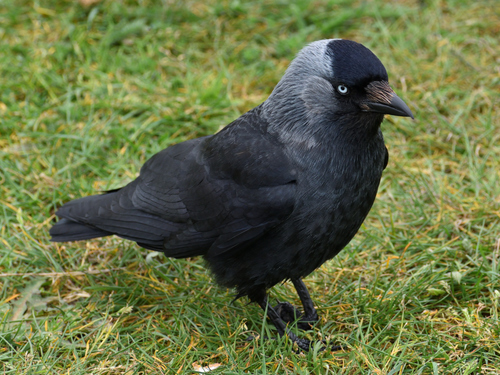 Eurasian Jackdaw
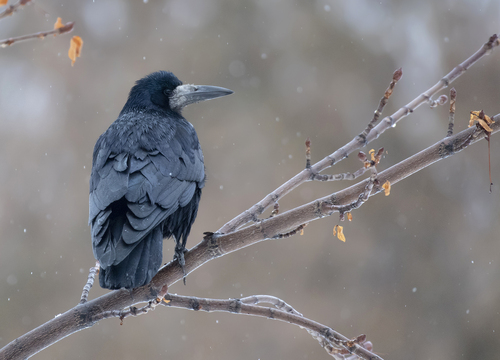 Rook
Rook
In short
The most reliable field mark to separate Eurasian Jackdaw from Rook is the jackdaw's pale silvery or grey nape and cheeks, contrasting with its otherwise black plumage, versus the rook's all-black plumage and distinctive bare whitish skin at the base of the bill in adults. Juvenile and immature birds are trickier: young rooks lack the bare bill patch and can appear superficially similar to jackdaws, but jackdaws are always smaller, with a much shorter, stubbier bill and a more compact, upright jizz. In flight, jackdaws show faster, deeper wingbeats and tighter flocking, while rooks appear longer-winged and more languid. Careful attention to head pattern, bill structure, and overall size will resolve most confusion, especially at a distance or with immature birds.
Identification tips
- Head pattern is key: Adult jackdaws show a pale grey or silvery nape and cheeks, sharply set off from the black crown and face. Rooks are all-black on the head except for the bare whitish skin at the bill base in adults.
- Bill structure: Jackdaws have a short, stout, black bill (about 75% the length of the head), while rooks have a longer, thinner, grey-black bill. In adult rooks, the bill looks even longer due to the bare skin at the base.
- Bare bill patch (adults only): Only adult rooks show the distinctive bare whitish skin at the base of the bill and around the eye. Juvenile rooks lack this, making them trickier to separate from jackdaws.
- Juvenile confusion: Young rooks are fully feathered on the face and lack the bare patch, but they are still larger, with a thinner, more pointed bill and shaggier leg feathering. Juvenile jackdaws are smaller, with a duller, less defined pale nape, but still show some contrast.
- Eye color: Adult jackdaws have pale silvery or greyish-white irises, which can stand out at close range. Juvenile jackdaws have blue or brownish eyes. Rooks have dark brown irises at all ages, but this is rarely visible at a distance.
- Size and jizz: Jackdaws are much smaller and more compact, with short necks and a brisk, upright posture. Rooks are larger, more elongated, and often appear hunched when perched.
- Flight style: Jackdaws fly with rapid, jerky wingbeats and tight flocking, often tumbling or gliding. Rooks have slower, deeper wingbeats and a more languid, less coordinated flock flight.
- Wing shape in flight: Jackdaws have narrower, less fingered wings; rook wings are longer and proportionally narrower than crows, but broader than jackdaw's.
- Plumage gloss: Both species can show blue or purple gloss in strong light, but this is not reliable for separation.
- Leg feathering: Rooks have shaggier, laxer feathering around the legs, especially compared to jackdaws.
- Underparts: Jackdaws have slate-grey underparts, while rooks are black or brownish-black below (juveniles may show some brownish tones).
- Habitat clues: Jackdaws are more likely near buildings, cliffs, and urban areas; rooks prefer open fields and rural landscapes, especially near rookery colonies.
- Bill color: Both species have black or grey-black bills, but the rook's appears longer and paler at the base in adults due to the bare skin.
- Group context: Mixed flocks are common, but jackdaws tend to stick together in tighter groups, while rooks form looser aggregations.
- Seasonal wear: Jackdaw head and neck plumage can fade and become less distinct before moulting, making pale areas less obvious, especially in males and immatures.
Size
Rooks are substantially larger than Eurasian Jackdaws. Adult rooks weigh about 453.5 g [wikidata], and measure 44–46 cm in length, with a wingspan of 81–99 cm [wikipedia]. Jackdaws are smaller, at 34–39 cm in length and around 240 g. In the field, jackdaws look noticeably more compact, with shorter necks and bills, and a much smaller overall bulk. When seen together, the size difference is obvious, but single birds at a distance can be deceptive, especially if the rook is hunched or the jackdaw is fluffed up.
Plumage
Adult jackdaws are distinctive with their pale grey or silvery nape and cheeks, contrasting sharply with the black crown, face, and body. Their underparts are slate-grey, and the black areas can show a purplish or bluish sheen depending on subspecies and light. Rooks are all-black with a blue or bluish-purple gloss, and adults have a bare whitish patch of skin at the base of the bill and in front of the eye, which is unique among European corvids. Juvenile rooks lack this bare patch and have a fully feathered black face, sometimes with a greenish gloss and brownish-black tones on the hindneck and underparts. Immature jackdaws are duller than adults, with less sharply defined pale areas and a more sooty overall look, but still show some contrast on the nape and cheeks. In flight, jackdaws have proportionately narrower, less fingered wings, while rook wings are longer and narrower than those of crows, but broader than jackdaw's. Both species are blackish overall in flight, but the jackdaw's pale nape can sometimes be glimpsed even when airborne.
Behaviour
Jackdaws are agile, tight-flying birds, often seen in close-knit flocks with rapid, jerky wingbeats and frequent glides. They have a brisk, upright gait on the ground, strutting with short legs and feeding with their heads down or horizontal. Rooks are also social, but their flight is more languid and less tightly coordinated, with slower, deeper wingbeats. On the ground, rooks appear more hunched and have shaggier feathering around the legs. Both species can be seen in mixed flocks, but jackdaws are more likely to perform aerial acrobatics and tight turns.
Habitat
Both species are widespread across Europe and western Asia, often sharing agricultural fields, parks, and urban areas. Jackdaws are more likely to be seen around buildings, towns, and cliffs, nesting in cavities and chimneys, while rooks prefer open countryside, farmland, and are closely associated with rookery colonies in tall trees. Rooks are less likely to be found in dense urban centers compared to jackdaws.