Birdr

Eurasian Jay vs Spotted Nutcracker

Garrulus glandarius versus Nucifraga caryocatactes

Play a quiz with Eurasian Jay and Spotted Nutcracker
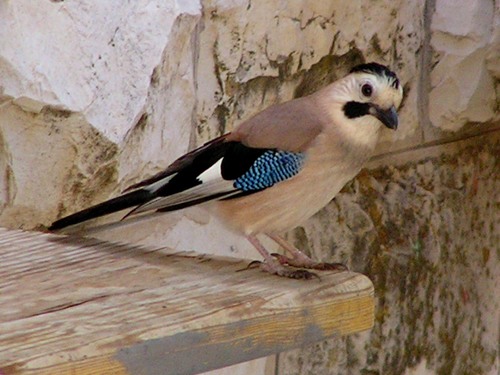
Eurasian Jay (Garrulus glandarius) Eurasian Jay
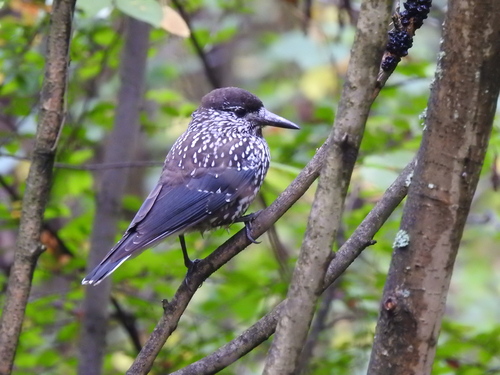
Spotted Nutcracker (Nucifraga caryocatactes) Spotted Nutcracker

Media

Loading…

In short

The Eurasian Jay and Spotted Nutcracker are both members of the corvid family, but they can be distinguished by their plumage and behavior. The Eurasian Jay is more colorful with its striking blue wing patches, while the Spotted Nutcracker has a more subdued brown and white spotted appearance. In the field, their habitats and vocalizations also provide clues for identification.

Identification tips

1. Look for the Eurasian Jay's blue wing patches and colorful plumage. 2. Note the Spotted Nutcracker's speckled brown and white appearance. 3. Consider habitat: Jays in mixed and urban areas, Nutcrackers in coniferous forests. 4. Listen for vocal differences: Jays are more varied and harsh, Nutcrackers are nasal and grating.

Size

Both species are similar in size, but the Spotted Nutcracker is generally more robust with a heavier build.

Plumage

The Eurasian Jay displays a mix of mauve-pink, gray, white, blue, and black plumage, with distinctive blue wing patches. In contrast, the Spotted Nutcracker has a brown body with white spots, giving it a speckled appearance.

Behaviour

Eurasian Jays are known for their acorn caching behavior and can often be seen in woodlands and urban areas. Spotted Nutcrackers are more likely to be found in coniferous forests, where they feed on seeds.

Habitat

Eurasian Jays are adaptable, found in woodlands, parks, and gardens. Spotted Nutcrackers prefer coniferous forests and are less commonly seen in urban areas.

Voice

Eurasian Jays have a variety of harsh, strident calls, while Spotted Nutcrackers produce a more nasal, grating sound.

Submit a better description

Use the same sections as the comparison. Your text is published immediately.

The Eurasian Jay and Spotted Nutcracker are both members of the corvid family, but they can be distinguished by their plumage and behavior. The Eurasian Jay is more colorful with its striking blue wing patches, while the Spotted Nutcracker has a more subdued brown and white spotted appearance. In the field, their habitats and vocalizations also provide clues for identification.

1. Look for the Eurasian Jay's blue wing patches and colorful plumage. 2. Note the Spotted Nutcracker's speckled brown and white appearance. 3. Consider habitat: Jays in mixed and urban areas, Nutcrackers in coniferous forests. 4. Listen for vocal differences: Jays are more varied and harsh, Nutcrackers are nasal and grating.

Both species are similar in size, but the Spotted Nutcracker is generally more robust with a heavier build.

The Eurasian Jay displays a mix of mauve-pink, gray, white, blue, and black plumage, with distinctive blue wing patches. In contrast, the Spotted Nutcracker has a brown body with white spots, giving it a speckled appearance.

Eurasian Jays are known for their acorn caching behavior and can often be seen in woodlands and urban areas. Spotted Nutcrackers are more likely to be found in coniferous forests, where they feed on seeds.

Eurasian Jays are adaptable, found in woodlands, parks, and gardens. Spotted Nutcrackers prefer coniferous forests and are less commonly seen in urban areas.

Eurasian Jays have a variety of harsh, strident calls, while Spotted Nutcrackers produce a more nasal, grating sound.

Discard your changes?

You have unsaved edits. If you leave now, those changes will be lost.

Eurasian Jay · Spotted Nutcracker · My Tricky Birds