Birdr

Eurasian Nightjar vs Egyptian Nightjar

Caprimulgus europaeus versus Caprimulgus aegyptius

Play a quiz with Eurasian Nightjar and Egyptian Nightjar
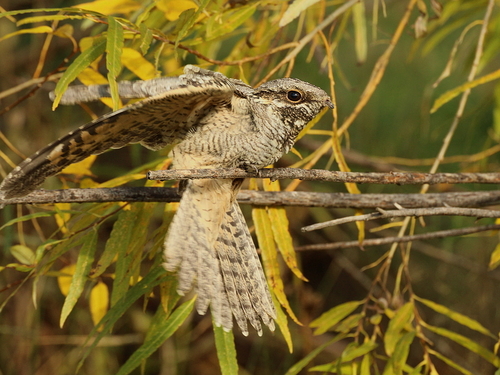
Eurasian Nightjar (Caprimulgus europaeus) Eurasian Nightjar
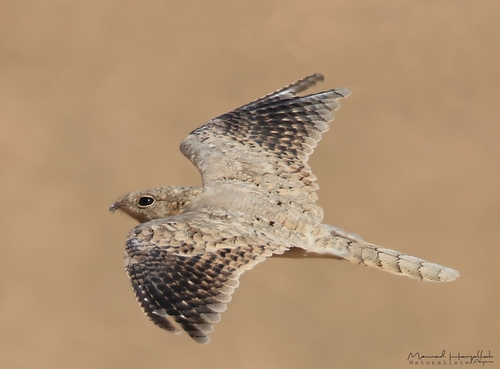
Egyptian Nightjar (Caprimulgus aegyptius) Egyptian Nightjar

Media

Loading…

In short

The Eurasian Nightjar and Egyptian Nightjar are both cryptically plumaged nightjars, but they differ in key structural and plumage features. The Eurasian Nightjar is generally more robust with white patches on the male's wings and tail, while the Egyptian Nightjar is paler and more uniform in color.

Identification tips

  1. Look for white patches on the wings and tail of male Eurasian Nightjars. 2. Note the overall paler, sandy coloration of the Egyptian Nightjar. 3. Consider habitat: Eurasian Nightjars are more likely in wooded areas, while Egyptian Nightjars prefer desert-like environments. 4. Listen for the Eurasian Nightjar's churring song at dusk, which is not typical for Egyptian Nightjars.

Size

The Eurasian Nightjar is slightly larger and more robust compared to the more slender Egyptian Nightjar.

Plumage

Eurasian Nightjar males have distinctive white patches on the primaries and tail, which are absent in females and Egyptian Nightjars. The Egyptian Nightjar is paler overall with a more uniform sandy color, lacking the contrasting wing and tail markings.

Behaviour

Both species are nocturnal and rely on camouflage during the day. The Eurasian Nightjar is known for its prolonged churring song at dusk, while the Egyptian Nightjar is less vocal.

Habitat

Eurasian Nightjars breed in open woodlands and heathlands across Europe and migrate to sub-Saharan Africa in winter. Egyptian Nightjars are found in arid and semi-arid regions, often near deserts.

Voice

The Eurasian Nightjar has a distinctive churring song, while the Egyptian Nightjar is generally quieter and less vocal.

Submit a better description

Use the same sections as the comparison. Your text is published immediately.

The Eurasian Nightjar and Egyptian Nightjar are both cryptically plumaged nightjars, but they differ in key structural and plumage features. The Eurasian Nightjar is generally more robust with white patches on the male's wings and tail, while the Egyptian Nightjar is paler and more uniform in color.

  1. Look for white patches on the wings and tail of male Eurasian Nightjars. 2. Note the overall paler, sandy coloration of the Egyptian Nightjar. 3. Consider habitat: Eurasian Nightjars are more likely in wooded areas, while Egyptian Nightjars prefer desert-like environments. 4. Listen for the Eurasian Nightjar's churring song at dusk, which is not typical for Egyptian Nightjars.

The Eurasian Nightjar is slightly larger and more robust compared to the more slender Egyptian Nightjar.

Eurasian Nightjar males have distinctive white patches on the primaries and tail, which are absent in females and Egyptian Nightjars. The Egyptian Nightjar is paler overall with a more uniform sandy color, lacking the contrasting wing and tail markings.

Both species are nocturnal and rely on camouflage during the day. The Eurasian Nightjar is known for its prolonged churring song at dusk, while the Egyptian Nightjar is less vocal.

Eurasian Nightjars breed in open woodlands and heathlands across Europe and migrate to sub-Saharan Africa in winter. Egyptian Nightjars are found in arid and semi-arid regions, often near deserts.

The Eurasian Nightjar has a distinctive churring song, while the Egyptian Nightjar is generally quieter and less vocal.

Discard your changes?

You have unsaved edits. If you leave now, those changes will be lost.

Eurasian Nightjar · Egyptian Nightjar · My Tricky Birds