Birdr

Eurasian Nightjar vs Fiery-necked Nightjar

Caprimulgus europaeus versus Caprimulgus pectoralis

Play a quiz with Eurasian Nightjar and Fiery-necked Nightjar
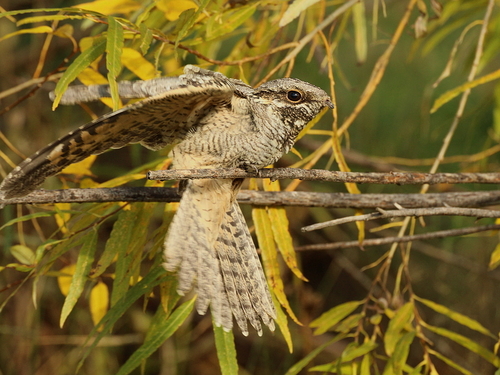
Eurasian Nightjar (Caprimulgus europaeus) Eurasian Nightjar
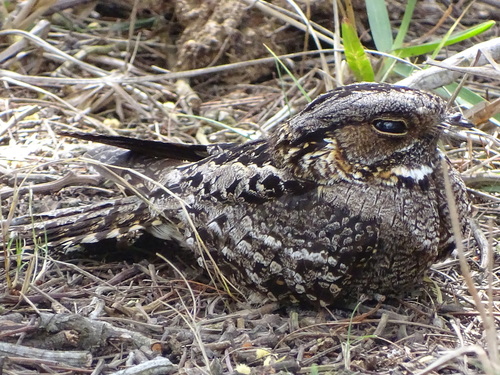
Fiery-necked Nightjar (Caprimulgus pectoralis) Fiery-necked Nightjar

Media

Loading…

In short

The Eurasian Nightjar and Fiery-necked Nightjar are both cryptically plumaged nightjars, but they can be distinguished by their geographic range and vocalizations. The Eurasian Nightjar is found in Europe and migrates to sub-Saharan Africa, while the Fiery-necked Nightjar is resident in the southern half of the Afrotropics. Their songs are distinct, with the Eurasian Nightjar producing a prolonged churring sound.

Identification tips

  1. Geographic location: Eurasian Nightjar in Europe and sub-Saharan Africa; Fiery-necked Nightjar in southern Afrotropics. 2. Listen for vocalizations: Eurasian Nightjar's churring vs. Fiery-necked Nightjar's 'good Lord, deliver us' call. 3. Look for white patches: Eurasian Nightjar males have white patches in wings and tail. 4. Check for fiery neck band: Fiery-necked Nightjar has a distinctive fiery neck band.

Size

Both species are similar in size, typical of nightjars, with no significant size difference to aid in identification.

Plumage

The Eurasian Nightjar male has distinctive white patches in the primaries and tail, which are absent in females and the Fiery-necked Nightjar. The Fiery-necked Nightjar is named for its fiery neck band, which is a key distinguishing feature.

Behaviour

Both species are nocturnal and rely on cryptic plumage for camouflage. The Eurasian Nightjar is migratory, whereas the Fiery-necked Nightjar is mostly resident.

Habitat

The Eurasian Nightjar breeds in open woodlands and heathlands in Europe and winters in sub-Saharan Africa. The Fiery-necked Nightjar inhabits a variety of wooded habitats across the southern Afrotropics, avoiding dense forests.

Voice

The Eurasian Nightjar is known for its prolonged churring song, while the Fiery-necked Nightjar has a distinct call often described as 'good Lord, deliver us.'

Submit a better description

Use the same sections as the comparison. Your text is published immediately.

The Eurasian Nightjar and Fiery-necked Nightjar are both cryptically plumaged nightjars, but they can be distinguished by their geographic range and vocalizations. The Eurasian Nightjar is found in Europe and migrates to sub-Saharan Africa, while the Fiery-necked Nightjar is resident in the southern half of the Afrotropics. Their songs are distinct, with the Eurasian Nightjar producing a prolonged churring sound.

  1. Geographic location: Eurasian Nightjar in Europe and sub-Saharan Africa; Fiery-necked Nightjar in southern Afrotropics. 2. Listen for vocalizations: Eurasian Nightjar's churring vs. Fiery-necked Nightjar's 'good Lord, deliver us' call. 3. Look for white patches: Eurasian Nightjar males have white patches in wings and tail. 4. Check for fiery neck band: Fiery-necked Nightjar has a distinctive fiery neck band.

Both species are similar in size, typical of nightjars, with no significant size difference to aid in identification.

The Eurasian Nightjar male has distinctive white patches in the primaries and tail, which are absent in females and the Fiery-necked Nightjar. The Fiery-necked Nightjar is named for its fiery neck band, which is a key distinguishing feature.

Both species are nocturnal and rely on cryptic plumage for camouflage. The Eurasian Nightjar is migratory, whereas the Fiery-necked Nightjar is mostly resident.

The Eurasian Nightjar breeds in open woodlands and heathlands in Europe and winters in sub-Saharan Africa. The Fiery-necked Nightjar inhabits a variety of wooded habitats across the southern Afrotropics, avoiding dense forests.

The Eurasian Nightjar is known for its prolonged churring song, while the Fiery-necked Nightjar has a distinct call often described as 'good Lord, deliver us.'

Discard your changes?

You have unsaved edits. If you leave now, those changes will be lost.

Eurasian Nightjar · Fiery-necked Nightjar · My Tricky Birds