Birdr

Eurasian Nuthatch vs Eurasian Wren

Sitta europaea versus Troglodytes troglodytes

Play a quiz with Eurasian Nuthatch and Eurasian Wren
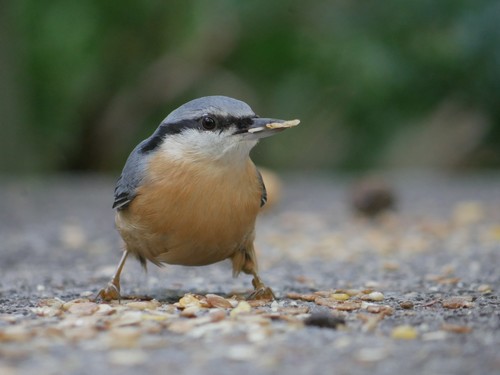
Eurasian Nuthatch (Sitta europaea) Eurasian Nuthatch
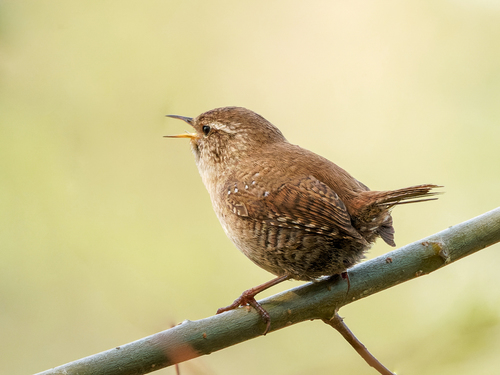
Eurasian Wren (Troglodytes troglodytes) Eurasian Wren

Media

Loading…

In short

The most reliable way to separate Eurasian Nuthatch from Eurasian Wren is by overall structure and posture: the nuthatch is a larger, blue-grey bird with a long, pointed bill and a black eye-stripe, while the wren is much smaller, plumper, and rufous-brown, with a very short, often cocked tail and a fine, thin bill. Juveniles of both species can be duller, but the wren's barred flanks and tail, along with its distinctive upright tail posture, are unique. In flight, nuthatch shows a pointed head and short, square tail, while wren's tiny, rounded wings and whirring flight are distinctive. Voice and habitat can help, but structure and plumage are usually enough for confident separation.

Identification tips

  1. Size: Nuthatch is more than twice the mass of wren and visibly larger and bulkier in the field. If you see a small, chunky bird, check for other marks.
  2. Bill shape: Nuthatch has a long, pointed, strong bill; wren's bill is thin, fine, and slightly downcurved. Bill shape is visible even at a distance.
  3. Tail shape and posture: Wren's tail is extremely short and almost always held cocked upright; nuthatch's tail is short but square and held straight out or slightly down, never cocked.
  4. Eye-stripe: Nuthatch always shows a strong black eye-stripe running from the bill through the eye; wren never has a dark eye-stripe.
  5. Upperparts color: Nuthatch is blue-grey above; wren is rufous-brown, sometimes with a slight greyish cast but never blue-grey.
  6. Underparts: Nuthatch has white throat and cheeks, with orange or rufous flanks and belly; wren is greyish below, sometimes with a buff wash, and heavily barred on flanks and undertail.
  7. Wing and tail barring: Wren shows fine, dark barring on wings and tail (all ages); nuthatch does not have this barring.
  8. Juvenile plumage: Young nuthatches are duller but still blue-grey with an eye-stripe; juvenile wrens are browner and less barred, but never show blue-grey or an eye-stripe.
  9. Flight pattern: Nuthatch flies with a pointed head, round wings, and short, square tail; wren's flight is low, rapid, with whirring, rounded wings and a cocked tail.
  10. Perched posture: Nuthatch often clings to vertical trunks, sometimes head-down; wren perches low, tail cocked, often in dense cover.
  11. Habitat use: If seen high on a tree trunk or large branch, especially moving head-first down, it's likely a nuthatch; if foraging near the ground or in thick brush, especially with tail cocked, it's a wren.
  12. Vocalizations: Listen for a loud, short 'dwip' (nuthatch) versus a long, complex, trilling song or rapid 'tic-tic-tic' (wren).
  13. Sex and age: Female and juvenile nuthatches are only slightly duller than males; wren sexes are alike, but juveniles are less barred and more mottled below.
  14. Pitfalls: In poor light, a wren's brown can look greyish, but the lack of an eye-stripe and the cocked tail are still clear. Nuthatch never shows barring or a cocked tail.
  15. Context: In Eurasia, these are the only birds with this combination of size, tail posture, and coloration—confusion is usually a matter of brief or obstructed views.

Size

Eurasian Nuthatch is significantly larger and heavier than Eurasian Wren. Nuthatch measures about 14 cm in length with a wingspan of 22.5–27 cm and a body mass around 23 g. In contrast, the wren is much smaller, only 9–10 cm long, with a wingspan of 13–17 cm and a mass of about 10 g. In the field, this size difference is obvious: nuthatch appears robust and solid, while wren is tiny and almost mouse-like. If seen together, the nuthatch dwarfs the wren.

Plumage

Juvenile and adult plumages are both distinctive. Nuthatch (all ages) has blue-grey upperparts, a strong black eye-stripe, white throat and cheeks, and orange or rufous flanks and belly, with some white mottling on the undertail. The bill is long and pointed. Females and juveniles are slightly duller, with paler flanks, but retain the same pattern. Wrens (all ages) are rufous-brown above, greyer below, and heavily barred with darker brown and grey on flanks, wings, and tail. The tail is very short and often held upright. Juvenile wrens are less distinctly barred and have more mottled underparts, but never show the nuthatch's blue-grey or eye-stripe. In flight, nuthatch shows a pointed head and short, square tail, while wren's wings are tiny and round, with a whirring flight and a cocked tail even in motion. No age or sex of wren ever shows a strong black eye-stripe or blue-grey tones.

Behaviour

Nuthatch moves with short leaps along tree trunks and branches, often head-down, never using its tail for support. Its flight is fast and direct, with wings closed between beats, usually over short distances. Wren is constantly active, foraging low to the ground or in dense vegetation, moving with quick jerks and probing into crevices. Its tail is almost always held upright, and it often flits in short, low, whirring flights. Wrens rarely climb high on trunks, and their movement is more mouse-like and erratic compared to the purposeful, acrobatic nuthatch.

Habitat

Both species can occur in woodland, but nuthatch is more often seen on mature trees, especially in forests and parks, moving along trunks and large branches. Wren is more often found low down, in dense undergrowth, brush piles, or near fallen logs, and is less tied to large trees. While both can overlap in mixed woodland, nuthatch is rarely found in dense ground vegetation where wrens are most at home.

Voice

Nuthatch gives a loud, repeated 'dwip' call, which is sharp and carries well, and is generally more vocal in short bursts. Wren has a sharp, repeated 'tic-tic-tic' call, but its most distinctive vocalization is its long, complex, and very loud song, a series of trills and clear notes that can last several seconds. The wren's song is much longer and more musical than any nuthatch call. When alarmed, wren gives a rapid, churring call. Nuthatch calls are never as long or complex as the wren's song.

Submit a better description

Use the same sections as the comparison. Your text is published immediately.

The most reliable way to separate Eurasian Nuthatch from Eurasian Wren is by overall structure and posture: the nuthatch is a larger, blue-grey bird with a long, pointed bill and a black eye-stripe, while the wren is much smaller, plumper, and rufous-brown, with a very short, often cocked tail and a fine, thin bill. Juveniles of both species can be duller, but the wren's barred flanks and tail, along with its distinctive upright tail posture, are unique. In flight, nuthatch shows a pointed head and short, square tail, while wren's tiny, rounded wings and whirring flight are distinctive. Voice and habitat can help, but structure and plumage are usually enough for confident separation.

  1. Size: Nuthatch is more than twice the mass of wren and visibly larger and bulkier in the field. If you see a small, chunky bird, check for other marks.
  2. Bill shape: Nuthatch has a long, pointed, strong bill; wren's bill is thin, fine, and slightly downcurved. Bill shape is visible even at a distance.
  3. Tail shape and posture: Wren's tail is extremely short and almost always held cocked upright; nuthatch's tail is short but square and held straight out or slightly down, never cocked.
  4. Eye-stripe: Nuthatch always shows a strong black eye-stripe running from the bill through the eye; wren never has a dark eye-stripe.
  5. Upperparts color: Nuthatch is blue-grey above; wren is rufous-brown, sometimes with a slight greyish cast but never blue-grey.
  6. Underparts: Nuthatch has white throat and cheeks, with orange or rufous flanks and belly; wren is greyish below, sometimes with a buff wash, and heavily barred on flanks and undertail.
  7. Wing and tail barring: Wren shows fine, dark barring on wings and tail (all ages); nuthatch does not have this barring.
  8. Juvenile plumage: Young nuthatches are duller but still blue-grey with an eye-stripe; juvenile wrens are browner and less barred, but never show blue-grey or an eye-stripe.
  9. Flight pattern: Nuthatch flies with a pointed head, round wings, and short, square tail; wren's flight is low, rapid, with whirring, rounded wings and a cocked tail.
  10. Perched posture: Nuthatch often clings to vertical trunks, sometimes head-down; wren perches low, tail cocked, often in dense cover.
  11. Habitat use: If seen high on a tree trunk or large branch, especially moving head-first down, it's likely a nuthatch; if foraging near the ground or in thick brush, especially with tail cocked, it's a wren.
  12. Vocalizations: Listen for a loud, short 'dwip' (nuthatch) versus a long, complex, trilling song or rapid 'tic-tic-tic' (wren).
  13. Sex and age: Female and juvenile nuthatches are only slightly duller than males; wren sexes are alike, but juveniles are less barred and more mottled below.
  14. Pitfalls: In poor light, a wren's brown can look greyish, but the lack of an eye-stripe and the cocked tail are still clear. Nuthatch never shows barring or a cocked tail.
  15. Context: In Eurasia, these are the only birds with this combination of size, tail posture, and coloration—confusion is usually a matter of brief or obstructed views.

Eurasian Nuthatch is significantly larger and heavier than Eurasian Wren. Nuthatch measures about 14 cm in length with a wingspan of 22.5–27 cm and a body mass around 23 g. In contrast, the wren is much smaller, only 9–10 cm long, with a wingspan of 13–17 cm and a mass of about 10 g. In the field, this size difference is obvious: nuthatch appears robust and solid, while wren is tiny and almost mouse-like. If seen together, the nuthatch dwarfs the wren.

Juvenile and adult plumages are both distinctive. Nuthatch (all ages) has blue-grey upperparts, a strong black eye-stripe, white throat and cheeks, and orange or rufous flanks and belly, with some white mottling on the undertail. The bill is long and pointed. Females and juveniles are slightly duller, with paler flanks, but retain the same pattern. Wrens (all ages) are rufous-brown above, greyer below, and heavily barred with darker brown and grey on flanks, wings, and tail. The tail is very short and often held upright. Juvenile wrens are less distinctly barred and have more mottled underparts, but never show the nuthatch's blue-grey or eye-stripe. In flight, nuthatch shows a pointed head and short, square tail, while wren's wings are tiny and round, with a whirring flight and a cocked tail even in motion. No age or sex of wren ever shows a strong black eye-stripe or blue-grey tones.

Nuthatch moves with short leaps along tree trunks and branches, often head-down, never using its tail for support. Its flight is fast and direct, with wings closed between beats, usually over short distances. Wren is constantly active, foraging low to the ground or in dense vegetation, moving with quick jerks and probing into crevices. Its tail is almost always held upright, and it often flits in short, low, whirring flights. Wrens rarely climb high on trunks, and their movement is more mouse-like and erratic compared to the purposeful, acrobatic nuthatch.

Both species can occur in woodland, but nuthatch is more often seen on mature trees, especially in forests and parks, moving along trunks and large branches. Wren is more often found low down, in dense undergrowth, brush piles, or near fallen logs, and is less tied to large trees. While both can overlap in mixed woodland, nuthatch is rarely found in dense ground vegetation where wrens are most at home.

Nuthatch gives a loud, repeated 'dwip' call, which is sharp and carries well, and is generally more vocal in short bursts. Wren has a sharp, repeated 'tic-tic-tic' call, but its most distinctive vocalization is its long, complex, and very loud song, a series of trills and clear notes that can last several seconds. The wren's song is much longer and more musical than any nuthatch call. When alarmed, wren gives a rapid, churring call. Nuthatch calls are never as long or complex as the wren's song.

Discard your changes?

You have unsaved edits. If you leave now, those changes will be lost.

Eurasian Nuthatch · Eurasian Wren · My Tricky Birds