Eurasian Oystercatcher vs Grey Plover
Haematopus ostralegus versus Pluvialis squatarola
Play a quiz with Eurasian Oystercatcher and Grey Plover

Eurasian Oystercatcher
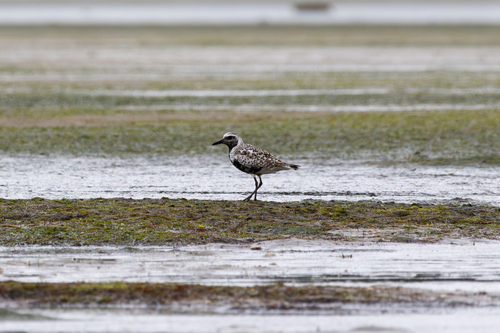
Grey Plover
In short
The Eurasian Oystercatcher and Grey Plover are both shorebirds but can be distinguished by their size, bill shape, and plumage patterns. The Oystercatcher is larger with a distinctive long, red bill, while the Grey Plover is smaller with a shorter, black bill and a more varied plumage.
Identification tips
1. Bill Shape: Look for the long, red bill of the Oystercatcher versus the shorter, black bill of the Grey Plover. 2. Plumage: Note the solid black head and back of the Oystercatcher compared to the mottled grey of the Grey Plover. 3. Behavior: Observe feeding behavior; Oystercatchers probe with their bills, while Plovers run and peck. 4. Habitat: Consider the habitat; Oystercatchers are more often on rocky shores, while Plovers prefer sandy beaches.
Size
The Eurasian Oystercatcher is larger and more robust compared to the smaller and more compact Grey Plover.
Plumage
Eurasian Oystercatchers have a striking black and white plumage with a solid black head and back, while Grey Plovers have a more mottled grey and white appearance, especially in non-breeding plumage. In breeding plumage, Grey Plovers have a distinctive black face and belly.
Behaviour
Eurasian Oystercatchers are often seen probing in mudflats with their long bills, while Grey Plovers are more likely to be observed standing still or running short distances to catch prey.
Habitat
Both species can be found in coastal habitats, but Eurasian Oystercatchers are more commonly associated with rocky shores and mudflats, whereas Grey Plovers prefer open sandy beaches and tidal flats.
Voice
Eurasian Oystercatchers have a loud, piping call, while Grey Plovers are known for their plaintive, whistling calls.