Birdr

European Bee-eater vs Eurasian Wryneck

Merops apiaster versus Jynx torquilla

Play a quiz with European Bee-eater and Eurasian Wryneck

European Bee-eater (Merops apiaster) European Bee-eater
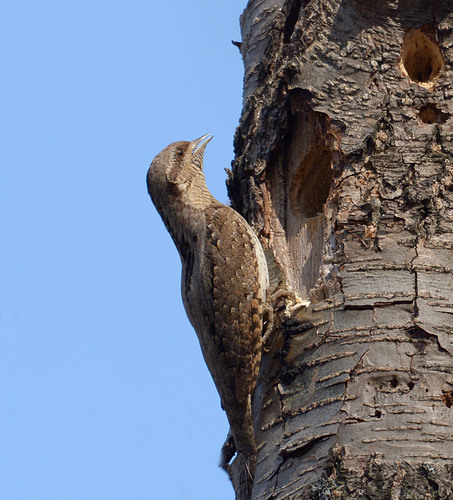
Eurasian Wryneck (Jynx torquilla) Eurasian Wryneck

Media

Loading…

In short

The European Bee-eater and Eurasian Wryneck are easily distinguished by their structure and behavior. The Bee-eater is a colorful, slender bird with a long bill, while the Wryneck is a cryptically colored bird with a short bill and unique neck-twisting behavior. These species are not closely related, making their differences in appearance and habits quite pronounced.

Identification tips

Look for the Bee-eater's bright plumage and aerial insect-catching behavior. In contrast, note the Wryneck's cryptic plumage and unique neck-twisting behavior, especially when disturbed.

Size

The European Bee-eater is larger and more slender compared to the smaller, stockier Eurasian Wryneck.

Plumage

The European Bee-eater is vibrant with a mix of blue, green, and chestnut colors, whereas the Eurasian Wryneck has cryptic, bark-like plumage that helps it blend into tree trunks.

Behaviour

The Bee-eater is often seen in open areas catching insects in flight, while the Wryneck is more secretive, often observed twisting its neck in a snake-like manner when threatened.

Habitat

European Bee-eaters prefer open areas with steep walls for nesting, while Eurasian Wrynecks are found in wooded areas where they can use tree cavities for nesting.

Submit a better description

Use the same sections as the comparison. Your text is published immediately.

The European Bee-eater and Eurasian Wryneck are easily distinguished by their structure and behavior. The Bee-eater is a colorful, slender bird with a long bill, while the Wryneck is a cryptically colored bird with a short bill and unique neck-twisting behavior. These species are not closely related, making their differences in appearance and habits quite pronounced.

Look for the Bee-eater's bright plumage and aerial insect-catching behavior. In contrast, note the Wryneck's cryptic plumage and unique neck-twisting behavior, especially when disturbed.

The European Bee-eater is larger and more slender compared to the smaller, stockier Eurasian Wryneck.

The European Bee-eater is vibrant with a mix of blue, green, and chestnut colors, whereas the Eurasian Wryneck has cryptic, bark-like plumage that helps it blend into tree trunks.

The Bee-eater is often seen in open areas catching insects in flight, while the Wryneck is more secretive, often observed twisting its neck in a snake-like manner when threatened.

European Bee-eaters prefer open areas with steep walls for nesting, while Eurasian Wrynecks are found in wooded areas where they can use tree cavities for nesting.

Discard your changes?

You have unsaved edits. If you leave now, those changes will be lost.

European Bee-eater · Eurasian Wryneck · My Tricky Birds