Birdr

European Golden Plover vs Eurasian Dotterel

Pluvialis apricaria versus Eudromias morinellus

Play a quiz with European Golden Plover and Eurasian Dotterel

European Golden Plover (Pluvialis apricaria) European Golden Plover
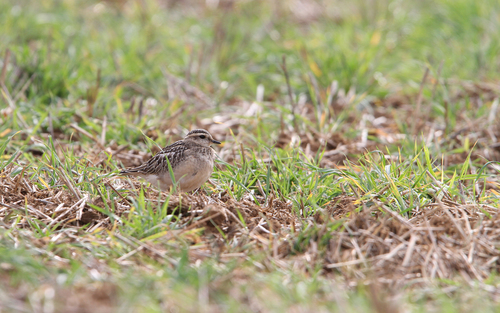
Eurasian Dotterel (Eudromias morinellus) Eurasian Dotterel

Media

Loading…

In short

The European Golden Plover and Eurasian Dotterel can be distinguished by structure and plumage. The Golden Plover is more robust with a shorter bill, while the Dotterel has a distinctive white supercilium and a more compact appearance. In breeding plumage, the Dotterel exhibits a striking chestnut belly band.

Identification tips

  1. Look for the white supercilium on the Dotterel, especially in non-breeding plumage. 2. Note the chestnut belly band on the Dotterel during breeding season. 3. Observe the bill size: the Golden Plover has a shorter, stouter bill. 4. Consider habitat: Dotterels are more likely at higher altitudes or arctic regions. 5. Listen for vocalizations: the Golden Plover's call is more distinct and whistling.

Size

The European Golden Plover is slightly larger and more robust than the Eurasian Dotterel.

Plumage

In breeding plumage, the Golden Plover has a black face and belly with golden speckling on the back, while the Dotterel features a bold white supercilium and a chestnut belly band. Non-breeding plumages are more similar, but the Dotterel retains the white supercilium.

Behaviour

Both species forage on the ground, but the Dotterel often exhibits a more crouched posture and can be more approachable.

Habitat

The European Golden Plover is typically found in open moorlands and tundra, while the Eurasian Dotterel prefers high-altitude or arctic tundra environments.

Voice

The Golden Plover has a plaintive, whistling call, while the Dotterel's call is softer and less frequently heard.

Submit a better description

Use the same sections as the comparison. Your text is published immediately.

The European Golden Plover and Eurasian Dotterel can be distinguished by structure and plumage. The Golden Plover is more robust with a shorter bill, while the Dotterel has a distinctive white supercilium and a more compact appearance. In breeding plumage, the Dotterel exhibits a striking chestnut belly band.

  1. Look for the white supercilium on the Dotterel, especially in non-breeding plumage. 2. Note the chestnut belly band on the Dotterel during breeding season. 3. Observe the bill size: the Golden Plover has a shorter, stouter bill. 4. Consider habitat: Dotterels are more likely at higher altitudes or arctic regions. 5. Listen for vocalizations: the Golden Plover's call is more distinct and whistling.

The European Golden Plover is slightly larger and more robust than the Eurasian Dotterel.

In breeding plumage, the Golden Plover has a black face and belly with golden speckling on the back, while the Dotterel features a bold white supercilium and a chestnut belly band. Non-breeding plumages are more similar, but the Dotterel retains the white supercilium.

Both species forage on the ground, but the Dotterel often exhibits a more crouched posture and can be more approachable.

The European Golden Plover is typically found in open moorlands and tundra, while the Eurasian Dotterel prefers high-altitude or arctic tundra environments.

The Golden Plover has a plaintive, whistling call, while the Dotterel's call is softer and less frequently heard.

Discard your changes?

You have unsaved edits. If you leave now, those changes will be lost.

European Golden Plover · Eurasian Dotterel · My Tricky Birds