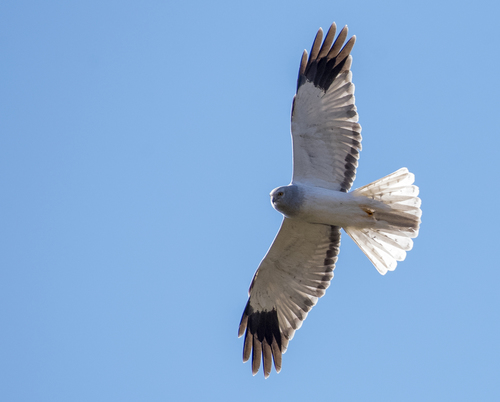
European Honey-buzzard vs Hen Harrier
Pernis apivorus versus Circus cyaneus
Play a quiz with European Honey-buzzard and Hen Harrier
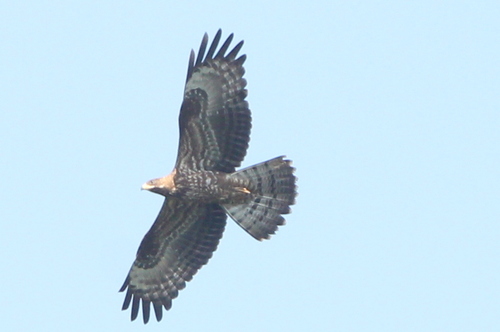
European Honey-buzzard
Hen Harrier
In short
The European Honey-buzzard and Hen Harrier can be distinguished primarily by their flight silhouette and behavior. The Honey-buzzard has a longer tail and a more pigeon-like head, while the Hen Harrier is more slender with a distinctive facial disk. Both species can be seen in open habitats, but their flight patterns and structure are key to identification.
Identification tips
- Flight silhouette: Look for the Honey-buzzard's longer tail and pigeon-like head versus the Hen Harrier's slender body and facial disk. 2. Flight behavior: Note the Honey-buzzard's soaring with flat wings compared to the Hen Harrier's low, gliding flight. 3. Plumage details: In males, the Hen Harrier's grey plumage is distinctive; females have a white rump patch. 4. Habitat: Consider the habitat; Honey-buzzards are more likely in wooded areas, while Hen Harriers prefer open fields and marshes.
Size
The European Honey-buzzard is generally larger and bulkier than the Hen Harrier, with broader wings and a longer tail.
Plumage
Plumage can vary, but the Honey-buzzard often has a more uniform brown coloration with less contrast, while the Hen Harrier shows more distinct patterns, especially the male's grey plumage and the female's brown with a white rump patch.
Behaviour
The Honey-buzzard often soars with flat wings and a distinctive head-forward posture, while the Hen Harrier flies low over fields with a buoyant, gliding flight and wings held in a shallow V.
Habitat
Both species can be found in open areas, but the Honey-buzzard prefers woodlands and forest edges, while the Hen Harrier is more often seen in marshes, moorlands, and open fields.
Voice
Vocalizations are not a primary field mark for either species, as both are generally silent outside the breeding season.