European Honey-buzzard vs Western Marsh Harrier
Pernis apivorus versus Circus aeruginosus
Play a quiz with European Honey-buzzard and Western Marsh Harrier
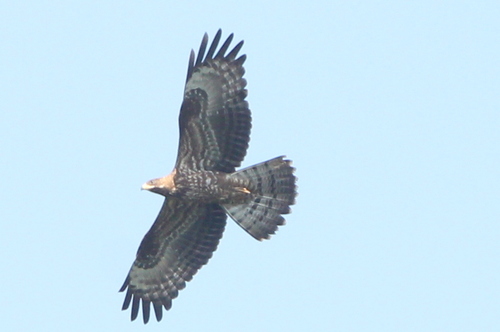
European Honey-buzzard
Western Marsh Harrier
In short
The European Honey-buzzard and Western Marsh Harrier can be distinguished by their flight silhouette and habitat preferences. The Honey-buzzard has a more slender body and longer tail, while the Marsh Harrier is bulkier with broader wings. Habitat is a key differentiator: Honey-buzzards prefer wooded areas, whereas Marsh Harriers are often found in wetlands.
Identification tips
- Flight silhouette: Look for the slender, long-tailed shape of the Honey-buzzard versus the bulkier, broader-winged Marsh Harrier. 2. Habitat: Note the environment; Honey-buzzards in wooded areas, Marsh Harriers in wetlands. 3. Flight style: Honey-buzzards glide with flat wings, Marsh Harriers have a tilting flight with wings in a shallow 'V'. 4. Plumage: Be cautious with plumage as it can vary; focus on structure and habitat.
Size
The European Honey-buzzard is generally more slender and longer-tailed compared to the bulkier Western Marsh Harrier.
Plumage
Plumage can vary, but Honey-buzzards often have a more uniform and subtle coloration with less contrast, while Marsh Harriers show more pronounced color differences, especially males with their distinctive grey and chestnut tones.
Behaviour
In flight, Honey-buzzards have a more buoyant and gliding style, often with wings held flat, while Marsh Harriers exhibit a more buoyant, tilting flight with wings held in a shallow 'V'.
Habitat
European Honey-buzzards are typically found in wooded areas, often near forests, while Western Marsh Harriers are associated with wetlands, reedbeds, and marshes.
Voice
Vocalizations are not a primary distinguishing feature in the field as both species are relatively silent, especially outside the breeding season.
European Honey-buzzard · Western Marsh Harrier · My Tricky Birds