
Birdr

European Pied Flycatcher vs Black Redstart

Ficedula hypoleuca versus Phoenicurus ochruros

Play a quiz with European Pied Flycatcher and Black Redstart
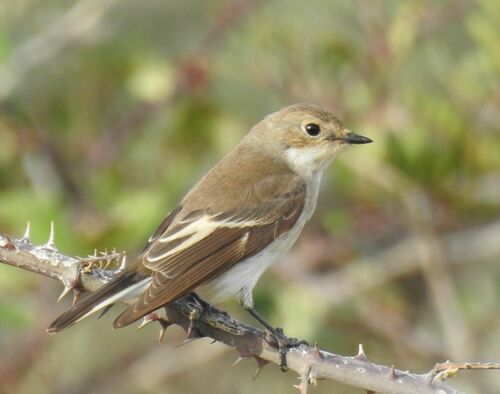
European Pied Flycatcher (Ficedula hypoleuca) European Pied Flycatcher
Black Redstart (Phoenicurus ochruros) Black Redstart

Media

Loading…

In short

The European Pied Flycatcher and Black Redstart can be distinguished by their plumage and behavior. The flycatcher typically shows a more contrasting black-and-white pattern, while the redstart is characterized by its dark slate-grey body and distinctive red tail. Observing their behavior and habitat preferences can also aid in identification.

Identification tips

  1. Plumage: Look for the contrasting black-and-white pattern in male European Pied Flycatchers and the red tail in Black Redstarts. 2. Behavior: Note the tail-flicking behavior of the Black Redstart. 3. Habitat: Consider the environment; Black Redstarts are more likely in urban or rocky areas. 4. Vocalization: Listen for the distinct song patterns; the flycatcher's song is more melodic, while the redstart's includes scratchy notes.

Size

Both species are small, but the Black Redstart is slightly larger and more robust than the European Pied Flycatcher.

Plumage

The European Pied Flycatcher male has a striking black-and-white plumage with a white patch on the forehead, while females are more subdued with brownish tones. The Black Redstart male is dark slate-grey with a striking red tail, and females are more brownish-grey with the same red tail.

Behaviour

The European Pied Flycatcher often perches upright and makes short sallies to catch insects. The Black Redstart frequently flicks its tail and wings, often seen foraging on the ground or low perches.

Habitat

European Pied Flycatchers prefer deciduous and mixed woodlands, often near water. Black Redstarts are more adaptable, found in rocky areas, urban settings, and open countryside.

Voice

The European Pied Flycatcher has a varied song with a series of short phrases, while the Black Redstart's song is a mix of melodic notes and harsh, scratchy sounds.

Submit a better description

Use the same sections as the comparison. Your text is published immediately.

The European Pied Flycatcher and Black Redstart can be distinguished by their plumage and behavior. The flycatcher typically shows a more contrasting black-and-white pattern, while the redstart is characterized by its dark slate-grey body and distinctive red tail. Observing their behavior and habitat preferences can also aid in identification.

  1. Plumage: Look for the contrasting black-and-white pattern in male European Pied Flycatchers and the red tail in Black Redstarts. 2. Behavior: Note the tail-flicking behavior of the Black Redstart. 3. Habitat: Consider the environment; Black Redstarts are more likely in urban or rocky areas. 4. Vocalization: Listen for the distinct song patterns; the flycatcher's song is more melodic, while the redstart's includes scratchy notes.

Both species are small, but the Black Redstart is slightly larger and more robust than the European Pied Flycatcher.

The European Pied Flycatcher male has a striking black-and-white plumage with a white patch on the forehead, while females are more subdued with brownish tones. The Black Redstart male is dark slate-grey with a striking red tail, and females are more brownish-grey with the same red tail.

The European Pied Flycatcher often perches upright and makes short sallies to catch insects. The Black Redstart frequently flicks its tail and wings, often seen foraging on the ground or low perches.

European Pied Flycatchers prefer deciduous and mixed woodlands, often near water. Black Redstarts are more adaptable, found in rocky areas, urban settings, and open countryside.

The European Pied Flycatcher has a varied song with a series of short phrases, while the Black Redstart's song is a mix of melodic notes and harsh, scratchy sounds.

Discard your changes?

You have unsaved edits. If you leave now, those changes will be lost.

European Pied Flycatcher · Black Redstart · My Tricky Birds