Birdr

European Robin vs Thrush Nightingale

Erithacus rubecula versus Luscinia luscinia

Play a quiz with European Robin and Thrush Nightingale
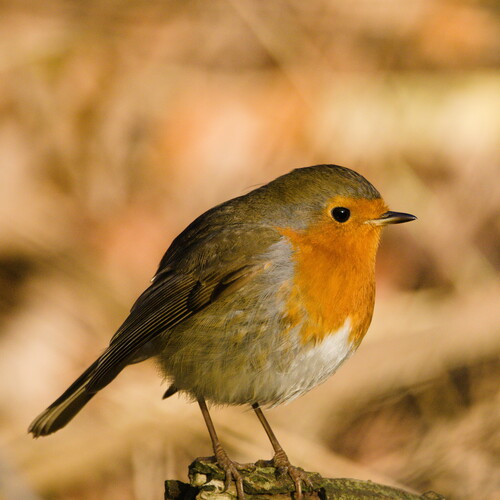
European Robin (Erithacus rubecula) European Robin
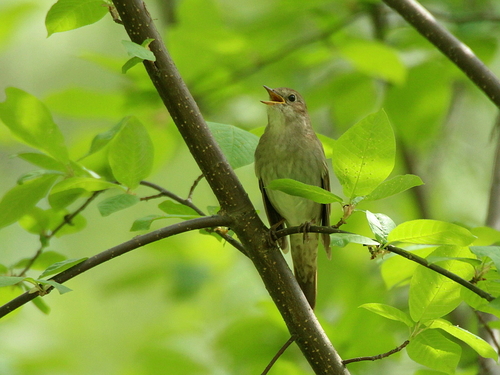
Thrush Nightingale (Luscinia luscinia) Thrush Nightingale

Media

Loading…

In short

The European Robin and Thrush Nightingale can be distinguished by structure and plumage. The Robin has a distinctive orange-red face and breast, while the Nightingale is more uniformly brown. Vocalizations also differ, with the Robin's song being more melodic and complex.

Identification tips

Look for the orange-red face and breast of the Robin, which is absent in the Nightingale. Listen for the Robin's complex song compared to the Nightingale's more straightforward melody. Note the Robin's preference for open areas versus the Nightingale's tendency to stay in dense cover.

Size

Both species are similar in size, but the Thrush Nightingale is slightly larger and bulkier.

Plumage

The European Robin has a bright orange-red face and breast, contrasting with its greyish-brown upperparts. The Thrush Nightingale is more uniformly brown with no bright coloration, making it appear plainer.

Behaviour

Both species are territorial, but the Robin is more often seen in open areas, while the Nightingale tends to stay hidden in dense cover.

Habitat

The European Robin is found in a variety of habitats including gardens and parks, while the Thrush Nightingale prefers dense thickets and woodland edges.

Voice

The European Robin's song is a complex mix of high, silvery warbles, while the Thrush Nightingale's song is rich and melodious but less varied.

Submit a better description

Use the same sections as the comparison. Your text is published immediately.

The European Robin and Thrush Nightingale can be distinguished by structure and plumage. The Robin has a distinctive orange-red face and breast, while the Nightingale is more uniformly brown. Vocalizations also differ, with the Robin's song being more melodic and complex.

Look for the orange-red face and breast of the Robin, which is absent in the Nightingale. Listen for the Robin's complex song compared to the Nightingale's more straightforward melody. Note the Robin's preference for open areas versus the Nightingale's tendency to stay in dense cover.

Both species are similar in size, but the Thrush Nightingale is slightly larger and bulkier.

The European Robin has a bright orange-red face and breast, contrasting with its greyish-brown upperparts. The Thrush Nightingale is more uniformly brown with no bright coloration, making it appear plainer.

Both species are territorial, but the Robin is more often seen in open areas, while the Nightingale tends to stay hidden in dense cover.

The European Robin is found in a variety of habitats including gardens and parks, while the Thrush Nightingale prefers dense thickets and woodland edges.

The European Robin's song is a complex mix of high, silvery warbles, while the Thrush Nightingale's song is rich and melodious but less varied.

Discard your changes?

You have unsaved edits. If you leave now, those changes will be lost.

European Robin · Thrush Nightingale · My Tricky Birds