
Birdr

European Stonechat vs Northern Wheatear

Saxicola rubicola versus Oenanthe oenanthe

Play a quiz with European Stonechat and Northern Wheatear
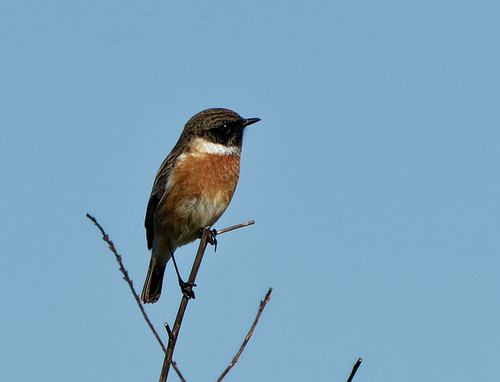
European Stonechat (Saxicola rubicola) European Stonechat
Northern Wheatear (Oenanthe oenanthe) Northern Wheatear

Media

Loading…

In short

The European Stonechat and Northern Wheatear are both small, ground-dwelling birds, but they differ significantly in structure and plumage. The Northern Wheatear is larger with a more upright stance and a distinctive white rump and tail pattern, while the European Stonechat is more compact with a dark head and less conspicuous tail markings.

Identification tips

  1. Look for the Northern Wheatear's white rump and tail with a black 'T' pattern. 2. Note the European Stonechat's dark head and orange breast. 3. Observe the habitat: Northern Wheatears prefer open, rocky areas, while European Stonechats are found in shrubby fields. 4. Listen for calls: European Stonechats have a 'chack' call, Northern Wheatears a 'wheet'.

Size

The Northern Wheatear is larger and more upright compared to the more compact European Stonechat.

Plumage

The European Stonechat has a dark head with a white collar and orange breast, whereas the Northern Wheatear features a pale face with a bold white supercilium and a distinctive white rump and tail with a black 'T' pattern.

Behaviour

Both species are ground-dwelling, but the Northern Wheatear often bobs its tail and is more likely to be seen in open, barren areas.

Habitat

The Northern Wheatear prefers open, rocky, or barren habitats, while the European Stonechat is more commonly found in shrubby, grassy areas.

Voice

The European Stonechat has a distinctive 'chack' call, while the Northern Wheatear's call is more of a whistled 'wheet'.

Submit a better description

Use the same sections as the comparison. Your text is published immediately.

The European Stonechat and Northern Wheatear are both small, ground-dwelling birds, but they differ significantly in structure and plumage. The Northern Wheatear is larger with a more upright stance and a distinctive white rump and tail pattern, while the European Stonechat is more compact with a dark head and less conspicuous tail markings.

  1. Look for the Northern Wheatear's white rump and tail with a black 'T' pattern. 2. Note the European Stonechat's dark head and orange breast. 3. Observe the habitat: Northern Wheatears prefer open, rocky areas, while European Stonechats are found in shrubby fields. 4. Listen for calls: European Stonechats have a 'chack' call, Northern Wheatears a 'wheet'.

The Northern Wheatear is larger and more upright compared to the more compact European Stonechat.

The European Stonechat has a dark head with a white collar and orange breast, whereas the Northern Wheatear features a pale face with a bold white supercilium and a distinctive white rump and tail with a black 'T' pattern.

Both species are ground-dwelling, but the Northern Wheatear often bobs its tail and is more likely to be seen in open, barren areas.

The Northern Wheatear prefers open, rocky, or barren habitats, while the European Stonechat is more commonly found in shrubby, grassy areas.

The European Stonechat has a distinctive 'chack' call, while the Northern Wheatear's call is more of a whistled 'wheet'.

Discard your changes?

You have unsaved edits. If you leave now, those changes will be lost.

European Stonechat · Northern Wheatear · My Tricky Birds