Birdr

European Storm-Petrel vs Sooty Shearwater

Hydrobates pelagicus versus Ardenna grisea

Play a quiz with European Storm-Petrel and Sooty Shearwater
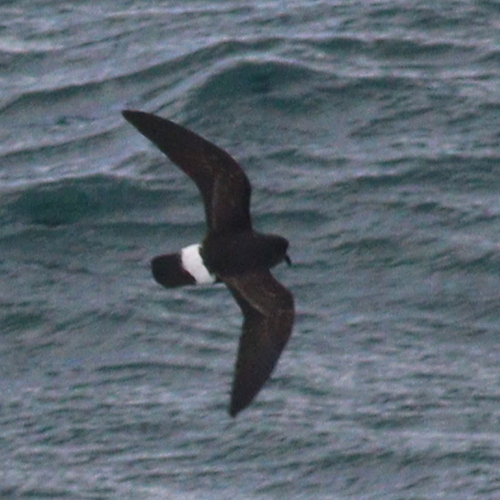
European Storm-Petrel (Hydrobates pelagicus) European Storm-Petrel
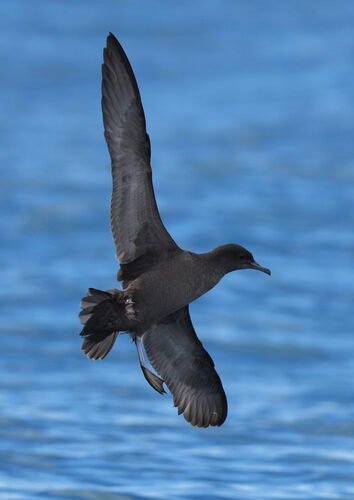
Sooty Shearwater (Ardenna grisea) Sooty Shearwater

Media

Loading…

In short

The European Storm-Petrel and the Sooty Shearwater are both seabirds but differ significantly in size and appearance. The European Storm-Petrel is much smaller and has a distinctive fluttering flight, while the Sooty Shearwater is larger with a more powerful, gliding flight.

Identification tips

  1. Size: Look for the much smaller size of the European Storm-Petrel. 2. Plumage: Note the white rump of the European Storm-Petrel. 3. Flight Pattern: Observe the fluttering flight of the storm-petrel versus the gliding of the shearwater. 4. Location: Consider the geographical location and season; Sooty Shearwaters are often seen during migration in different hemispheres.

Size

The European Storm-Petrel is much smaller, about the size of a sparrow, whereas the Sooty Shearwater is larger, comparable to a crow.

Plumage

The European Storm-Petrel is mostly black with a white rump, while the Sooty Shearwater is uniformly dark brown or sooty grey without a contrasting rump.

Behaviour

European Storm-Petrels have a fluttering flight pattern, often appearing to 'dance' on the water surface. In contrast, Sooty Shearwaters exhibit a strong, direct flight with long glides.

Habitat

Both species are pelagic, but the European Storm-Petrel is more commonly found in European waters, while the Sooty Shearwater has a broader range, often seen in the Southern Hemisphere and during migrations.

Voice

European Storm-Petrels are known for their distinctive calls at breeding colonies, whereas Sooty Shearwaters are generally silent at sea.

Submit a better description

Use the same sections as the comparison. Your text is published immediately.

The European Storm-Petrel and the Sooty Shearwater are both seabirds but differ significantly in size and appearance. The European Storm-Petrel is much smaller and has a distinctive fluttering flight, while the Sooty Shearwater is larger with a more powerful, gliding flight.

  1. Size: Look for the much smaller size of the European Storm-Petrel. 2. Plumage: Note the white rump of the European Storm-Petrel. 3. Flight Pattern: Observe the fluttering flight of the storm-petrel versus the gliding of the shearwater. 4. Location: Consider the geographical location and season; Sooty Shearwaters are often seen during migration in different hemispheres.

The European Storm-Petrel is much smaller, about the size of a sparrow, whereas the Sooty Shearwater is larger, comparable to a crow.

The European Storm-Petrel is mostly black with a white rump, while the Sooty Shearwater is uniformly dark brown or sooty grey without a contrasting rump.

European Storm-Petrels have a fluttering flight pattern, often appearing to 'dance' on the water surface. In contrast, Sooty Shearwaters exhibit a strong, direct flight with long glides.

Both species are pelagic, but the European Storm-Petrel is more commonly found in European waters, while the Sooty Shearwater has a broader range, often seen in the Southern Hemisphere and during migrations.

European Storm-Petrels are known for their distinctive calls at breeding colonies, whereas Sooty Shearwaters are generally silent at sea.

Discard your changes?

You have unsaved edits. If you leave now, those changes will be lost.

European Storm-Petrel · Sooty Shearwater · My Tricky Birds