
Evening Grosbeak vs Pine Grosbeak
Hesperiphona vespertina versus Pinicola enucleator
Play a quiz with Evening Grosbeak and Pine Grosbeak
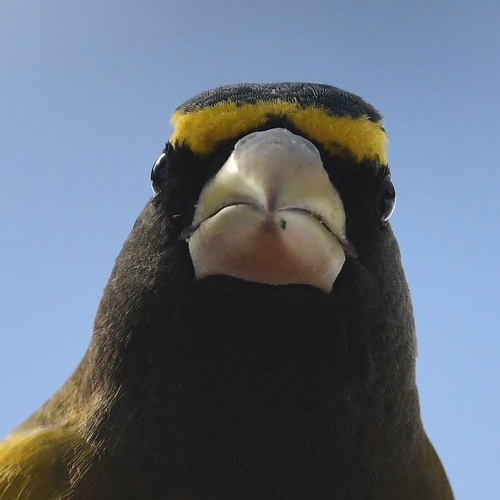
Evening Grosbeak
Pine Grosbeak
In short
Evening Grosbeaks and Pine Grosbeaks can be distinguished by their bill shape and plumage. Evening Grosbeaks have a more robust, conical bill, while Pine Grosbeaks have a smaller, more curved bill. Plumage differences include the Evening Grosbeak's brighter yellow and black patterning compared to the Pine Grosbeak's more subdued pinkish-red tones.
Identification tips
- Bill shape: Look for the robust, conical bill of the Evening Grosbeak versus the smaller, curved bill of the Pine Grosbeak. 2. Plumage color: Check for the bright yellow and black of the Evening Grosbeak compared to the pinkish-red or grayish tones of the Pine Grosbeak. 3. Wing pattern: Evening Grosbeaks have a prominent white wing patch. 4. Vocalization: Listen for the clear call of the Evening Grosbeak versus the melodic song of the Pine Grosbeak.
Size
Both species are similar in size, but the Pine Grosbeak is slightly larger and bulkier.
Plumage
Evening Grosbeaks have bright yellow bodies with black wings and tail, and a striking white wing patch. Males are particularly vibrant. Pine Grosbeaks, on the other hand, have a more muted appearance with males showing pinkish-red plumage and females being more grayish with a hint of yellow or orange on the head and rump.
Behaviour
Both species are often seen in flocks, especially in winter. Evening Grosbeaks are known for their irruptive movements, while Pine Grosbeaks are more resident but can also move in response to food availability.
Habitat
Evening Grosbeaks are often found in mixed and coniferous forests, particularly during irruptions. Pine Grosbeaks prefer boreal forests and are more associated with higher altitudes and northern latitudes.
Voice
Evening Grosbeaks have a distinctive, clear, and piercing call note, while Pine Grosbeaks have a more melodic, flute-like song. Calls can be a useful distinction in the field.