Birdr

Fairy Prion vs Antarctic Prion

Pachyptila turtur versus Pachyptila desolata

Play a quiz with Fairy Prion and Antarctic Prion

Fairy Prion (Pachyptila turtur) Fairy Prion
Antarctic Prion (Pachyptila desolata) Antarctic Prion

Media

Loading…

In short

Fairy Prion and Antarctic Prion are both small seabirds of the genus Pachyptila, often found in similar oceanic environments. The most reliable field mark is the bill: Fairy Prion has a narrower bill compared to the broader bill of Antarctic Prion. Both species have similar plumage patterns, but subtle differences in structure and behavior can aid identification.

Identification tips

  1. Bill Shape: Look for the narrower bill of the Fairy Prion compared to the broader bill of the Antarctic Prion. 2. Plumage Tone: Note any slight differences in darkness, with Antarctic Prion potentially appearing darker. 3. Location: Consider the geographic range post-breeding, as Fairy Prions move to warmer waters. 4. Behavior: Observe feeding behavior, though differences are subtle. Use these tips with caution, as both species are very similar.

Size

Both species are similar in size, typical of small prions.

Plumage

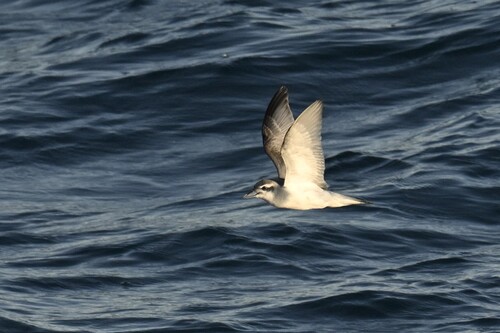
Both have gray upperparts with a black diagonal band across the wings, but the Antarctic Prion may appear slightly darker overall. The Fairy Prion's plumage is typical of the genus, with no distinctive color differences noted.

Behaviour

Both species engage in surface-seizing and dipping for crustaceans, but specific behavioral differences are not well-documented.

Habitat

Both species are oceanic and nest on islands, but Fairy Prions tend to move north into temperate and subtropical waters post-breeding.

Voice

Vocalization differences are not well-documented in the provided sources.

Submit a better description

Use the same sections as the comparison. Your text is published immediately.

Fairy Prion and Antarctic Prion are both small seabirds of the genus Pachyptila, often found in similar oceanic environments. The most reliable field mark is the bill: Fairy Prion has a narrower bill compared to the broader bill of Antarctic Prion. Both species have similar plumage patterns, but subtle differences in structure and behavior can aid identification.

  1. Bill Shape: Look for the narrower bill of the Fairy Prion compared to the broader bill of the Antarctic Prion. 2. Plumage Tone: Note any slight differences in darkness, with Antarctic Prion potentially appearing darker. 3. Location: Consider the geographic range post-breeding, as Fairy Prions move to warmer waters. 4. Behavior: Observe feeding behavior, though differences are subtle. Use these tips with caution, as both species are very similar.

Both species are similar in size, typical of small prions.

Both have gray upperparts with a black diagonal band across the wings, but the Antarctic Prion may appear slightly darker overall. The Fairy Prion's plumage is typical of the genus, with no distinctive color differences noted.

Both species engage in surface-seizing and dipping for crustaceans, but specific behavioral differences are not well-documented.

Both species are oceanic and nest on islands, but Fairy Prions tend to move north into temperate and subtropical waters post-breeding.

Vocalization differences are not well-documented in the provided sources.

Discard your changes?

You have unsaved edits. If you leave now, those changes will be lost.

Fairy Prion · Antarctic Prion · My Tricky Birds