Birdr

Fan-tailed Cuckoo vs Brush Cuckoo

Cacomantis flabelliformis versus Cacomantis variolosus

Play a quiz with Fan-tailed Cuckoo and Brush Cuckoo
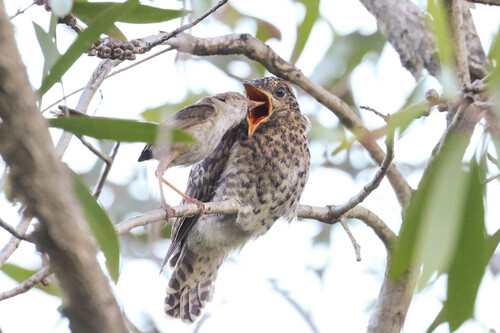
Fan-tailed Cuckoo (Cacomantis flabelliformis) Fan-tailed Cuckoo
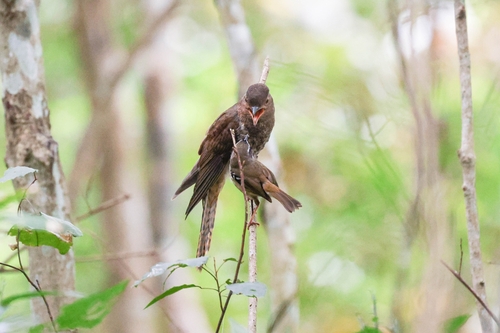
Brush Cuckoo (Cacomantis variolosus) Brush Cuckoo

Media

Loading…

In short

The Fan-tailed Cuckoo and Brush Cuckoo are similar in size and shape, but can be distinguished by their vocalizations and subtle plumage differences. The Fan-tailed Cuckoo typically has a more distinct rufous wash on the underparts and a more pronounced tail pattern. Vocalizations are a reliable differentiator, with the Fan-tailed Cuckoo having a more melodious call.

Identification tips

  1. Listen for vocalizations: Fan-tailed Cuckoo has a melodious call; Brush Cuckoo's call is repetitive. 2. Check underparts: Fan-tailed Cuckoo shows more rufous wash. 3. Examine tail pattern: Fan-tailed Cuckoo has more distinct white tips. 4. Consider habitat overlap: Both species can be found in similar environments, so rely on vocal and plumage differences.

Size

Both species are similar in size, with no significant differences in overall body length or structure.

Plumage

The Fan-tailed Cuckoo often shows a more pronounced rufous wash on the underparts and a more distinct tail pattern with white tips. The Brush Cuckoo tends to have a plainer appearance with less contrast in the tail.

Behaviour

Both species exhibit similar behaviors, often seen perched quietly or flying between trees. There are no significant behavioral differences noted in the field.

Habitat

Both species occupy similar habitats, often found in forests, woodlands, and scrublands. They can overlap in range, making habitat alone an unreliable differentiator.

Voice

The Fan-tailed Cuckoo has a more melodious and descending call, while the Brush Cuckoo's call is typically a repetitive, monotonous series of notes. Vocalizations are a key field mark.

Submit a better description

Use the same sections as the comparison. Your text is published immediately.

The Fan-tailed Cuckoo and Brush Cuckoo are similar in size and shape, but can be distinguished by their vocalizations and subtle plumage differences. The Fan-tailed Cuckoo typically has a more distinct rufous wash on the underparts and a more pronounced tail pattern. Vocalizations are a reliable differentiator, with the Fan-tailed Cuckoo having a more melodious call.

  1. Listen for vocalizations: Fan-tailed Cuckoo has a melodious call; Brush Cuckoo's call is repetitive. 2. Check underparts: Fan-tailed Cuckoo shows more rufous wash. 3. Examine tail pattern: Fan-tailed Cuckoo has more distinct white tips. 4. Consider habitat overlap: Both species can be found in similar environments, so rely on vocal and plumage differences.

Both species are similar in size, with no significant differences in overall body length or structure.

The Fan-tailed Cuckoo often shows a more pronounced rufous wash on the underparts and a more distinct tail pattern with white tips. The Brush Cuckoo tends to have a plainer appearance with less contrast in the tail.

Both species exhibit similar behaviors, often seen perched quietly or flying between trees. There are no significant behavioral differences noted in the field.

Both species occupy similar habitats, often found in forests, woodlands, and scrublands. They can overlap in range, making habitat alone an unreliable differentiator.

The Fan-tailed Cuckoo has a more melodious and descending call, while the Brush Cuckoo's call is typically a repetitive, monotonous series of notes. Vocalizations are a key field mark.

Discard your changes?

You have unsaved edits. If you leave now, those changes will be lost.

Fan-tailed Cuckoo · Brush Cuckoo · My Tricky Birds