Birdr

Fan-tailed Grassbird vs Familiar Chat

Catriscus brevirostris versus Oenanthe familiaris

Play a quiz with Fan-tailed Grassbird and Familiar Chat
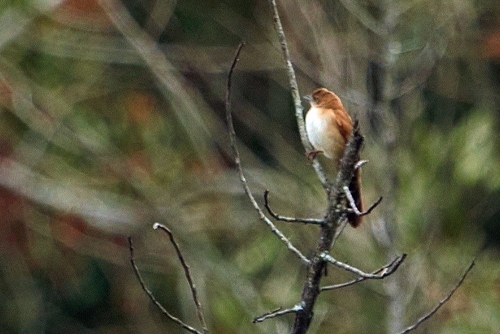
Fan-tailed Grassbird (Catriscus brevirostris) Fan-tailed Grassbird
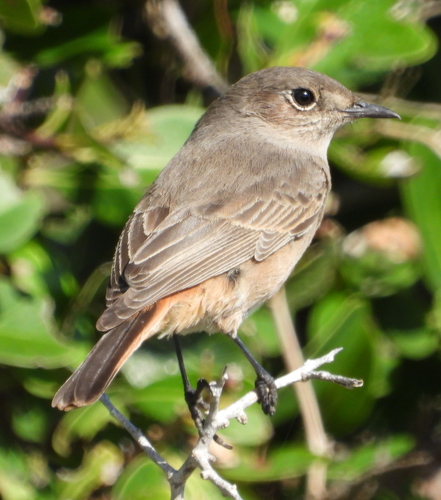
Familiar Chat (Oenanthe familiaris) Familiar Chat

Media

Loading…

In short

The Fan-tailed Grassbird and Familiar Chat can be distinguished primarily by their habitat preferences and tail shape. The grassbird prefers dense, grassy areas and has a longer, more fan-shaped tail, while the chat is often found in open, rocky habitats and has a shorter, square tail.

Identification tips

  1. Tail Shape: Look for the longer, fan-shaped tail of the grassbird versus the shorter, square tail of the chat. 2. Habitat: Note the habitat; grassbirds are in dense grasses, chats in open, rocky areas. 3. Behavior: Observe behavior; grassbirds are more secretive, chats more conspicuous. 4. Vocalization: Listen for the grassbird's repetitive song versus the chat's varied calls.

Size

Both species are small passerines, but the Fan-tailed Grassbird is slightly larger and more elongated compared to the more compact Familiar Chat.

Plumage

The Fan-tailed Grassbird has a more streaked appearance with brown and buff tones, while the Familiar Chat is generally more uniform with a warm brown or rufous coloration.

Behaviour

Fan-tailed Grassbirds are often seen skulking in dense grass, flicking their tails, whereas Familiar Chats are more conspicuous, often perching openly on rocks or low branches.

Habitat

Fan-tailed Grassbirds prefer dense, grassy or marshy habitats, while Familiar Chats are typically found in open, rocky areas, often near human habitation.

Voice

The Fan-tailed Grassbird has a distinctive, repetitive song often given in flight, whereas the Familiar Chat's song is more varied and includes mimicry.

Submit a better description

Use the same sections as the comparison. Your text is published immediately.

The Fan-tailed Grassbird and Familiar Chat can be distinguished primarily by their habitat preferences and tail shape. The grassbird prefers dense, grassy areas and has a longer, more fan-shaped tail, while the chat is often found in open, rocky habitats and has a shorter, square tail.

  1. Tail Shape: Look for the longer, fan-shaped tail of the grassbird versus the shorter, square tail of the chat. 2. Habitat: Note the habitat; grassbirds are in dense grasses, chats in open, rocky areas. 3. Behavior: Observe behavior; grassbirds are more secretive, chats more conspicuous. 4. Vocalization: Listen for the grassbird's repetitive song versus the chat's varied calls.

Both species are small passerines, but the Fan-tailed Grassbird is slightly larger and more elongated compared to the more compact Familiar Chat.

The Fan-tailed Grassbird has a more streaked appearance with brown and buff tones, while the Familiar Chat is generally more uniform with a warm brown or rufous coloration.

Fan-tailed Grassbirds are often seen skulking in dense grass, flicking their tails, whereas Familiar Chats are more conspicuous, often perching openly on rocks or low branches.

Fan-tailed Grassbirds prefer dense, grassy or marshy habitats, while Familiar Chats are typically found in open, rocky areas, often near human habitation.

The Fan-tailed Grassbird has a distinctive, repetitive song often given in flight, whereas the Familiar Chat's song is more varied and includes mimicry.

Discard your changes?

You have unsaved edits. If you leave now, those changes will be lost.

Fan-tailed Grassbird · Familiar Chat · My Tricky Birds