Birdr

Fasciated Antshrike vs Black-crowned Antshrike

Cymbilaimus lineatus versus Thamnophilus atrinucha

Play a quiz with Fasciated Antshrike and Black-crowned Antshrike
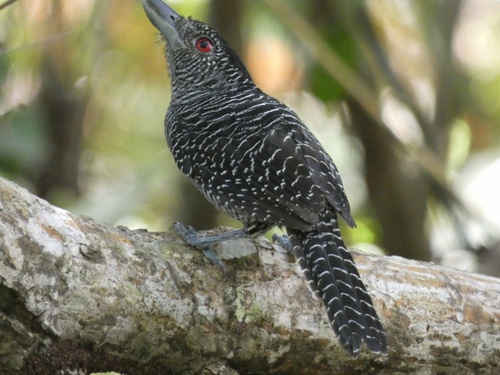
Fasciated Antshrike (Cymbilaimus lineatus) Fasciated Antshrike
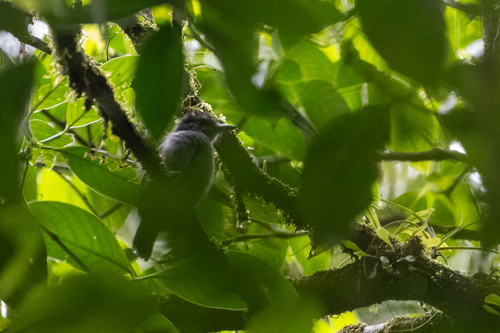
Black-crowned Antshrike (Thamnophilus atrinucha) Black-crowned Antshrike

Media

Loading…

In short

The Fasciated Antshrike is best identified by its heavy, hooked bill and distinctive barring on the body, while the Black-crowned Antshrike features a black crown and more uniform plumage. Both species are often found in mixed-species flocks, but differ in their preferred forest strata.

Identification tips

  1. Look for the heavy, hooked bill of the Fasciated Antshrike. 2. Note the barred plumage of the Fasciated Antshrike versus the more uniform plumage of the Black-crowned Antshrike. 3. Observe the habitat: midstory for Fasciated, understory for Black-crowned. 4. Listen for vocal differences if possible, as these can be distinctive.

Size

Both species are similar in size, typical of antshrikes, with no significant differences in structure.

Plumage

The Fasciated Antshrike has a barred dark brown and yellowish-brown plumage with red eyes, and females have a russet crown. The Black-crowned Antshrike has a black crown and more uniform plumage, lacking the extensive barring seen in the Fasciated Antshrike.

Behaviour

Both species forage in mixed-species flocks, but the Fasciated Antshrike is more often found in the midstory, while the Black-crowned Antshrike is typically in the understory.

Habitat

The Fasciated Antshrike is found in tropical lowland forests, primarily below 800 m, while the Black-crowned Antshrike inhabits both primary and secondary tropical forests throughout Central and northern South America.

Voice

Vocalizations are not detailed in the provided notes, but differences in song and call can be significant in antshrike identification.

Submit a better description

Use the same sections as the comparison. Your text is published immediately.

The Fasciated Antshrike is best identified by its heavy, hooked bill and distinctive barring on the body, while the Black-crowned Antshrike features a black crown and more uniform plumage. Both species are often found in mixed-species flocks, but differ in their preferred forest strata.

  1. Look for the heavy, hooked bill of the Fasciated Antshrike. 2. Note the barred plumage of the Fasciated Antshrike versus the more uniform plumage of the Black-crowned Antshrike. 3. Observe the habitat: midstory for Fasciated, understory for Black-crowned. 4. Listen for vocal differences if possible, as these can be distinctive.

Both species are similar in size, typical of antshrikes, with no significant differences in structure.

The Fasciated Antshrike has a barred dark brown and yellowish-brown plumage with red eyes, and females have a russet crown. The Black-crowned Antshrike has a black crown and more uniform plumage, lacking the extensive barring seen in the Fasciated Antshrike.

Both species forage in mixed-species flocks, but the Fasciated Antshrike is more often found in the midstory, while the Black-crowned Antshrike is typically in the understory.

The Fasciated Antshrike is found in tropical lowland forests, primarily below 800 m, while the Black-crowned Antshrike inhabits both primary and secondary tropical forests throughout Central and northern South America.

Vocalizations are not detailed in the provided notes, but differences in song and call can be significant in antshrike identification.

Discard your changes?

You have unsaved edits. If you leave now, those changes will be lost.

Fasciated Antshrike · Black-crowned Antshrike · My Tricky Birds