Birdr

Fasciated Antshrike vs Great Antshrike

Cymbilaimus lineatus versus Taraba major

Play a quiz with Fasciated Antshrike and Great Antshrike
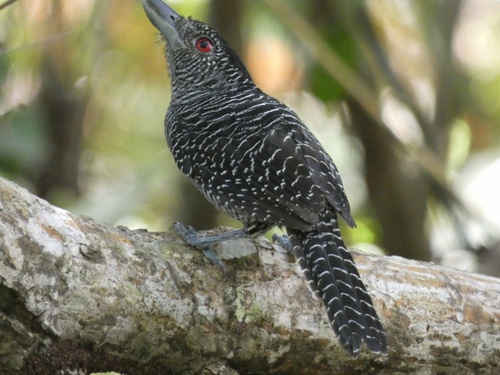
Fasciated Antshrike (Cymbilaimus lineatus) Fasciated Antshrike
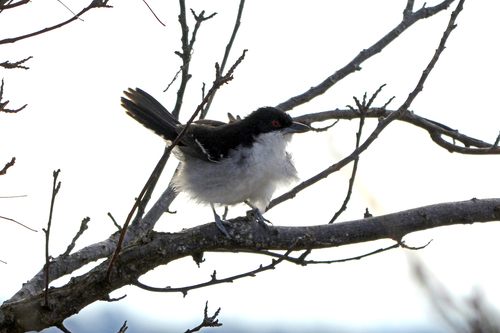
Great Antshrike (Taraba major) Great Antshrike

Media

Loading…

In short

The Fasciated Antshrike and Great Antshrike can be distinguished by their plumage and behavior. The Fasciated Antshrike has a barred appearance and forages in the midstory, while the Great Antshrike is larger, with males showing stark black and white plumage and females a rich rufous-brown, often skulking in dense, low growth.

Identification tips

  1. Size and Build: Great Antshrikes are larger and heavier. 2. Plumage: Look for barred plumage in Fasciated Antshrikes; Great Antshrikes have stark black and white or rufous-brown plumage. 3. Behavior: Fasciated Antshrikes are more likely to be seen in mixed-species flocks, while Great Antshrikes are more solitary and secretive.

Size

The Great Antshrike is notably larger and has a heavier build compared to the Fasciated Antshrike.

Plumage

Fasciated Antshrikes have barred dark brown and yellowish-brown plumage with red eyes and a russet crown in females. Great Antshrike males are black above and white below, while females are rich rufous-brown.

Behaviour

Fasciated Antshrikes forage in the midstory and are often seen in mixed-species flocks. Great Antshrikes are more solitary and skulk through dense, low growth.

Habitat

Fasciated Antshrikes are found in tropical lowland forests, primarily below 800 m. Great Antshrikes prefer dense, low growth areas.

Submit a better description

Use the same sections as the comparison. Your text is published immediately.

The Fasciated Antshrike and Great Antshrike can be distinguished by their plumage and behavior. The Fasciated Antshrike has a barred appearance and forages in the midstory, while the Great Antshrike is larger, with males showing stark black and white plumage and females a rich rufous-brown, often skulking in dense, low growth.

  1. Size and Build: Great Antshrikes are larger and heavier. 2. Plumage: Look for barred plumage in Fasciated Antshrikes; Great Antshrikes have stark black and white or rufous-brown plumage. 3. Behavior: Fasciated Antshrikes are more likely to be seen in mixed-species flocks, while Great Antshrikes are more solitary and secretive.

The Great Antshrike is notably larger and has a heavier build compared to the Fasciated Antshrike.

Fasciated Antshrikes have barred dark brown and yellowish-brown plumage with red eyes and a russet crown in females. Great Antshrike males are black above and white below, while females are rich rufous-brown.

Fasciated Antshrikes forage in the midstory and are often seen in mixed-species flocks. Great Antshrikes are more solitary and skulk through dense, low growth.

Fasciated Antshrikes are found in tropical lowland forests, primarily below 800 m. Great Antshrikes prefer dense, low growth areas.

Discard your changes?

You have unsaved edits. If you leave now, those changes will be lost.

Fasciated Antshrike · Great Antshrike · My Tricky Birds