Birdr

Fieldfare vs Spotted Flycatcher

Turdus pilaris versus Muscicapa striata

Play a quiz with Fieldfare and Spotted Flycatcher
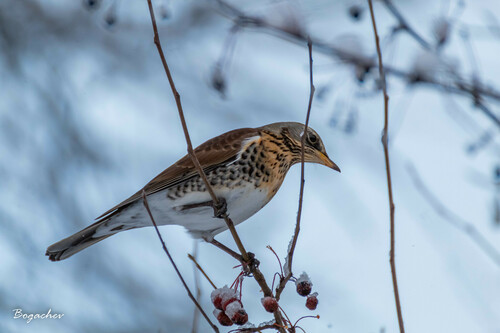
Fieldfare (Turdus pilaris) Fieldfare
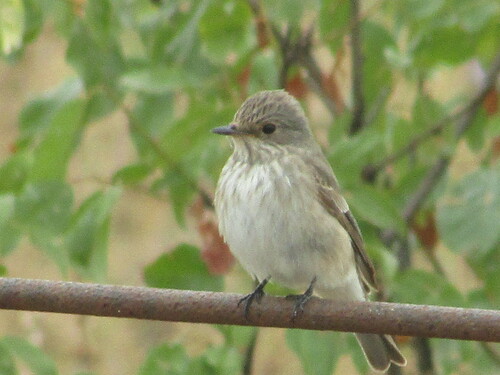
Spotted Flycatcher (Muscicapa striata) Spotted Flycatcher

Media

Loading…

In short

The Fieldfare and Spotted Flycatcher are easily distinguished by size and behavior. Fieldfares are larger thrushes with distinctive plumage, while Spotted Flycatchers are smaller and more active, often seen sallying for insects.

Identification tips

Size and shape: Fieldfare is larger and more robust. Plumage: Look for the Fieldfare's gray head and streaked breast versus the Spotted Flycatcher's plain face and subtle streaking. Behavior: Note the Fieldfare's ground foraging in flocks compared to the Spotted Flycatcher's solitary insect-catching flights. Habitat: Consider the environment; Fieldfares in open fields, Spotted Flycatchers near trees. Calls: Listen for the Fieldfare's harsh calls versus the Spotted Flycatcher's soft 'tsee'.

Size

Fieldfare is significantly larger than the Spotted Flycatcher, with a more robust build typical of thrushes.

Plumage

Fieldfare has a gray head, brown back, and a heavily streaked breast, while the Spotted Flycatcher is more uniformly brownish-gray with subtle streaks on the breast and a plain face.

Behaviour

Fieldfares often forage on the ground in flocks, especially in winter. Spotted Flycatchers are more solitary and frequently seen perched on branches, darting out to catch flying insects.

Habitat

Fieldfares are found in open fields, parks, and woodland edges, especially in winter. Spotted Flycatchers prefer woodland edges, gardens, and open areas with scattered trees during the breeding season.

Voice

Fieldfare has a harsh 'chack-chack' call, while the Spotted Flycatcher's call is a soft, high-pitched 'tsee'.

Submit a better description

Use the same sections as the comparison. Your text is published immediately.

The Fieldfare and Spotted Flycatcher are easily distinguished by size and behavior. Fieldfares are larger thrushes with distinctive plumage, while Spotted Flycatchers are smaller and more active, often seen sallying for insects.

Size and shape: Fieldfare is larger and more robust. Plumage: Look for the Fieldfare's gray head and streaked breast versus the Spotted Flycatcher's plain face and subtle streaking. Behavior: Note the Fieldfare's ground foraging in flocks compared to the Spotted Flycatcher's solitary insect-catching flights. Habitat: Consider the environment; Fieldfares in open fields, Spotted Flycatchers near trees. Calls: Listen for the Fieldfare's harsh calls versus the Spotted Flycatcher's soft 'tsee'.

Fieldfare is significantly larger than the Spotted Flycatcher, with a more robust build typical of thrushes.

Fieldfare has a gray head, brown back, and a heavily streaked breast, while the Spotted Flycatcher is more uniformly brownish-gray with subtle streaks on the breast and a plain face.

Fieldfares often forage on the ground in flocks, especially in winter. Spotted Flycatchers are more solitary and frequently seen perched on branches, darting out to catch flying insects.

Fieldfares are found in open fields, parks, and woodland edges, especially in winter. Spotted Flycatchers prefer woodland edges, gardens, and open areas with scattered trees during the breeding season.

Fieldfare has a harsh 'chack-chack' call, while the Spotted Flycatcher's call is a soft, high-pitched 'tsee'.

Discard your changes?

You have unsaved edits. If you leave now, those changes will be lost.

Fieldfare · Spotted Flycatcher · My Tricky Birds