Birdr

Forest Scimitarbill vs Common Scimitarbill

Rhinopomastus castaneiceps versus Rhinopomastus cyanomelas

Play a quiz with Forest Scimitarbill and Common Scimitarbill
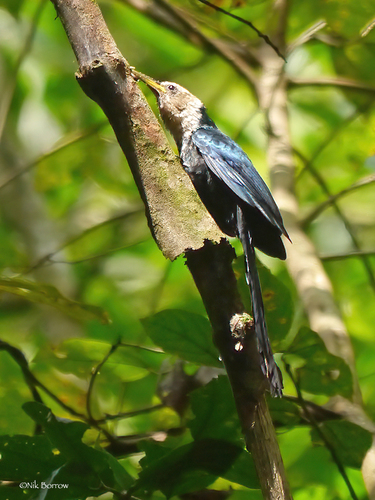
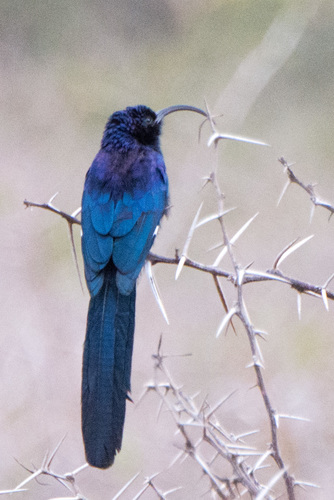
Forest Scimitarbill (Rhinopomastus castaneiceps) Forest Scimitarbill
Common Scimitarbill (Rhinopomastus cyanomelas) Common Scimitarbill

Media

Loading…

In short

The Forest Scimitarbill and Common Scimitarbill are similar in appearance but can be distinguished by their habitat preferences and subtle plumage differences. The Forest Scimitarbill is typically found in denser forest habitats, whereas the Common Scimitarbill is more often seen in open woodlands and savannas. Observing the habitat and subtle differences in plumage can aid in identification.

Identification tips

  1. Habitat: Check the surrounding environment; dense forests suggest Forest Scimitarbill, while open woodlands suggest Common Scimitarbill. 2. Plumage: Look for subtle differences in plumage contrast and iridescence. 3. Behavior: Observe foraging behavior; both species are active and use their bills to probe for insects. 4. Vocalizations: If possible, listen for calls, though this may require experience with their vocalizations.

Size

Both species are similar in size, with long, decurved bills characteristic of scimitarbills.

Plumage

The Forest Scimitarbill tends to have a more uniform dark plumage with a slight iridescence, while the Common Scimitarbill may show more contrast with a slightly paler belly. These differences can be subtle and are best observed in good lighting conditions.

Behaviour

Both species exhibit similar foraging behaviors, often seen probing into bark and foliage with their long bills. They are generally active and can be seen hopping along branches.

Habitat

The Forest Scimitarbill is typically found in dense forests, while the Common Scimitarbill prefers open woodlands and savannas. This habitat preference is a key distinguishing factor.

Voice

Vocalizations of both species are not well-documented in the provided sources, but they are known to have distinctive calls. Listening for differences may aid in identification, though this requires familiarity with their calls.

Submit a better description

Use the same sections as the comparison. Your text is published immediately.

The Forest Scimitarbill and Common Scimitarbill are similar in appearance but can be distinguished by their habitat preferences and subtle plumage differences. The Forest Scimitarbill is typically found in denser forest habitats, whereas the Common Scimitarbill is more often seen in open woodlands and savannas. Observing the habitat and subtle differences in plumage can aid in identification.

  1. Habitat: Check the surrounding environment; dense forests suggest Forest Scimitarbill, while open woodlands suggest Common Scimitarbill. 2. Plumage: Look for subtle differences in plumage contrast and iridescence. 3. Behavior: Observe foraging behavior; both species are active and use their bills to probe for insects. 4. Vocalizations: If possible, listen for calls, though this may require experience with their vocalizations.

Both species are similar in size, with long, decurved bills characteristic of scimitarbills.

The Forest Scimitarbill tends to have a more uniform dark plumage with a slight iridescence, while the Common Scimitarbill may show more contrast with a slightly paler belly. These differences can be subtle and are best observed in good lighting conditions.

Both species exhibit similar foraging behaviors, often seen probing into bark and foliage with their long bills. They are generally active and can be seen hopping along branches.

The Forest Scimitarbill is typically found in dense forests, while the Common Scimitarbill prefers open woodlands and savannas. This habitat preference is a key distinguishing factor.

Vocalizations of both species are not well-documented in the provided sources, but they are known to have distinctive calls. Listening for differences may aid in identification, though this requires familiarity with their calls.

Discard your changes?

You have unsaved edits. If you leave now, those changes will be lost.

Forest Scimitarbill · Common Scimitarbill · My Tricky Birds