Birdr

Fork-tailed Flycatcher vs Black-capped Vireo

Tyrannus savana versus Vireo atricapilla

Play a quiz with Fork-tailed Flycatcher and Black-capped Vireo
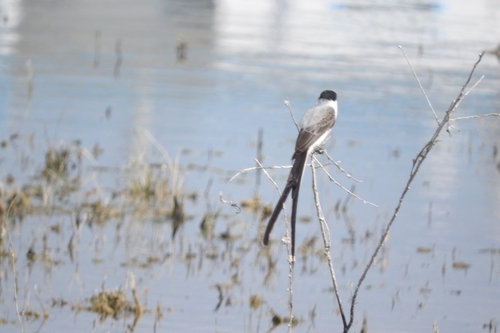
Fork-tailed Flycatcher (Tyrannus savana) Fork-tailed Flycatcher
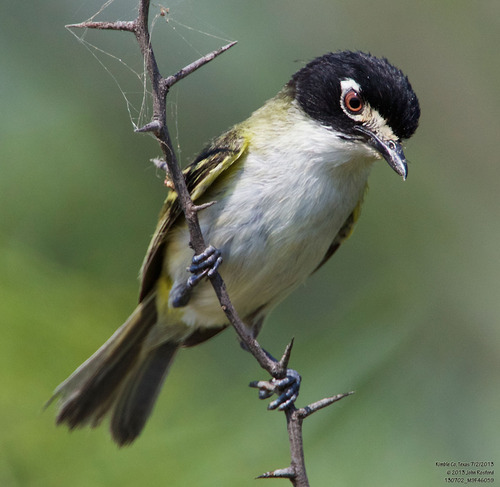
Black-capped Vireo (Vireo atricapilla) Black-capped Vireo

Media

Loading…

In short

The Fork-tailed Flycatcher and Black-capped Vireo are distinct in appearance and behavior. The Fork-tailed Flycatcher is notable for its long, deeply forked tail, while the Black-capped Vireo is recognized by its contrasting black cap and white spectacles. These species differ significantly in habitat preference and vocalizations.

Identification tips

1. Tail: Look for the Fork-tailed Flycatcher's long, forked tail. 2. Cap and Spectacles: Note the Black-capped Vireo's black cap and white spectacles. 3. Habitat: Consider the habitat; open areas suggest Fork-tailed Flycatcher, while dense shrubs indicate Black-capped Vireo. 4. Behavior: Observe behavior; flycatchers perch openly, vireos are more secretive. 5. Vocalization: Listen for the vireo's distinctive singing pattern.

Size

The Fork-tailed Flycatcher is larger and more slender than the compact Black-capped Vireo.

Plumage

The Fork-tailed Flycatcher has a strikingly long, forked tail and a mostly white body with a black cap. In contrast, the Black-capped Vireo features a black cap, white spectacles, and olive-green upperparts.

Behaviour

Fork-tailed Flycatchers are often seen perched prominently in open areas, sallying out to catch insects. Black-capped Vireos are more secretive, foraging in dense shrubbery.

Habitat

Fork-tailed Flycatchers prefer open habitats like savannas and grasslands, while Black-capped Vireos inhabit scrubby areas and thickets in south-central U.S. and north-central Mexico.

Voice

The Black-capped Vireo is known for its persistent singing with alternating phrases, especially during the breeding season. Fork-tailed Flycatcher vocalizations are less notable and not a primary identification feature.

Submit a better description

Use the same sections as the comparison. Your text is published immediately.

The Fork-tailed Flycatcher and Black-capped Vireo are distinct in appearance and behavior. The Fork-tailed Flycatcher is notable for its long, deeply forked tail, while the Black-capped Vireo is recognized by its contrasting black cap and white spectacles. These species differ significantly in habitat preference and vocalizations.

1. Tail: Look for the Fork-tailed Flycatcher's long, forked tail. 2. Cap and Spectacles: Note the Black-capped Vireo's black cap and white spectacles. 3. Habitat: Consider the habitat; open areas suggest Fork-tailed Flycatcher, while dense shrubs indicate Black-capped Vireo. 4. Behavior: Observe behavior; flycatchers perch openly, vireos are more secretive. 5. Vocalization: Listen for the vireo's distinctive singing pattern.

The Fork-tailed Flycatcher is larger and more slender than the compact Black-capped Vireo.

The Fork-tailed Flycatcher has a strikingly long, forked tail and a mostly white body with a black cap. In contrast, the Black-capped Vireo features a black cap, white spectacles, and olive-green upperparts.

Fork-tailed Flycatchers are often seen perched prominently in open areas, sallying out to catch insects. Black-capped Vireos are more secretive, foraging in dense shrubbery.

Fork-tailed Flycatchers prefer open habitats like savannas and grasslands, while Black-capped Vireos inhabit scrubby areas and thickets in south-central U.S. and north-central Mexico.

The Black-capped Vireo is known for its persistent singing with alternating phrases, especially during the breeding season. Fork-tailed Flycatcher vocalizations are less notable and not a primary identification feature.

Discard your changes?

You have unsaved edits. If you leave now, those changes will be lost.

Fork-tailed Flycatcher · Black-capped Vireo · My Tricky Birds