Birdr

Fork-tailed Storm-Petrel vs Eastern Meadowlark

Hydrobates furcatus versus Sturnella magna

Play a quiz with Fork-tailed Storm-Petrel and Eastern Meadowlark
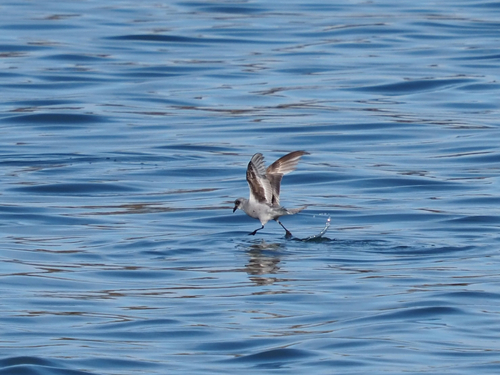
Fork-tailed Storm-Petrel (Hydrobates furcatus) Fork-tailed Storm-Petrel
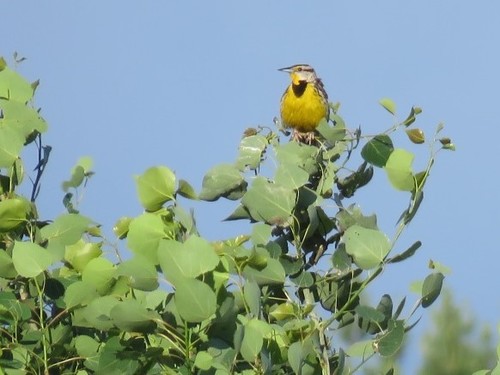
Eastern Meadowlark (Sturnella magna) Eastern Meadowlark

Media

Loading…

In short

Fork-tailed Storm-Petrel and Eastern Meadowlark are vastly different in appearance and habitat. The Storm-Petrel is a small, bluish-gray seabird, while the Meadowlark is a larger, ground-dwelling bird with bright yellow underparts. Their distinct environments and behaviors make them easy to differentiate in the field.

Identification tips

Location: Check the habitat; Storm-Petrels are at sea, Meadowlarks in fields. Plumage: Look for the Storm-Petrel's bluish-gray color versus the Meadowlark's yellow and black pattern. Behavior: Note the Storm-Petrel's flight over water compared to the Meadowlark's ground foraging.

Size

The Fork-tailed Storm-Petrel is much smaller than the Eastern Meadowlark.

Plumage

The Fork-tailed Storm-Petrel has a bluish-gray plumage, whereas the Eastern Meadowlark is characterized by its bright yellow underparts and a distinctive black 'V' on its chest.

Behaviour

Fork-tailed Storm-Petrels are pelagic and often seen hovering or pattering over the ocean surface. Eastern Meadowlarks are terrestrial, often seen walking on the ground in open fields.

Habitat

Fork-tailed Storm-Petrels inhabit open ocean environments, while Eastern Meadowlarks are found in grasslands and open fields.

Voice

The Eastern Meadowlark is known for its melodious song, which is a key identifier. Fork-tailed Storm-Petrels are generally silent at sea.

Submit a better description

Use the same sections as the comparison. Your text is published immediately.

Fork-tailed Storm-Petrel and Eastern Meadowlark are vastly different in appearance and habitat. The Storm-Petrel is a small, bluish-gray seabird, while the Meadowlark is a larger, ground-dwelling bird with bright yellow underparts. Their distinct environments and behaviors make them easy to differentiate in the field.

Location: Check the habitat; Storm-Petrels are at sea, Meadowlarks in fields. Plumage: Look for the Storm-Petrel's bluish-gray color versus the Meadowlark's yellow and black pattern. Behavior: Note the Storm-Petrel's flight over water compared to the Meadowlark's ground foraging.

The Fork-tailed Storm-Petrel is much smaller than the Eastern Meadowlark.

The Fork-tailed Storm-Petrel has a bluish-gray plumage, whereas the Eastern Meadowlark is characterized by its bright yellow underparts and a distinctive black 'V' on its chest.

Fork-tailed Storm-Petrels are pelagic and often seen hovering or pattering over the ocean surface. Eastern Meadowlarks are terrestrial, often seen walking on the ground in open fields.

Fork-tailed Storm-Petrels inhabit open ocean environments, while Eastern Meadowlarks are found in grasslands and open fields.

The Eastern Meadowlark is known for its melodious song, which is a key identifier. Fork-tailed Storm-Petrels are generally silent at sea.

Discard your changes?

You have unsaved edits. If you leave now, those changes will be lost.

Fork-tailed Storm-Petrel · Eastern Meadowlark · My Tricky Birds