Birdr

Fork-tailed Woodnymph vs Crested Barbet

Thalurania furcata versus Trachyphonus vaillantii

Play a quiz with Fork-tailed Woodnymph and Crested Barbet
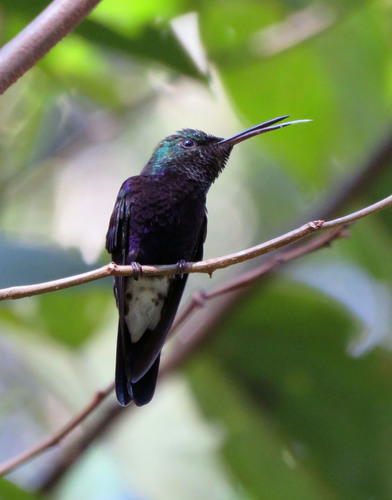
Fork-tailed Woodnymph (Thalurania furcata) Fork-tailed Woodnymph
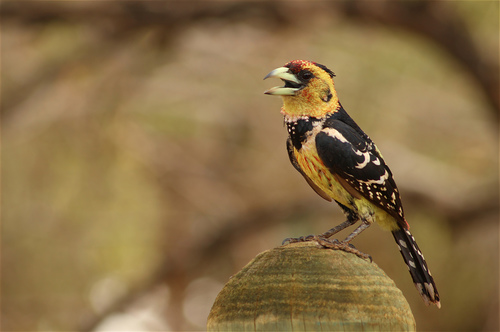
Crested Barbet (Trachyphonus vaillantii) Crested Barbet

Media

Loading…

In short

The Fork-tailed Woodnymph and Crested Barbet are easily distinguished by their size and habitat preferences. The Woodnymph is a small, iridescent hummingbird found in forested areas, while the Barbet is a larger, colorful bird common in open woodlands and savannas.

Identification tips

1. Note the size difference: Woodnymphs are tiny compared to Barbets. 2. Look for the Woodnymph's iridescent plumage and forked tail versus the Barbet's colorful, crested appearance. 3. Observe behavior: Woodnymphs hover near flowers; Barbets perch and forage. 4. Consider habitat: Woodnymphs in forests, Barbets in open areas. 5. Listen for vocalizations: Woodnymphs are quiet; Barbets have loud calls.

Size

The Fork-tailed Woodnymph is much smaller than the Crested Barbet, typical of hummingbirds compared to barbets.

Plumage

The Fork-tailed Woodnymph has iridescent green and blue plumage with a distinctive forked tail, whereas the Crested Barbet displays a striking mix of yellow, black, and red with a prominent crest.

Behaviour

The Woodnymph hovers and feeds on nectar, often seen darting between flowers. In contrast, the Barbet is more often seen perching and foraging for insects and fruit.

Habitat

Fork-tailed Woodnymphs are typically found in humid forests and edges, while Crested Barbets prefer open woodlands, savannas, and gardens.

Voice

The Fork-tailed Woodnymph is generally silent or makes soft chipping sounds, whereas the Crested Barbet has a loud, trilling call.

Submit a better description

Use the same sections as the comparison. Your text is published immediately.

The Fork-tailed Woodnymph and Crested Barbet are easily distinguished by their size and habitat preferences. The Woodnymph is a small, iridescent hummingbird found in forested areas, while the Barbet is a larger, colorful bird common in open woodlands and savannas.

1. Note the size difference: Woodnymphs are tiny compared to Barbets. 2. Look for the Woodnymph's iridescent plumage and forked tail versus the Barbet's colorful, crested appearance. 3. Observe behavior: Woodnymphs hover near flowers; Barbets perch and forage. 4. Consider habitat: Woodnymphs in forests, Barbets in open areas. 5. Listen for vocalizations: Woodnymphs are quiet; Barbets have loud calls.

The Fork-tailed Woodnymph is much smaller than the Crested Barbet, typical of hummingbirds compared to barbets.

The Fork-tailed Woodnymph has iridescent green and blue plumage with a distinctive forked tail, whereas the Crested Barbet displays a striking mix of yellow, black, and red with a prominent crest.

The Woodnymph hovers and feeds on nectar, often seen darting between flowers. In contrast, the Barbet is more often seen perching and foraging for insects and fruit.

Fork-tailed Woodnymphs are typically found in humid forests and edges, while Crested Barbets prefer open woodlands, savannas, and gardens.

The Fork-tailed Woodnymph is generally silent or makes soft chipping sounds, whereas the Crested Barbet has a loud, trilling call.

Discard your changes?

You have unsaved edits. If you leave now, those changes will be lost.

Fork-tailed Woodnymph · Crested Barbet · My Tricky Birds