Birdr

Forster's Tern vs Roseate Tern

Sterna forsteri versus Sterna dougallii

Play a quiz with Forster's Tern and Roseate Tern
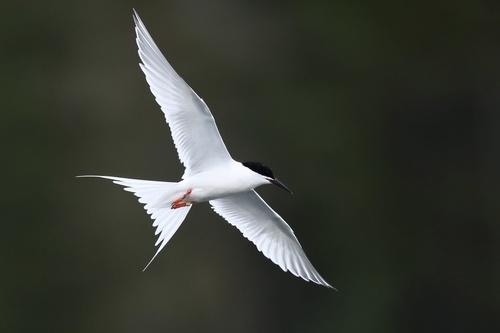
Forster's Tern (Sterna forsteri) Forster's Tern
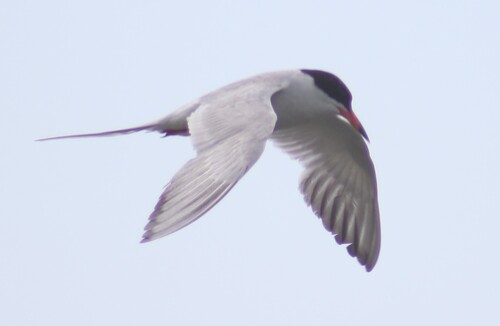
Roseate Tern (Sterna dougallii) Roseate Tern

Media

Loading…

In short

Forster's Tern and Roseate Tern can be distinguished by their tail and bill characteristics. Forster's Tern has a longer tail with deeply forked outer feathers and a thicker, orange bill, while Roseate Tern features a more slender, black bill and a less pronounced tail fork. Both species are similar in size and general coloration, but these structural differences are key.

Identification tips

  1. Tail and Bill: Look for the longer, deeply forked tail and thicker orange bill of Forster's Tern versus the slender black bill and less forked tail of Roseate Tern. 2. Plumage: Note the faint pink blush in fresh plumage of Roseate Tern. 3. Habitat: Consider the habitat; Forster's Tern is more likely in marshes, Roseate Tern on coastal islands. 4. Vocalization: Listen for the distinct calls; Roseate Tern has a unique 'gakkering' call.

Size

Both species are similar in size, typical of medium-sized terns.

Plumage

Forster's Tern has a white body with a pale gray mantle and wings, and a black cap during breeding season. Roseate Tern also has a white body but is noted for its faint pinkish hue on the breast in fresh plumage and a more uniform gray on the wings.

Behaviour

Forster's Tern is more often associated with marshes and open water, while Roseate Tern is typically found on islands and coastal areas. Both species exhibit similar flight patterns typical of terns.

Habitat

Forster's Tern is primarily a marsh bird found in fresh, brackish, and saltwater marshes, while Roseate Tern is more coastal, breeding on islands and along shorelines.

Voice

Forster's Tern has a varied vocal repertoire, while Roseate Tern is known for its grating flight calls and 'gakkering' threat display.

Submit a better description

Use the same sections as the comparison. Your text is published immediately.

Forster's Tern and Roseate Tern can be distinguished by their tail and bill characteristics. Forster's Tern has a longer tail with deeply forked outer feathers and a thicker, orange bill, while Roseate Tern features a more slender, black bill and a less pronounced tail fork. Both species are similar in size and general coloration, but these structural differences are key.

  1. Tail and Bill: Look for the longer, deeply forked tail and thicker orange bill of Forster's Tern versus the slender black bill and less forked tail of Roseate Tern. 2. Plumage: Note the faint pink blush in fresh plumage of Roseate Tern. 3. Habitat: Consider the habitat; Forster's Tern is more likely in marshes, Roseate Tern on coastal islands. 4. Vocalization: Listen for the distinct calls; Roseate Tern has a unique 'gakkering' call.

Both species are similar in size, typical of medium-sized terns.

Forster's Tern has a white body with a pale gray mantle and wings, and a black cap during breeding season. Roseate Tern also has a white body but is noted for its faint pinkish hue on the breast in fresh plumage and a more uniform gray on the wings.

Forster's Tern is more often associated with marshes and open water, while Roseate Tern is typically found on islands and coastal areas. Both species exhibit similar flight patterns typical of terns.

Forster's Tern is primarily a marsh bird found in fresh, brackish, and saltwater marshes, while Roseate Tern is more coastal, breeding on islands and along shorelines.

Forster's Tern has a varied vocal repertoire, while Roseate Tern is known for its grating flight calls and 'gakkering' threat display.

Discard your changes?

You have unsaved edits. If you leave now, those changes will be lost.

Forster's Tern · Roseate Tern · My Tricky Birds