Birdr

Franklin's Gull vs Audouin's Gull

Leucophaeus pipixcan versus Ichthyaetus audouinii

Play a quiz with Franklin's Gull and Audouin's Gull
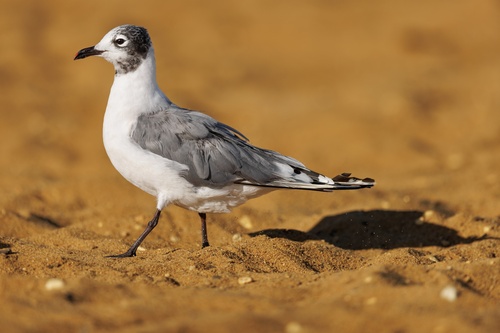
Franklin's Gull (Leucophaeus pipixcan) Franklin's Gull
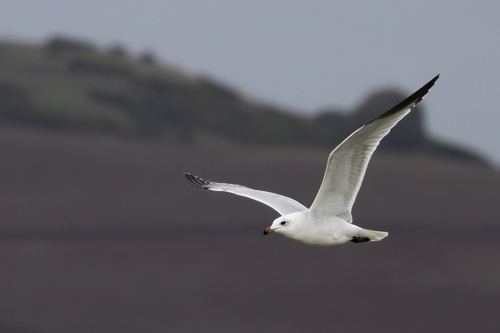
Audouin's Gull (Ichthyaetus audouinii) Audouin's Gull

Media

Loading…

In short

Franklin's Gull (Leucophaeus pipixcan) and Audouin's Gull (Ichthyaetus audouinii) can be distinguished by their size, coloration, habitat preferences, and behavioral characteristics. Franklin's Gull is smaller and has a more distinct black cap and pale body, while Audouin's Gull is larger, has a more uniform gray body with a black wingtip and is often found in marine environments, particularly in Mediterranean regions.

Identification tips

  1. Birds of the World Similar-Species Diagnostics:
  2. Franklin’s Gull is noted to have a “striking black hood” during breeding, which is a key identifier. This species’ “light, buoyant flight” and “pinkish bloom” are also mentioned.
  3. Audouin's Gull is characterized by its “larger size” and “black wingtip,” suggesting a more robust overall appearance compared to Franklin's Gull.

  4. AI Field Diagnostics:

  5. Size Comparison: When observing, note that Franklin's Gull is significantly smaller than Audouin's Gull. If the bird appears to be roughly the size of a pigeon, it's more likely a Franklin's Gull; if it's larger, it's likely an Audouin's Gull.
  6. Plumage Characteristics: Look for the distinctive black cap of the Franklin's Gull during breeding season, whereas Audouin's Gull has a more uniform gray coloration and distinct black wing tips.
  7. Behavioral Cues: If you see a gull actively foraging in fields or near marshes, it is more likely to be a Franklin's Gull. In contrast, Audouin's Gull is often associated with coastal areas and fishing activities.
  8. Vocalization: Pay attention to the calls; if the call is soft and plaintive, it is likely a Franklin's Gull. A loud and harsh call would indicate an Audouin's Gull.
  9. Habitat: Be mindful of the habitat; Franklin's Gulls are mostly found inland near marshes, while Audouin's Gulls thrive along coastlines and estuaries.

These distinctions will aid birdwatchers in accurately identifying and differentiating between Franklin's and Audouin's Gulls in the field.

Size

Plumage

Behaviour

Habitat

Voice

Submit a better description

Use the same sections as the comparison. Your text is published immediately.

Franklin's Gull (Leucophaeus pipixcan) and Audouin's Gull (Ichthyaetus audouinii) can be distinguished by their size, coloration, habitat preferences, and behavioral characteristics. Franklin's Gull is smaller and has a more distinct black cap and pale body, while Audouin's Gull is larger, has a more uniform gray body with a black wingtip and is often found in marine environments, particularly in Mediterranean regions.

  1. Birds of the World Similar-Species Diagnostics:
  2. Franklin’s Gull is noted to have a “striking black hood” during breeding, which is a key identifier. This species’ “light, buoyant flight” and “pinkish bloom” are also mentioned.
  3. Audouin's Gull is characterized by its “larger size” and “black wingtip,” suggesting a more robust overall appearance compared to Franklin's Gull.

  4. AI Field Diagnostics:

  5. Size Comparison: When observing, note that Franklin's Gull is significantly smaller than Audouin's Gull. If the bird appears to be roughly the size of a pigeon, it's more likely a Franklin's Gull; if it's larger, it's likely an Audouin's Gull.
  6. Plumage Characteristics: Look for the distinctive black cap of the Franklin's Gull during breeding season, whereas Audouin's Gull has a more uniform gray coloration and distinct black wing tips.
  7. Behavioral Cues: If you see a gull actively foraging in fields or near marshes, it is more likely to be a Franklin's Gull. In contrast, Audouin's Gull is often associated with coastal areas and fishing activities.
  8. Vocalization: Pay attention to the calls; if the call is soft and plaintive, it is likely a Franklin's Gull. A loud and harsh call would indicate an Audouin's Gull.
  9. Habitat: Be mindful of the habitat; Franklin's Gulls are mostly found inland near marshes, while Audouin's Gulls thrive along coastlines and estuaries.

These distinctions will aid birdwatchers in accurately identifying and differentiating between Franklin's and Audouin's Gulls in the field.

  • Franklin's Gull: Measures approximately 30-36 cm (12-14 in) in length with a wingspan of about 76-82 cm (30-32 in). This species is small for a gull.
  • Audouin's Gull: Larger, measuring around 45-50 cm (18-20 in) in length with a wingspan of 120-130 cm (47-51 in), making it a robust gull.
  • Franklin's Gull: Features a striking black hood (head) during breeding, a pale gray body, and white underparts. The wings are gray with white tips. The juvenile is mottled brown and lacks the black cap.
  • Audouin's Gull: Characterized by a gray body, white head, and black wing tips. In breeding plumage, it has a light gray mantle and a uniform pale head, while the juvenile is predominantly brown with a more subtle pattern compared to the Franklin's Gull.
  • Franklin's Gull: Known for its agile, buoyant flight and tendency to form large flocks, often seen foraging in agricultural fields for insects and worms. It displays a unique behavior of feeding on insects while in flight or snatching them from water surfaces.
  • Audouin's Gull: Typically more solitary or found in smaller groups. It is commonly seen foraging along the coast, feeding primarily on fish, and displays a more powerful flight style compared to the Franklin's Gull.
  • Franklin's Gull: Prefers breeding in remote marshes of interior North America, often shifting colonies based on water levels. They nest in colonies over water in bulrush or cattail marshes.
  • Audouin's Gull: Inhabits coastal habitats, especially near the Mediterranean Sea, often found in coastal wetlands, estuaries, and around fishing ports.
  • Franklin's Gull: Produces a series of soft, plaintive calls, often used in social interactions and during nesting.
  • Audouin's Gull: Has a distinctive, loud, and harsh call, which is often used to assert dominance or during feeding.

Discard your changes?

You have unsaved edits. If you leave now, those changes will be lost.

Franklin's Gull · Audouin's Gull · My Tricky Birds