Fulvous Whistling-Duck vs Bar-headed Goose
Dendrocygna bicolor versus Anser indicus
Play a quiz with Fulvous Whistling-Duck and Bar-headed Goose

Fulvous Whistling-Duck
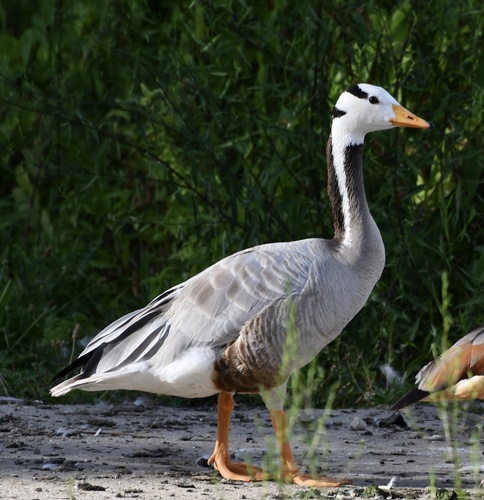
Bar-headed Goose
In short
The Fulvous Whistling-Duck and Bar-headed Goose are both waterfowl but differ significantly in appearance and behavior. The Fulvous Whistling-Duck is smaller, with a distinctive fulvous (tawny) body and dark wings, while the Bar-headed Goose is larger, with a striking white head marked by two black bars. These differences are easily observed in the field.
Identification tips
1. Look for size: Fulvous Whistling-Ducks are smaller and more compact. 2. Check plumage: Fulvous Whistling-Ducks have tawny bodies with dark wings; Bar-headed Geese have gray bodies with a white head and black bars. 3. Observe behavior: Fulvous Whistling-Ducks are often in rice fields, while Bar-headed Geese are seen grazing in open fields. 4. Listen for calls: Fulvous Whistling-Ducks have a raspy, two-noted call, unlike the honking of Bar-headed Geese.
Size
The Fulvous Whistling-Duck is smaller and more compact than the larger Bar-headed Goose.
Plumage
Fulvous Whistling-Ducks have a tawny body with dark wings and a pale stripe along the flanks. In contrast, Bar-headed Geese have a mostly gray body with a white head and two prominent black bars across the head.
Behaviour
Fulvous Whistling-Ducks often feed in rice fields and are known for their nocturnal calls, while Bar-headed Geese are more likely to be seen grazing in open fields or flying at high altitudes during migration.
Habitat
Fulvous Whistling-Ducks are commonly found in flooded rice fields and wetlands, whereas Bar-headed Geese prefer open grasslands and are known for their high-altitude migrations over the Himalayas.
Voice
Fulvous Whistling-Ducks have a distinctive two-noted, raspy call often heard at night. Bar-headed Geese have a more typical goose-like honking call.