
Birdr

Fulvous Whistling-Duck vs Emperor Goose

Dendrocygna bicolor versus Anser canagicus

Play a quiz with Fulvous Whistling-Duck and Emperor Goose
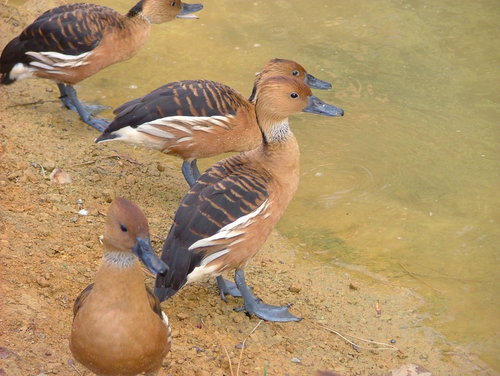
Fulvous Whistling-Duck (Dendrocygna bicolor) Fulvous Whistling-Duck
Emperor Goose (Anser canagicus) Emperor Goose

Media

Loading…

In short

Fulvous Whistling-Duck and Emperor Goose are both waterfowl but differ greatly in appearance and habitat preference. The Fulvous Whistling-Duck is a warm-toned, slender duck often found in ricefields, while the Emperor Goose is a stocky, gray goose with a distinctive white head, typically found in coastal areas.

Identification tips

  1. Plumage: Look for the warm, fulvous color of the Fulvous Whistling-Duck versus the gray body and white head of the Emperor Goose. 2. Size and Shape: Note the slender build of the Fulvous Whistling-Duck compared to the stocky Emperor Goose. 3. Habitat: Check the surrounding environment; ricefields suggest Fulvous Whistling-Duck, coastal areas suggest Emperor Goose. 4. Vocalization: Listen for the raspy calls of the Fulvous Whistling-Duck, especially at night.

Size

The Fulvous Whistling-Duck is smaller and more slender than the stocky and robust Emperor Goose.

Plumage

The Fulvous Whistling-Duck has a rich, warm, fulvous body with darker wings and a pale stripe along the flanks. In contrast, the Emperor Goose has a predominantly gray body with a striking white head and neck, and a black chin strap.

Behaviour

Fulvous Whistling-Ducks are often seen in flocks and are more active at night, while Emperor Geese are typically seen in smaller groups or pairs and are more diurnal.

Habitat

Fulvous Whistling-Ducks prefer flooded ricefields and marshes, whereas Emperor Geese are found in coastal tundra and rocky shorelines.

Voice

Fulvous Whistling-Ducks produce a two-noted raspy call, often heard at night. Emperor Geese are generally quieter, with softer calls.

Submit a better description

Use the same sections as the comparison. Your text is published immediately.

Fulvous Whistling-Duck and Emperor Goose are both waterfowl but differ greatly in appearance and habitat preference. The Fulvous Whistling-Duck is a warm-toned, slender duck often found in ricefields, while the Emperor Goose is a stocky, gray goose with a distinctive white head, typically found in coastal areas.

  1. Plumage: Look for the warm, fulvous color of the Fulvous Whistling-Duck versus the gray body and white head of the Emperor Goose. 2. Size and Shape: Note the slender build of the Fulvous Whistling-Duck compared to the stocky Emperor Goose. 3. Habitat: Check the surrounding environment; ricefields suggest Fulvous Whistling-Duck, coastal areas suggest Emperor Goose. 4. Vocalization: Listen for the raspy calls of the Fulvous Whistling-Duck, especially at night.

The Fulvous Whistling-Duck is smaller and more slender than the stocky and robust Emperor Goose.

The Fulvous Whistling-Duck has a rich, warm, fulvous body with darker wings and a pale stripe along the flanks. In contrast, the Emperor Goose has a predominantly gray body with a striking white head and neck, and a black chin strap.

Fulvous Whistling-Ducks are often seen in flocks and are more active at night, while Emperor Geese are typically seen in smaller groups or pairs and are more diurnal.

Fulvous Whistling-Ducks prefer flooded ricefields and marshes, whereas Emperor Geese are found in coastal tundra and rocky shorelines.

Fulvous Whistling-Ducks produce a two-noted raspy call, often heard at night. Emperor Geese are generally quieter, with softer calls.

Discard your changes?

You have unsaved edits. If you leave now, those changes will be lost.

Fulvous Whistling-Duck · Emperor Goose · My Tricky Birds