Birdr

Fulvous Whistling-Duck vs Mourning Wheatear

Dendrocygna bicolor versus Oenanthe lugens

Play a quiz with Fulvous Whistling-Duck and Mourning Wheatear

Fulvous Whistling-Duck (Dendrocygna bicolor) Fulvous Whistling-Duck
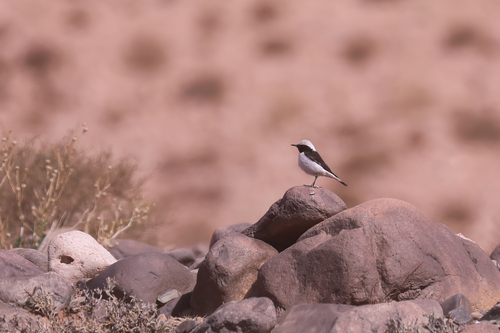
Mourning Wheatear (Oenanthe lugens) Mourning Wheatear

Media

Loading…

In short

The Fulvous Whistling-Duck and Mourning Wheatear are easily distinguished by habitat and appearance. The Fulvous Whistling-Duck is a waterfowl found in wetland areas, while the Mourning Wheatear is a passerine bird found in arid, rocky regions. Their plumage and behaviors are distinct, making them unlikely to be confused in the field.

Identification tips

1. Habitat: Check the environment; wetlands indicate Fulvous Whistling-Duck, rocky arid areas suggest Mourning Wheatear. 2. Size and Shape: Ducks are larger and bulkier compared to the small, slender wheatear. 3. Plumage: Look for the warm brown tones of the duck versus the stark black and white of the wheatear. 4. Behavior: Ducks may be in groups in water, wheatears are solitary on land.

Size

The Fulvous Whistling-Duck is significantly larger, being a duck, compared to the smaller, sparrow-sized Mourning Wheatear.

Plumage

The Fulvous Whistling-Duck has a warm, fulvous-brown plumage with a darker back and wings, while the Mourning Wheatear features contrasting black and white plumage, with a black face and throat and white underparts.

Behaviour

Fulvous Whistling-Ducks are often seen in groups, feeding in flooded fields, while Mourning Wheatears are solitary or in pairs, often seen perching on rocks or hopping on the ground.

Habitat

Fulvous Whistling-Ducks inhabit wetlands and flooded rice fields, whereas Mourning Wheatears are found in arid, rocky landscapes.

Voice

Fulvous Whistling-Ducks produce a distinctive two-noted, raspy whistle, often heard at night. Mourning Wheatears have a varied song, but specific vocalization details are not provided.

Submit a better description

Use the same sections as the comparison. Your text is published immediately.

The Fulvous Whistling-Duck and Mourning Wheatear are easily distinguished by habitat and appearance. The Fulvous Whistling-Duck is a waterfowl found in wetland areas, while the Mourning Wheatear is a passerine bird found in arid, rocky regions. Their plumage and behaviors are distinct, making them unlikely to be confused in the field.

1. Habitat: Check the environment; wetlands indicate Fulvous Whistling-Duck, rocky arid areas suggest Mourning Wheatear. 2. Size and Shape: Ducks are larger and bulkier compared to the small, slender wheatear. 3. Plumage: Look for the warm brown tones of the duck versus the stark black and white of the wheatear. 4. Behavior: Ducks may be in groups in water, wheatears are solitary on land.

The Fulvous Whistling-Duck is significantly larger, being a duck, compared to the smaller, sparrow-sized Mourning Wheatear.

The Fulvous Whistling-Duck has a warm, fulvous-brown plumage with a darker back and wings, while the Mourning Wheatear features contrasting black and white plumage, with a black face and throat and white underparts.

Fulvous Whistling-Ducks are often seen in groups, feeding in flooded fields, while Mourning Wheatears are solitary or in pairs, often seen perching on rocks or hopping on the ground.

Fulvous Whistling-Ducks inhabit wetlands and flooded rice fields, whereas Mourning Wheatears are found in arid, rocky landscapes.

Fulvous Whistling-Ducks produce a distinctive two-noted, raspy whistle, often heard at night. Mourning Wheatears have a varied song, but specific vocalization details are not provided.

Discard your changes?

You have unsaved edits. If you leave now, those changes will be lost.

Fulvous Whistling-Duck · Mourning Wheatear · My Tricky Birds