Garganey vs Mottled Duck
Spatula querquedula versus Anas fulvigula
Play a quiz with Garganey and Mottled Duck
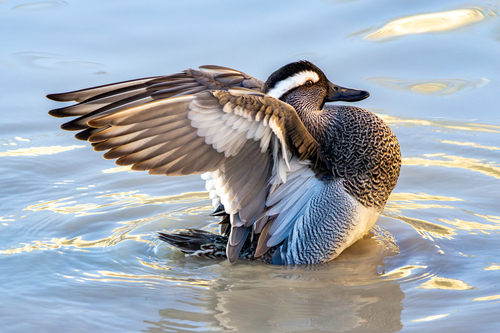
Garganey
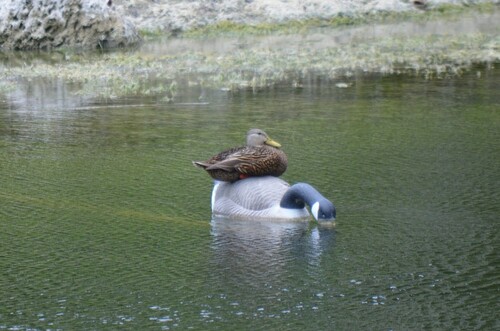
Mottled Duck
In short
The Garganey and Mottled Duck can be distinguished by their plumage and habitat preferences. Garganeys have a distinctive white supercilium, while Mottled Ducks lack this feature and have a more uniformly brown appearance. Habitat also plays a role, with Garganeys favoring freshwater wetlands in Europe and Asia, whereas Mottled Ducks are found in the southeastern United States.
Identification tips
Look for the white supercilium on Garganeys, especially in males. Note the uniform brown plumage of Mottled Ducks and their lack of facial markings. Consider the habitat and geographic location: Garganeys are migratory and found in Europe and Asia, while Mottled Ducks are resident in the southeastern U.S. Listen for the Garganey's rattling call versus the Mottled Duck's quack.
Size
Both species are medium-sized ducks, but the Mottled Duck is generally slightly larger and bulkier than the Garganey.
Plumage
Garganey males have a striking white supercilium and a grayish body, while females are mottled brown but still show the supercilium. Mottled Ducks are uniformly mottled brown with no distinct facial markings, resembling a female Mallard but darker.
Behaviour
Both species dabble in shallow water, but Garganeys are more likely to be seen in small flocks during migration, while Mottled Ducks are often seen in pairs or small groups.
Habitat
Garganeys prefer freshwater wetlands and are migratory, found in Europe and Asia. Mottled Ducks are resident in the southeastern United States, favoring marshes and coastal areas.
Voice
Garganeys produce a distinctive rattling call during the breeding season, while Mottled Ducks have a more typical duck quack, similar to a Mallard.