Birdr

Garganey vs Northern Shoveler

Spatula querquedula versus Spatula clypeata

Play a quiz with Garganey and Northern Shoveler
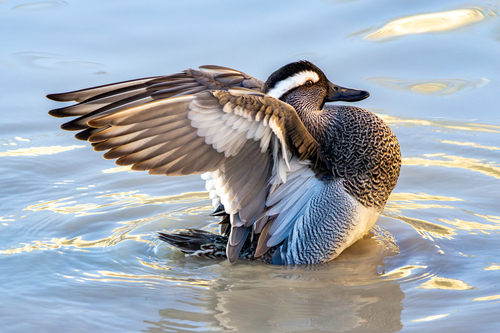
Garganey (Spatula querquedula) Garganey
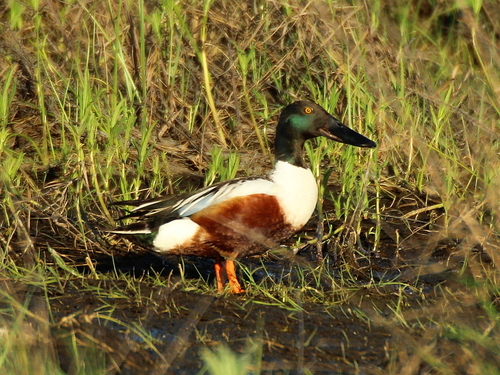
Northern Shoveler (Spatula clypeata) Northern Shoveler

Media

Loading…

In short

The Garganey and Northern Shoveler are both dabbling ducks with distinctive features. The most reliable field mark is the bill shape: the Northern Shoveler has a large, spatula-shaped bill, while the Garganey's bill is more typical of dabbling ducks. Both species have similar body sizes, but their plumage and behavior offer additional clues for identification.

Identification tips

Size

Both species are similar in size, typical of medium-sized dabbling ducks.

Plumage

Male Garganeys have a distinctive white supercilium and a more subtle overall plumage compared to the male Northern Shoveler, which has a striking green head, white chest, and chestnut flanks. Female Garganeys and Northern Shovelers are more similar, both being mottled brown, but the Shoveler's larger bill is a key differentiator.

Behaviour

Northern Shovelers are more territorial and often seen in pairs longer than Garganeys. Both species dabble for food but the Shoveler's feeding behavior is more distinctive due to its unique bill.

Habitat

Both species use wetlands, but the Northern Shoveler is more likely to be found in a variety of wetland habitats including coastal marshes and rice prairies during winter. Garganeys prefer shallow freshwater habitats.

Voice

Vocalizations are not a primary distinguishing feature in the field for these species.

Submit a better description

Use the same sections as the comparison. Your text is published immediately.

The Garganey and Northern Shoveler are both dabbling ducks with distinctive features. The most reliable field mark is the bill shape: the Northern Shoveler has a large, spatula-shaped bill, while the Garganey's bill is more typical of dabbling ducks. Both species have similar body sizes, but their plumage and behavior offer additional clues for identification.

  • Bill Shape: Look for the Northern Shoveler's large, spatula-shaped bill.
  • Male Plumage: Note the Garganey's white supercilium versus the Shoveler's green head and chestnut flanks.
  • Behavior: Observe feeding behavior; Shovelers often sweep their bills side to side.
  • Habitat: Consider the habitat; Shovelers are more versatile in wetland types.

Both species are similar in size, typical of medium-sized dabbling ducks.

Male Garganeys have a distinctive white supercilium and a more subtle overall plumage compared to the male Northern Shoveler, which has a striking green head, white chest, and chestnut flanks. Female Garganeys and Northern Shovelers are more similar, both being mottled brown, but the Shoveler's larger bill is a key differentiator.

Northern Shovelers are more territorial and often seen in pairs longer than Garganeys. Both species dabble for food but the Shoveler's feeding behavior is more distinctive due to its unique bill.

Both species use wetlands, but the Northern Shoveler is more likely to be found in a variety of wetland habitats including coastal marshes and rice prairies during winter. Garganeys prefer shallow freshwater habitats.

Vocalizations are not a primary distinguishing feature in the field for these species.

Discard your changes?

You have unsaved edits. If you leave now, those changes will be lost.

Garganey · Northern Shoveler · My Tricky Birds