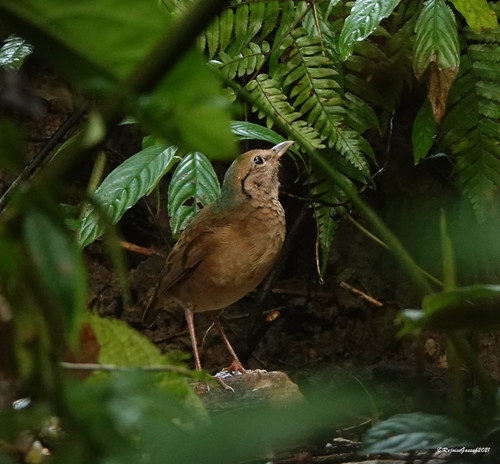
Garnet Pitta vs Blue-naped Pitta
Erythropitta granatina versus Hydrornis nipalensis
Play a quiz with Garnet Pitta and Blue-naped Pitta
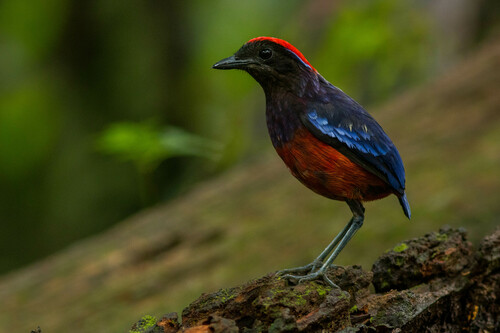
Garnet Pitta
Blue-naped Pitta
In short
The Garnet Pitta and Blue-naped Pitta are both strikingly colorful birds, but they can be distinguished by their head and wing patterns. The Garnet Pitta has a more uniform deep red plumage with a dark head, while the Blue-naped Pitta features a distinct blue patch on the nape and a more varied green and blue body. Both species inhabit dense forest undergrowth, but their vocalizations and specific habitat preferences can aid in identification.
Identification tips
1. Look for the blue patch on the nape of the Blue-naped Pitta, absent in the Garnet Pitta. 2. Note the overall plumage color: deep red and uniform in Garnet Pitta versus green and blue in Blue-naped Pitta. 3. Listen for vocalizations: clear whistles for Garnet Pitta. 4. Consider habitat: lowland preference for Garnet Pitta, broader range for Blue-naped Pitta.
Size
Both species are similar in size, typical of pittas, with no significant differences in overall body size.
Plumage
The Garnet Pitta has a deep red body with a dark head, lacking significant color variation. In contrast, the Blue-naped Pitta displays a blue patch on the nape and a more varied plumage with green and blue tones, making it more colorful overall.
Behaviour
Both species are elusive and prefer to stay low in dense forest undergrowth, often hopping on the ground. Their behavior is generally similar, making visual identification more reliable than behavioral cues.
Habitat
Both species inhabit dense tropical forests, but the Garnet Pitta is often found in lowland and hill forests, while the Blue-naped Pitta may be found in a wider range of elevations, including subtropical regions.
Voice
The vocalizations of these species differ, with the Garnet Pitta having a series of clear, whistled notes, while the Blue-naped Pitta's call is less documented but generally involves a series of softer notes. Listening for these differences can help in identification.